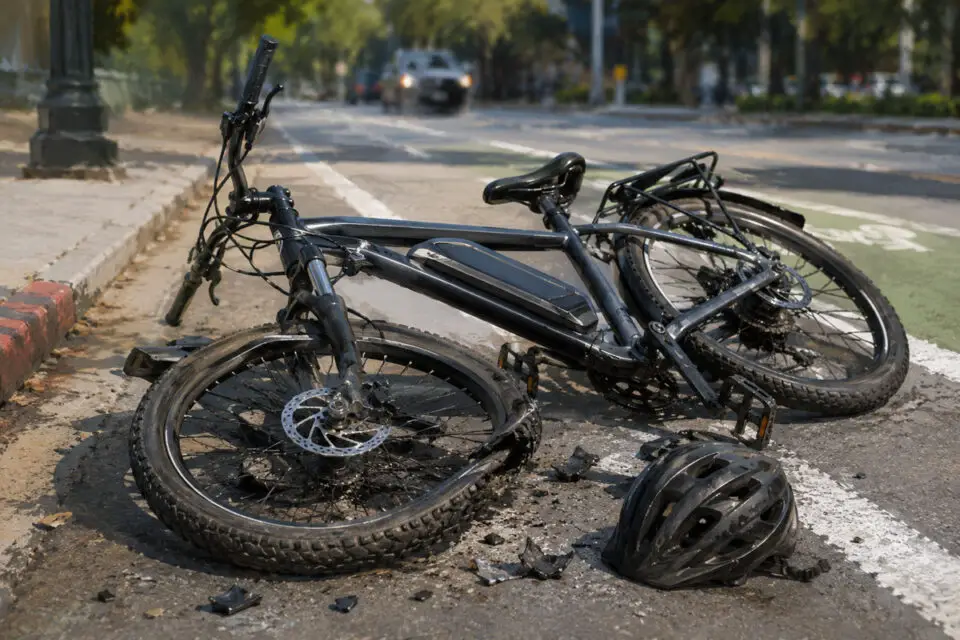
SAN DIEGO — As the use of electric bicycles, or e-bikes, has grown dramatically across California, the number of injuries involving them has grown “exponentially,” according to a report released Friday by UC San Diego Health researchers.
From just two injuries in 2018 to 1,506 in 2024, injuries involving e-bikes are also more likely to be moderate to severe than those involving traditional bicycles.
“One of our most concerning findings was the disproportionately high number of injured children involved in e-bike crashes,” said Dr. John Austin, general surgery resident and research fellow at the UC San Diego School of Medicine and first author of the study.
“E-bikes provide valuable transportation and recreational benefits, but their higher speeds can generate crash forces more comparable to motorcycles than traditional bicycles, leading to potentially severe injuries.
“Families should understand these risks, ensure riders wear properly fitted helmets and provide appropriate supervision and training. Safety education needs to grow as quickly as e-bike adoption and safety is our target for trauma injury prevention and advocacy.”
In general, e-bikes are heavier and capable of higher speeds than conventional bicycles, factors that may contribute to more serious injuries when collisions occur, the study’s authors said.
To better understand trends, researchers analyzed data from the California Highway Patrol’s Statewide Integrated Traffic Records System, examining collisions involving e-bikes and traditional bicycles from 2018 through 2024. The analysis included 4,035 e-bike collisions and 58,332 collisions involving traditional bicycles.
The results found that injuries involving e-bikes occurred among younger riders, who were also more likely to ride at unsafe speeds. The crashes also occurred more frequently in affluent communities.
“E-bikes are here to stay, and they provide substantial benefits to mobility and recreation,” said Dr. Jay Doucet, voluntary clinical professor of surgery at the UC San Diego School of Medicine.
“However, our study found a dramatic increase in e-bike injuries across California, including a disproportionate number involving children and low rates of helmet use among injured riders.
“Parents need to understand what they are buying for their children, and communities and policymakers need to recognize that safety infrastructure, education and policy have not kept pace with adoption. As trauma surgeons, we will continue our advocacy efforts to ensure that the benefits of e-bikes are realized while reducing preventable injuries and deaths.”
The city of San Diego is the latest local municipality to adopt e-bike regulations, citing previous studies and reports from physicians. Those regulations will take effect in August.
“Without a doubt these regulations will save lives,” Councilmember Raul Campillo said. “I’m incredibly grateful to everyone who has rallied around this important issue to help keep children and families safe throughout our city.”
Following this month’s approval, the city began a 30-day public outreach campaign before enforcement takes effect, followed by a 60-day warning period before citations are issued.
Specifically, the regulations:
- Impose a minimum age of 12 for Class 1 and Class 2 e-bikes.
- Reinforce helmet requirements and passenger restrictions. Passengers are allowed only if the e-bike is specifically designed to accommodate multiple riders with a permanent second seat.
- Allow cited individuals to complete an e-bike safety course instead of paying a $25 fine.
“As a pediatric trauma surgeon at Rady Children’s Hospital who cares for injured children every week, I’ve seen how quickly e-bike crashes can change a family’s life,” Dr. Romeo Ignacio Jr. said.
“Setting a minimum age of 12 is a simple, practical safeguard that helps keep our youngest riders safe while still supporting active transportation for older youth.
“Children under 12 simply aren’t developmentally ready for the speed, weight and split-second decisions e-bikes demand. This proposal for an age restriction gives families a clear standard, helps schools and community groups teach safety more effectively, and aligns San Diego with national trends toward responsible e-mobility.”
In 2024, county hospitals recorded 865 emergency department visits and 186 hospitalizations related to e-bike crashes. Earlier this year, San Diego County officials issued an advisory recommending doctors counsel patients and families on applicable laws, screen for e-bike use during injury and well-child visits, and encourage safety training programs.
The California Vehicle Code defines e-bikes as “a bicycle equipped with fully operable pedals and an electric motor of less than 750 watts.” It divides e-bikes into three categories:
- Class 1: Provides assistance only while the rider is pedaling and stops providing assistance at 20 mph.
- Class 2: Operates via pedal assist or throttle and stops providing assistance at 20 mph.
- Class 3: Provides assistance only while the rider is pedaling and stops providing assistance at 28 mph.
State law allows Class 1, 2 and 3 e-bikes to operate on public roadways and bike paths, according to the San Diego Police Department.
However, “high-powered electric motorcycles are not street legal,” officials said.
“The growing number of severe injuries among young riders makes it clear that deceivingly powerful e-bikes pose a significant danger to children,” county Public Health Officer Dr. Sayone Thihalolipavan said.
“It is possible e-bike injuries are being unreported due to being misclassified as non-electric bicycle injuries. Getting better data will help us highlight the seriousness of this public health issue.”
Public safety leaders offered the following safety tips for e-bike riders:
- Ride in bike lanes, roads or bike paths where permitted.
- Don’t ride on crosswalks, near businesses or on sidewalks.
- Ride in the same direction as traffic and use bike lanes when available.
- Obey all traffic signs and signals, just as motor vehicle drivers do.
- Carry passengers only if the e-bike is designed for them.
Helmets are required for riders younger than 18 and for all riders operating Class 3 e-bikes.