In his July 10 op-ed, “Encinitas should stop funding feel-good climate policies,” Encinitas resident Denis Lougeay gives the impression that climate change is an overblown issue that does not warrant Encinitas’s actions to reduce greenhouse gas (GHG) emissions.
In making his case, he makes a number of false claims and includes misinformation concerning climate change. For example, Lougeay makes the claim that:
“Although CO2 levels have continued to rise as projected, the Earth’s temperatures, which were forecast to increase in parallel with CO2 increases…have virtually leveled off for the last 20 years…Catastrophic events such as fires, floods and hurricanes cannot be linked to a slightly warmer climate.”
This is simply not true. In fact, global warming has accelerated in recent decades, with the last 11 years being the warmest on record. There is an overwhelming scientific consensus that human activities — primarily the emission of greenhouse gases — are the dominant driver of the observed warming since the mid-20th century.
The impacts of global warming are already being felt around the world, including here in California. These impacts include a warmer, drier climate, more destructive wildfires, rising sea levels along the California coast, and adverse effects on public health and agriculture. Since 1895, the annual average air temperature in California has increased by about 2.5 degrees Fahrenheit, according to the Office of Environmental Health Hazard Assessment.
A 2022 study in the journal Science concluded that 2000-2021 was the driest 22-year period in the western United States since at least 800 CE. The authors found that human-caused warming made this drought substantially worse.
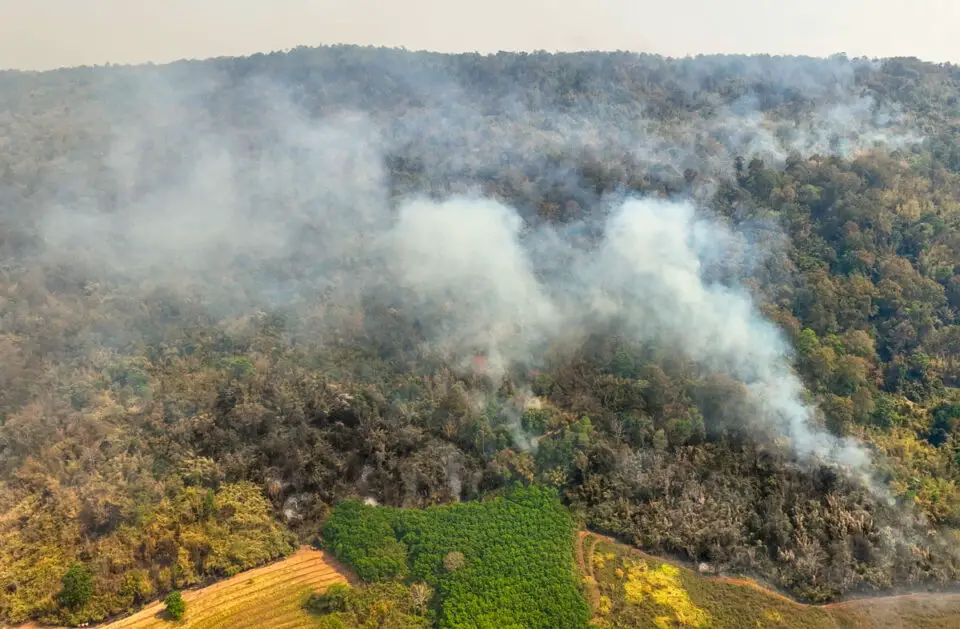
Anthropogenic climate change has contributed to an approximately fivefold increase in summer burned area in forests in Northern and Central California during 1996 to 2021 relative to 1971 to 1995. The 10 largest California wildfires all happened in the last 20 years. Attribution studies consistently find that climate change is largely to blame for this increase.
One recent study found that nearly all the observed increase is due to anthropogenic climate change. This enormous increase in wildfires in California translates into hundreds of billions of dollars in costs, as well as the loss of life, homes and livelihoods.
Additionally, as a result of climate change, sea level along California’s coast has risen 7 to 8 inches over the last century, and sea levels are projected to rise approximately 1.6 to 3 feet under intermediate scenarios, with higher-end scenarios approaching 6 feet by 2100. Such sea level rise poses a serious threat to California’s coastal infrastructure.
How much worse these climate change effects will get in California and elsewhere depends largely on the climate pathway we follow. The daily maximum average temperature in California is expected to rise 5.6 to 8.8 degrees Fahrenheit by late century. Such warming will have severe and, in many cases, devastating consequences in California.
This is a global problem that requires cooperation at a global level. However, make no mistake, these efforts cannot succeed without the leadership of the United States. We have a responsibility to help lead these efforts, given that no other country has more cumulative CO₂ emissions than the United States.
For our part, the citizens of California have chosen to help lead these efforts. Over the last 25 years, California citizens, through their elected officials at the state and local levels, have enacted some of the most ambitious and comprehensive policies to reduce our greenhouse gas emissions in the world.
These include far-reaching GHG emission reduction targets, one of the most comprehensive cap-and-trade programs in the world, renewable energy mandates, energy efficiency standards, subsidies to spur the electric vehicle and renewable energy industries, the enactment of climate action plans at the municipal level to align local and state policies, and the enabling of Community Choice Aggregation, which gives residents greater choice over how their electricity is procured.
It is important that we continue to discuss the merits and effectiveness of such policies and make any needed corrections and improvements. We should welcome discussion and debate about specific policies (Lougeay’s op-ed is void of such specifics). However, when considered in their entirety, the evidence suggests that the benefits of these policies outweigh their costs.
These policies, enacted by elected representatives in California at the state and local levels, have contributed to the widespread adoption and affordability of renewable energy, battery and storage technology, and electric vehicles. Wind and solar now provide roughly 40% of California’s electricity generation, and the top-selling car in California is an electric vehicle. The levelized cost of electricity from utility-scale solar and onshore wind is now competitive with new natural gas generation in California.
We are rapidly moving toward an economy in which our homes and vehicles are increasingly powered by renewable energy produced in California that, after the initial capital investment, provides a stable source of energy with very low operating costs. Recent geopolitical disruptions, including the conflict involving Iran, have highlighted the economic vulnerability of dependence on petroleum, contributing to sharp increases in gasoline prices in California.
Climate mitigation policies also have numerous and significant local environmental and health benefits, as they reduce local pollutants released during the extraction, production and burning of fossil fuels. Additionally, climate policies have helped create new industries, companies and jobs in California, contributing to California’s strong and growing economy.
Climate policies enacted by our elected representatives at the local and state levels have strengthened California’s economy, improved public health and reduced greenhouse gas emissions. We should continue to debate how these policies can be improved, but that debate should be grounded in evidence rather than misinformation. California’s climate leadership is an achievement we should build upon — not abandon.
Related Articles:
- Weekly Crime Reports: Encinitas, Del Mar, Solana Beach August 10, 2024
- Weekly Crime Reports: Encinitas, Del Mar, Solana Beach November 13, 2023
- Op-ed: Encinitas should stop funding feel-good… July 10, 2026
- Weekly Crime Reports: Encinitas, Del Mar, Solana Beach July 30, 2024
- Weekly Crime Reports: Encinitas, Del Mar, Solana Beach July 15, 2024
- Weekly Crime Reports: Encinitas, Del Mar, Solana Beach August 22, 2024