Many Encinitans are environmentalists, and I am among them. We all want to live in healthy and beautiful surroundings, and we want that for future generations. To accomplish this goal, we must allocate resources wisely.
Let’s make sure we do that here in Encinitas, because continued spending on the city’s Climate Action Plan (CAP) makes no sense.
Science has shown that the climate has changed since the Earth was formed. What is now Chicago was once covered by ice a half-mile thick. Dinosaur bones have been discovered in the Yukon, which was once tropical. Ice ages have developed and receded in a cyclic pattern over millions of years.
The Earth’s climate is immensely complex and impacted greatly by the sun, the Earth’s orbit, ocean currents and major geologic events. In geologic time, humans are very recent inhabitants. Humans’ ability to control the climate is very limited.
The Encinitas CAP is focused on reducing “greenhouse gases,” specifically carbon dioxide (CO2). CO2 (one carbon atom and two oxygen atoms) has always been a small part of our atmosphere. Nitrogen is 78%, oxygen 21%, and argon 0.93%.
CO2 comprises less than 0.0005 (1/20 of a percent). CO2 is a clear, odorless component of our atmosphere and does not produce carbon “dust” falling from the sky. It “carbonates” our soft drinks, beer and champagne.
Humans and animals inhale air and extract oxygen from it via their lungs. CO2 is discharged when we exhale. Many of us learned in elementary school about the process of photosynthesis, whereby plants use sunlight, water and CO2 to grow.
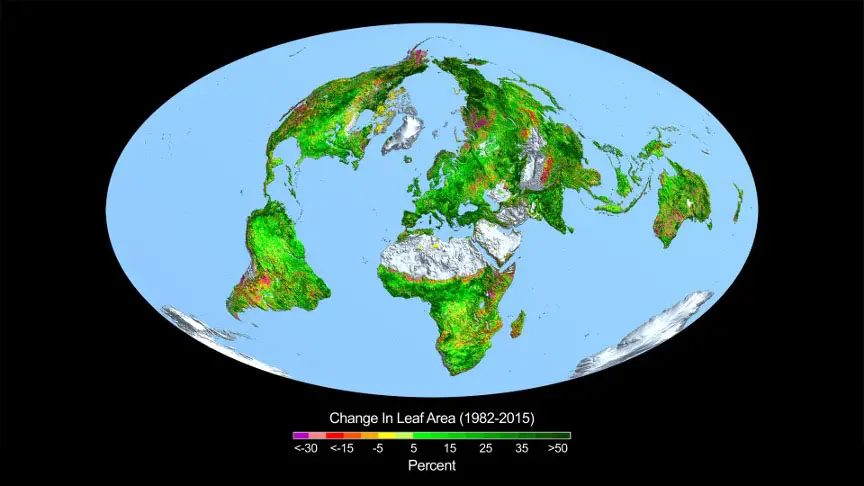
Scientific studies clearly demonstrate that higher carbon dioxide levels accelerate plant growth and increase plants’ resistance to drought. The benefits of increased atmospheric CO2 are shown using NASA satellite photos of the Earth.
This “greening” trend continues today. The state of California mandates that every city must have a CAP. But many cities do not, and there is no requirement for how much to spend. The CO2 that the CAP seeks to reduce is the same substance that is greening the planet.
The Encinitas CAP costs $600,000 per year from city funds, plus approximately $400,000 more for residents and businesses to comply with CAP rules.
The 20-year CAP program cost is about $20 million. This amount is dwarfed by federal programs, which cost billions every year. Simultaneously, there were no funds to treat Tijuana River sewage, which destroys the environment on land and in the ocean and creates personal health risks.
Encinitas CAP programs are primarily feel-good efforts that have no practical impact. CO2 in the atmosphere has increased by 16% since 2000, as projected (from 370 ppm to 430 ppm). Earth’s wind patterns distribute CO2 evenly across the planet.
Between 2005, when the Kyoto Protocol was adopted, and 2016, when the Paris Accords were signed, China alone constructed 1,579 coal-fired power units with a total capacity of 655 gigawatts. Subsequently, China is constructing an additional 1,055 coal units with a capacity of 609 gigawatts (1,264 gigawatts total).
To put those numbers in perspective, the total U.S. electric generating capacity from all sources (i.e., coal, oil, nuclear, solar, hydro, etc.) is 1,250 gigawatts. Many other developing nations have similar energy programs.
The drastic and costly reductions in carbon dioxide emissions made by the United States and Europe have been overwhelmed by increases in other nations.
Although CO2 levels have continued to rise as projected, the Earth’s temperatures, which were forecast to increase in parallel with CO2 increases (the “Hockey Stick” phenomenon), have virtually leveled off for the last 20 years.
Catastrophic events such as fires, floods and hurricanes cannot be linked to a slightly warmer climate. Wildfires decreased for many years due to increased surveillance and improved firefighting techniques, resulting in more underbrush that fuels recent fires.
Climate science has not changed, but the public’s understanding is beginning to evolve as economic costs spiral upward. Cold kills about nine times as many humans each year as heat. In about the year 1000, the Medieval Warm Period began. Then, around 1400, a cold period began, known as the “Little Ice Age.” Since about 1850, the Earth’s climate warming cycle has been underway.
The Industrial Age began later, in about 1910. There was never any science to justify calling climate change an “existential threat.” Computer models, which are pseudo-science at best, show a vast array of outcomes, from insignificant warming to warming of several degrees.
Self-serving bureaucrats and activists have bombarded the media with the worst-case scenarios that have virtually no chance of occurring. California, a leader in climate activism, has the highest electricity rates and gasoline prices in the nation.
Encinitas should reallocate CAP funds to genuine environmental programs that also directly benefit our community. Recycling of electronics and plastics could be much improved with minor financial support. Let’s invest our hard-earned tax dollars in programs that make economic sense where we can actually see our results.
Denis Lougeay is a retired California professional engineer. He lives in Encinitas.