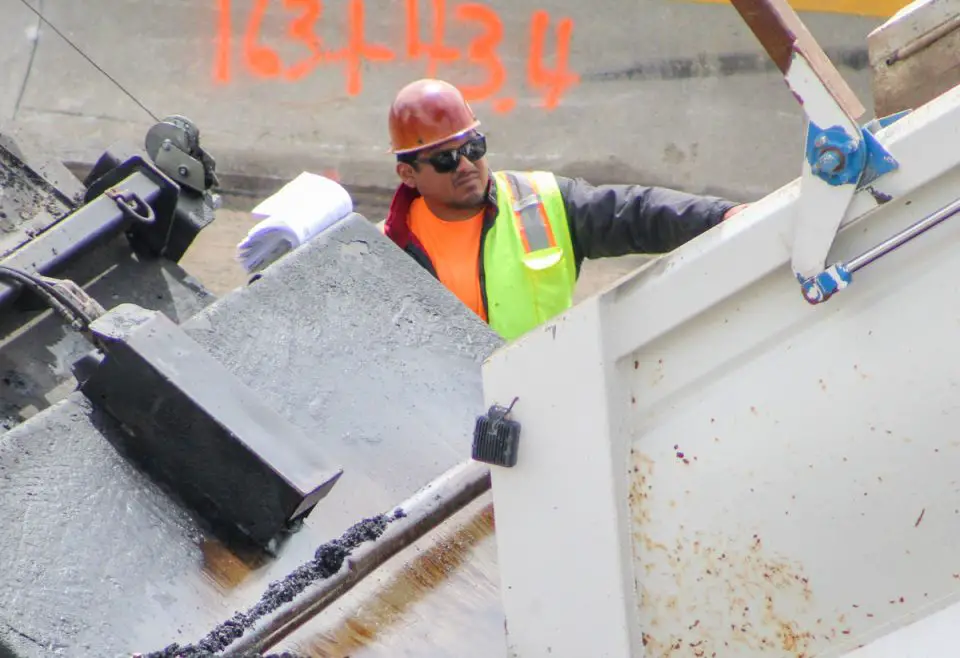
CARLSBAD — The City of Carlsbad clarified rules governing the temporary staging of construction equipment and materials on public property or public rights-of-way for city-related construction or maintenance projects.
Jeff Murphy, deputy city manager, said the need for nearby staging space is typical for street improvement projects.
“For small projects, staging areas can usually be located within the public right of way near the construction site,” Murphy said. “However, for larger or longer duration projects, staging within the same right of way is not always feasible.”
In those cases, construction crews often prefer to stage building materials on a nearby public road or other public property. Murphy said the municipal code did not previously provide a clear mechanism to allow for those alternative temporary staging areas.
The ordinance — adopted unanimously by the City Council at its April 28 meeting — introduces a new term to the municipal code to facilitate such uses: “Temporary Construction Support Use.”
Staging areas are limited to developed or disturbed public property, according to city documents. A specific site of public property may be used for city-initiated construction projects no more than three times per year, for a maximum of 60 consecutive days per use, unless otherwise authorized by the city engineer.
Temporary perimeter screening and security fencing must be installed, and uses must comply with other city standards, including operating hours, per city documents.
Materials and equipment must be removed, and the site restored or repaired to the city engineer’s satisfaction before final approval of the construction project.
Staging areas will be included in the Capital Improvement Project approval process, ensuring the public is aware of which public space will be used for temporary storage.
The new rules apply only to public projects and do not allow public spaces to be used to stage private construction projects, Murphy said.
Mayoral appointments
Mayor Keith Blackburn appointed John May, District 1, and Robert Smith, District 4, to the city’s Historic Preservation Commission.
The City Council unanimously confirmed the nominees.
May received a bachelor’s degree in history from the University of California, San Diego, in 1973 and was previously appointed to the commission in September 2023 to fill a term that expired in April, according to his application.
He taught at Carlsbad High School and wrote in his application, “I am interested in local history and education.”
Smith has been a Carlsbad resident for nearly 50 years and wrote in his application that, as an architect, “I am keenly interested in the preservation of the City’s historic areas and structures.”
“This City has a unique heritage that deserves to be carefully preserved,” he wrote. “Rampant development that threatens or destroys historic sites and heritage monuments should not be allowed to occur. Preserving and recognizing historic structures can give residents and visitors a better appreciation and understanding of Carlsbad’s culture.”
Smith has been a member of several professional organizations, including the Save Our Heritage Organization of San Diego, the San Diego Gaslamp Quarter Historical Foundation and the National Trust for Historic Preservation, according to his application.
Carlsbad Police military equipment policy
The City Council also formally renewed the Carlsbad Police Department’s military equipment policy at the meeting by unanimous vote.
In a report discussed at the April 14 meeting, the city found that the department had used its weapons and equipment designed for military applications responsibly and in accordance with department standards over the previous year.
That meeting constituted the first reading, and the meeting two weeks later included formal adoption of the policy.
Under state law, law enforcement agencies must receive approval from city councils or other governing bodies before acquiring or using military equipment.