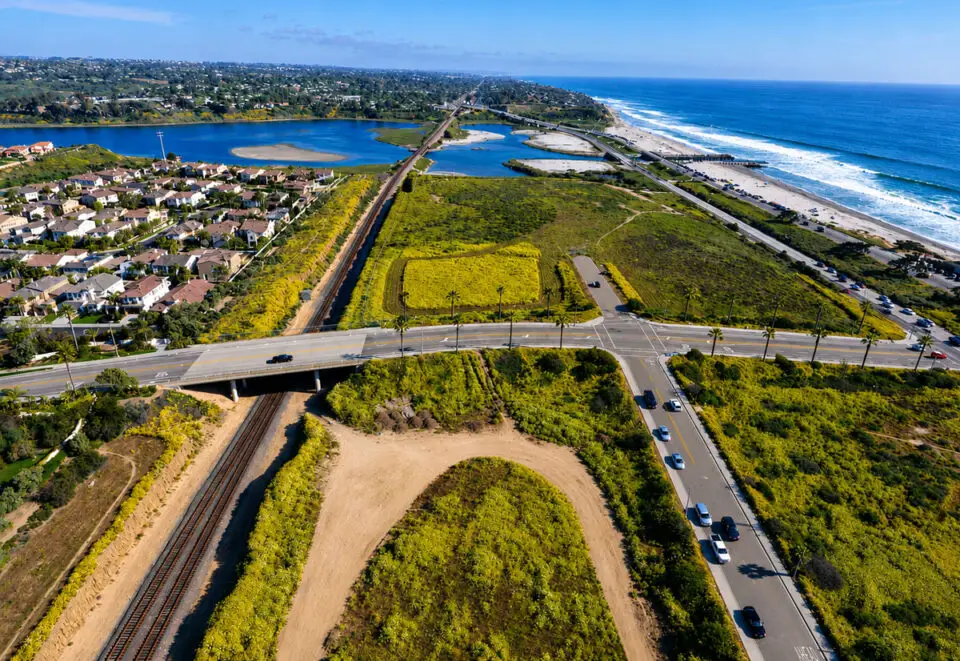
CARLSBAD — For years, motorists driving south on Coast Highway through the Ponto neighborhood have passed a quiet stretch of vacant land between the beach and Interstate 5 without giving it much thought.
Behind the scenes, it’s been loggerheads.
On paper, the proposal is straightforward: 120 rental townhomes, commercial space and hundreds of parking spaces on an 11-acre lot near Ponto Beach.
But to the thousands of residents who have spent years fighting for a coastal park, the project represents far more than another plan for a long-vacant property. They see it as one of the last opportunities to address South Carlsbad’s lack of recreation space near the beach.
Now, as the California Coastal Commission prepares to consider changes that could clear the way for the development, the decades-old battle over the future of the city’s southern coastline is reaching a pivotal moment.
For Lance Schulte, a former Carlsbad city planner and member of People for Ponto, the parcel represents one of the most consequential pieces of undeveloped land left on the Southern California coast. For developers, it represents an opportunity to build coastal property in one of the region’s most desirable locations.
And after nearly four decades of planning studies, zoning changes, development proposals and citizen activism, residents say the city is approaching a crossroads, where decisions made today could impact its residents for generations.
“This is a decision that will reshape Carlsbad’s coastline forever,” Schulte told The Coast News. “Once it’s gone, it’s gone.”
A fight decades in the making
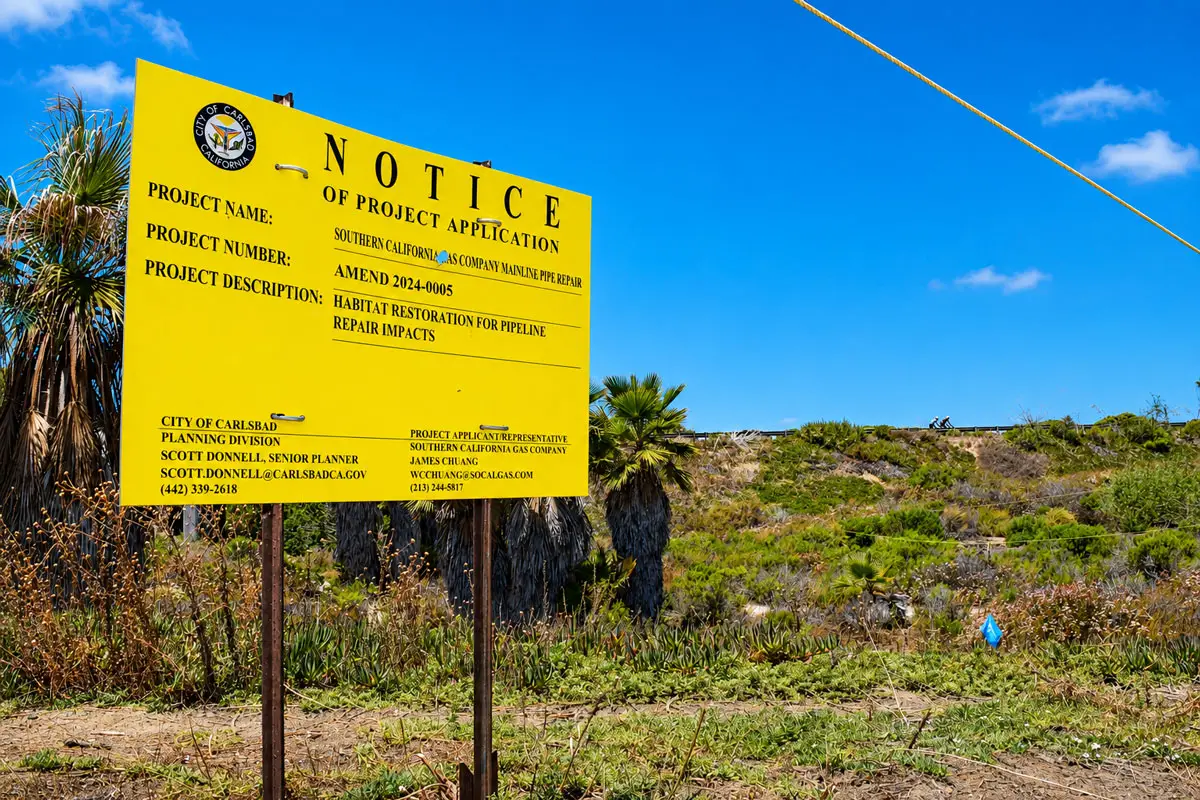
The battle centers on an 11.1-acre property, known as Planning Area F, a site designated “non-residential reserve” since the 1990s near the intersection of Ponto Drive and Avenida Encinas, between Coast Highway and Interstate 5, and just south of South Ponto Beach. The vacant site sits in the middle of a roughly six-mile stretch of coastline without a coastal park.
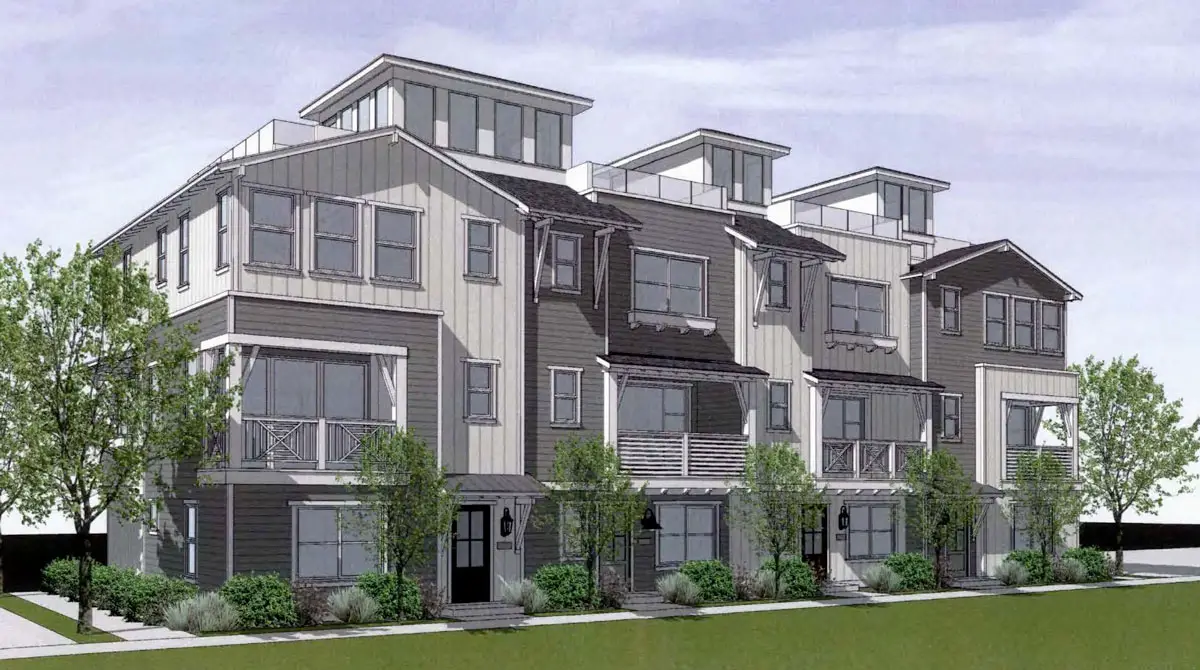
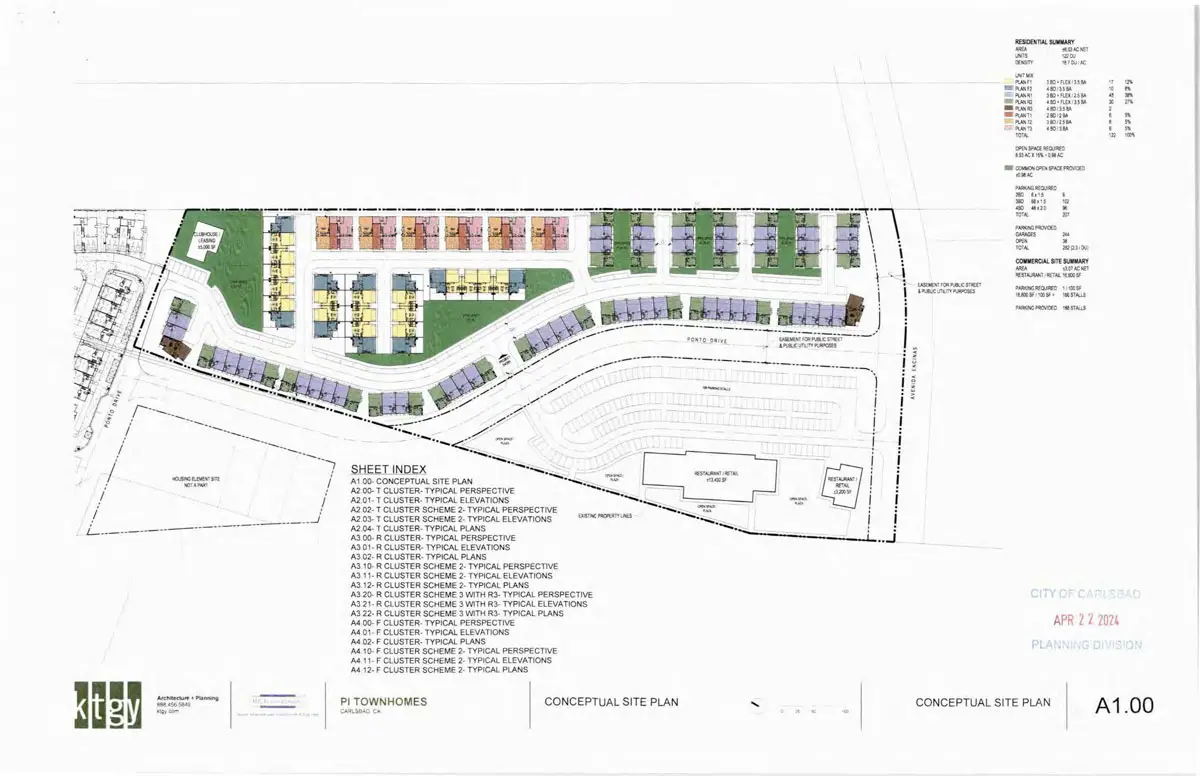
Today, the parcel is owned by a company associated with developer H.G. Fenton, which has proposed redeveloping the site through amendments to the city’s master plan and Local Coastal Program. The proposal, PI Townhomes, is a mixed-use residential project featuring 120 rental townhomes, about 6,340 square feet of commercial space, and more than 340 parking spaces.
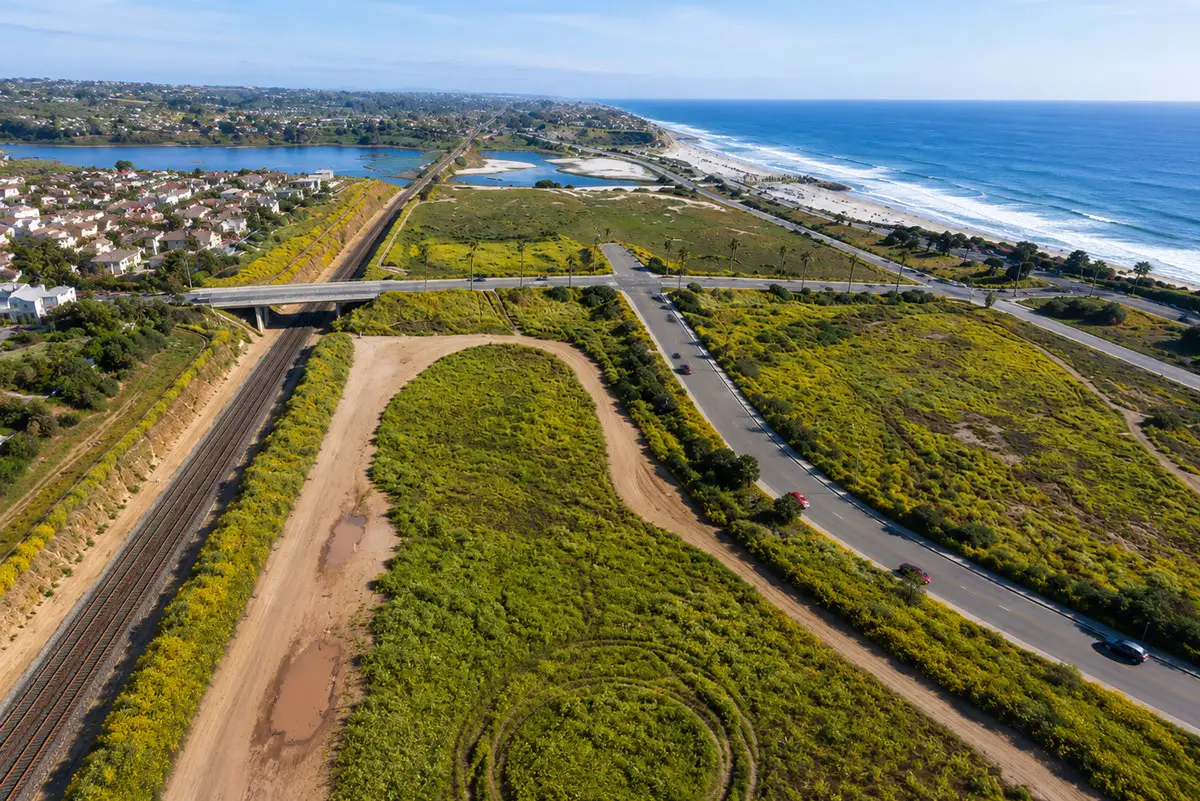
City officials say the proposed land uses are not new. According to the city, Planning Area F was designated as “unplanned” when the Poinsettia Shores Master Plan was adopted in 1993, meaning development could not occur until additional study and approvals were completed.
During the city’s 2015 General Plan update, the area east of Ponto Drive was designated for residential uses of 19 to 23 units per acre, while the western portion was designated for general commercial uses. Those land-use changes were approved by the City Council and, later, by the California Coastal Commission in 2016, although related amendments to the Poinsettia Shores Master Plan remain under the Coastal Commission’s review.
Between these areas, the fate of the prosaically named Planning Area F remains undetermined.
But advocates with People for Ponto argue that plans for the property date much further back than the current development proposal. The group says Planning Area F was intended to remain available for potential coastal recreation uses and represents the last realistic opportunity to create a coastal park in South Carlsbad.
Over the last decade, the grassroots group has filed more than 80 public records requests and collected thousands of planning documents dating back to the 1980s, assembling what Schulte describes as a “paper trail” showing how land once planned for a 12.8-acre coastal recreation site, along with significant amounts of usable open space, gradually shifted toward residential and commercial development.
According to Schulte, more than 8,000 residents and visitors have signed petitions to support a park at Ponto. What began as a neighborhood campaign has evolved into one of the most persistent citizen-led planning efforts in Carlsbad’s recent history.
The group’s central argument is not simply that South Carlsbad needs a park. Rather, it contends that decades of city planning decisions gradually reduced the recreation and open-space opportunities originally envisioned for the area, leaving the southern part of the city without amenities enjoyed elsewhere in Carlsbad.
The missing park
People for Ponto points to what it describes as a stark geographic imbalance: North Carlsbad contains 10 coastal parks west of Interstate 5 totaling roughly 37 acres, while South Carlsbad — home to a majority of the city’s residents — has no coastal park, despite decades of residential growth.
The Trust for Public Land reached a similar conclusion. In letters supporting the so-called “Ponto Park” concept, the nonprofit organization’s data noted that Carlsbad ranks last among 29 coastal cities from Santa Barbara to Imperial Beach in providing residents access to parks within a 10-minute walk, a standard increasingly used by planners nationwide to measure accessibility.
“What we’re talking about is quality of life,” Schulte said. “As the city grows, parks become more important, not less important.”
Schulte also points to disparities between Carlsbad and neighboring coastal cities. According to data compiled by People for Ponto, Encinitas and Oceanside each provide or require roughly five acres of parkland per 1,000 residents, compared with Carlsbad’s standard of three acres per 1,000 residents. The group also notes that those cities place greater emphasis on locating parks within a 10-minute walk of neighborhoods.
City officials dispute the notion that South Carlsbad is underserved by parks. In a written response to The Coast News, staff said city planners measure park obligations by quadrant rather than by neighborhood. The Growth Management Monitoring (GMM) report found all four quadrants currently exceed the city’s standard of three acres of community park or special-use parkland per 1,000 residents.
The GMM report also credits the planned 93.7-acre Veterans Memorial Park, which broke ground earlier this week, as a citywide facility, allocating a portion of its acreage to each quadrant to satisfy future park needs. City officials noted that open-space requirements vary by planning zone and that the standards cited by People for Ponto do not apply uniformly throughout the city.
Councilwoman Teresa Acosta, while declining to comment on Planning Area F or the proposed development, which is expected to come before the City Council, said she appreciates hearing from residents advocating for more park space in the Ponto area.
“Community engagement is very important to me, and I appreciate the outreach I have received from neighbors who want a park in the Ponto area,” Acosta said in a statement to The Coast News. “Parks are a key element of our quality of life here in Carlsbad, and I am supportive of adding new parks if feasible.”
Acosta noted that Carlsbad has 14 community parks and 28 special-use areas, including neighborhood parks and recreational facilities, with additional projects underway, including Veterans Park and Robertson Ranch Park. She also pointed to ongoing City Council discussions about creating a beachfront coastal park extending through the Ponto area if South Carlsbad Boulevard is realigned farther inland.
“I continue to be very supportive of parks, trails and green spaces throughout Carlsbad,” Acosta said.
So, what exactly does People for Ponto want?
The group envisions, at minimum, a six-acre community park in South Carlsbad with large, flat grassy areas where families can gather, children can play, and residents and visitors can enjoy the coast. Additional land should be reserved for coastal recreation and adaptation to sea-level rise, including the potential future relocation of campground facilities now in the crosshairs of coastal erosion.
This is based on maintaining a ratio of three acres of parkland per 1,000 residents in the city’s southwest quadrant, where parkland has failed to keep pace with population growth since 2012.
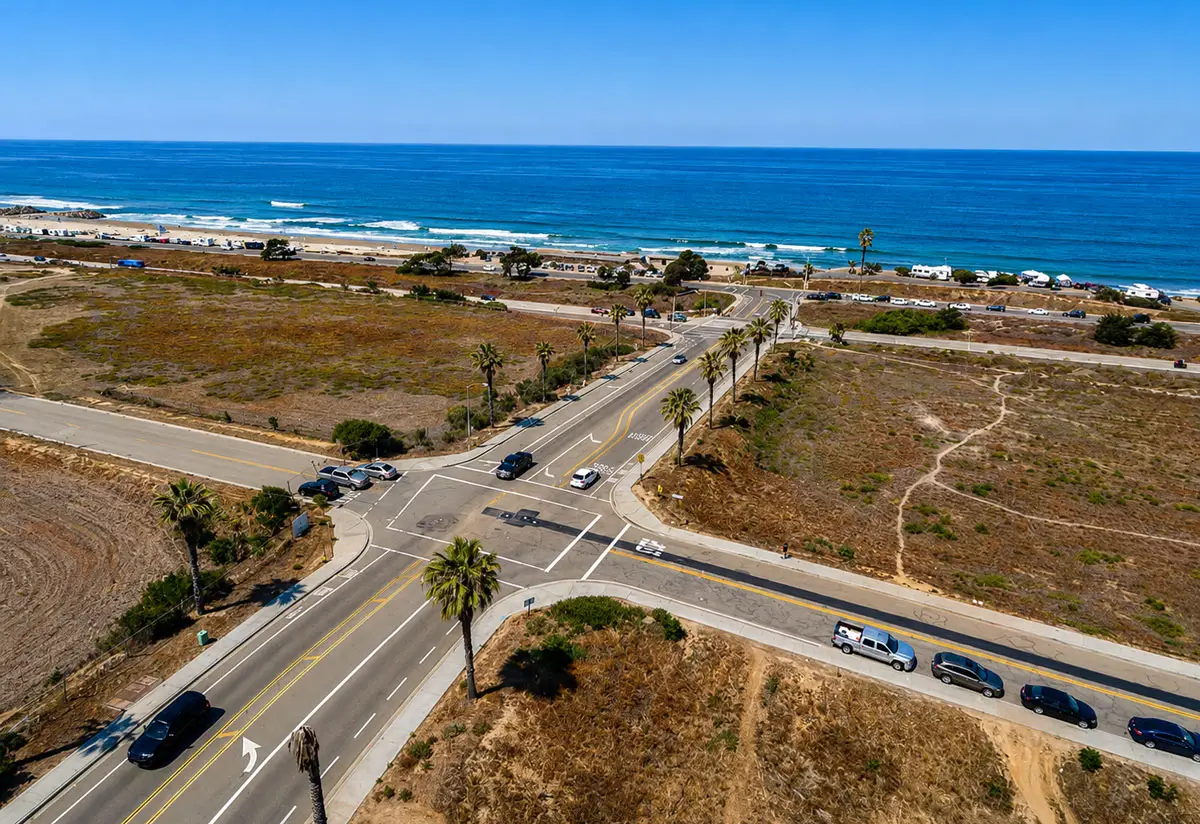
The group also sees the site as an opportunity to restore what it describes as decades of failed open-space commitments in South Carlsbad and create a lasting public amenity on one of the last undeveloped coastal properties in the city.
The property’s owner and developer, Fenton, sees things differently.
Before selling the property to Fenton, former landowner LSF5 Carlsbad Holdings, an apparent subsidiary of Hudson Advisors, repeatedly warned through its attorneys that downzoning the site or pursuing eminent domain for a park could expose Carlsbad to litigation.
Translation from legal planning jargon? No municipal park.
In letters to the City Council in 2021, attorney Michele Staples, representing LSF5 Carlsbad Holdings, repeatedly stated that residents had falsely portrayed the property owner as willing to sell the land and that the site was not for sale.
Staples claimed the site’s fair market value exceeded $40 million, citing previous purchase offers — despite the county’s assessed value of $15 million — and maintained that city planning documents supported residential and commercial development.
“…Any other direction exposes the City to significant legal liability and damages, and impairs housing opportunities … contrary to state and local housing laws and environmental justice considerations,” Staples wrote.
As previously reported by The Coast News in 2021, Schulte provided emails that told a different story, revealing conversations between People for Ponto member Michelle Sebahar and Jon Barkan, senior vice president at Hudson Advisors, about a possible purchase of the site, undermining Staples’ characterization that the landowner was not interested in selling the land.
And then, in September 2022, LSF5 Carlsbad Holdings sold the 11.1-acre site to Fenton for less than $8 million. Fenton subsequently submitted plans for PI Townhomes, or Ponto Mixed Use, which remains under city review.
The PI Townhomes project cannot proceed until the California Coastal Commission approves amendments to the Poinsettia Shores Master Plan and the city’s Local Coastal Program. If approved, the proposal is expected to go before the Carlsbad City Council early next year.
The paper trail
The modern fight over Ponto kicked into gear in 2017.
That year, residents obtained city GIS data through the city’s settlement of a lawsuit by North County Advocates that allowed them to analyze open-space allocations in Local Facility Management Plan Zone 9, the larger planning area that includes the Ponto site.

According to documents assembled by People for Ponto and provided to The Coast News, the analysis showed approximately 30 acres of mandatory usable open space were never provided as part of development in Zone 9.
When Carlsbad voters approved growth-management standards in the 1980s, they established requirements intended to ensure development occurred alongside adequate parks, open space and public facilities. Park advocates contend that those standards were never fully implemented in the Ponto area.
For years, Ponto developers were exempted from the city’s 15% usable open-space requirements that applied elsewhere in the city, as confirmed by the city’s own data, maps and court testimony obtained through public records requests.
The consequence after years of what Schulte calls “improper exemptions”? The Ponto neighborhood is developed at a density about 40% higher than the rest of Carlsbad, which he argues is the primary reason the area lacks a coastal park.
“Being able to see for the first time the missing (usable) open space was one of the key awakenings that started People for Ponto,” Schulte wrote to city officials.
The city maintains that Ponto’s open-space obligations were already fulfilled through habitat preservation, recreation areas and land set aside for the restoration of Batiquitos Lagoon, leading city leaders in the 1980s to conclude that additional parkland was unnecessary.
But some residents have never accepted the city’s conclusion. Over the years, the disagreement evolved into an organized campaign, the formation of People for Ponto and a sustained push for the city and Coastal Commission to reconsider Planning Area F.
The group has continued to work with several Ponto landowners and the city to communicate the mutual benefits of a land swap, seeking a fair trade for the city’s surplus land and buildings, which it has been trying to sell.
Specifically, People for Ponto asked the City Council to buy Planning Area F for $15 million, but the council, by a single vote, rejected looking into the opportunity, Schulte said. The group also worked with the Trust for Public Land to secure roughly $30 million to purchase 15 acres in planning areas G and H, but the landowner pulled out.
“A building or land swap with the Ponto landowners is an all-win solution, if the council would only lead this opportunity,” Schulte said at the time.
City officials said they have not received a land-swap proposal from a willing property owner and therefore have no proposal to consider. While no formal proposal has been submitted, Schulte said People for Ponto spent months encouraging council members and the developer to explore a land swap option. Those conversations, he said, never materialized.
In 2010, the people for Ponto got a win. The California Coastal Commission rejected Carlsbad’s proposed Ponto Beachfront Village Vision Plan, concluding the city had failed to adequately consider “coastal recreational (i.e. public park)” and visitor-serving uses at Planning Area F.
The Coastal Commission found the city needed to consider public recreation or lower-cost visitor accommodations for the site before allowing other types of development. The commission raised similar concerns again in 2016 and 2017.
Today, the fate of a “Ponto Park” is on the California Coastal Commission’s docket for its Oct. 7-9 meeting in Oceanside.
The Coastal Commission will consider Carlsbad’s proposed amendments to its coastal plan, which, if approved, would allow Planning Area F to be developed for residential and commercial uses, replacing its current “unplanned” designation.
The city argues that the pending amendment would not create new land uses but instead align the Poinsettia Shores Master Plan with residential and commercial designations already adopted and approved by the City Council.
Schulte and other advocates say that the city’s latest proposal is virtually identical to the earlier Ponto Vision Plan, rejected by the same state agency 16 years earlier, and still fails to address the commission’s earlier directives to consider public recreation and lower-cost visitor accommodations at Planning Area F.
Coastline under pressure
Lingering over the debate is a colossal city project that may never happen. For 40 years, city planners have discussed moving portions of South Carlsbad Boulevard (historic Coast Highway 101) farther inland while allowing development to continue around it.
The result, in Schulte’s view, has been decades of road realignment planning with little action, as opportunities for parks and open space gradually shrink.
City records show millions of dollars have been spent examining road realignment concepts dating back to the early 1980s. The concept, which the city cites as a means of creating new public space along the shoreline, was originally conceived in state planning documents decades earlier when the roadway was under Caltrans control.
But Schulte argues realignment has become a perpetual future promise — one that city leaders invoke when discussing land-use changes at Ponto while the work itself remains unfunded and unbuilt.
“It’s a mythical Trojan horse,” Schulte said.
And yet, the city continues to study the idea. The city’s current capital improvement program proposes spending an additional $10 million on future roadway relocation studies.
According to internal emails, city staff estimated in 2023 that relocating roughly three miles of South Carlsbad Boulevard between Palomar Airport Road and La Costa Avenue could cost $280 million (a figure the city has confirmed with The Coast News). That figure is almost certainly higher today.
The millions spent on relocation studies and the ballooning costs of achieving such a feat have long cast doubt on the project’s financial viability. A 2001 report by ERA (Phase 2 Financial Feasibility Report) — the full version is not readily accessible on the city’s website for unknown reasons — concluded that the realignment was infeasible unless “surplus areas” created by the relocation were sold or leased to developers.
Schulte argues that the city’s pursuit of realignment has overshadowed a less expensive alternative: acquiring coastal land for a park, which he says would cost substantially less than creating recreation space after a complex and costly roadway relocation project.
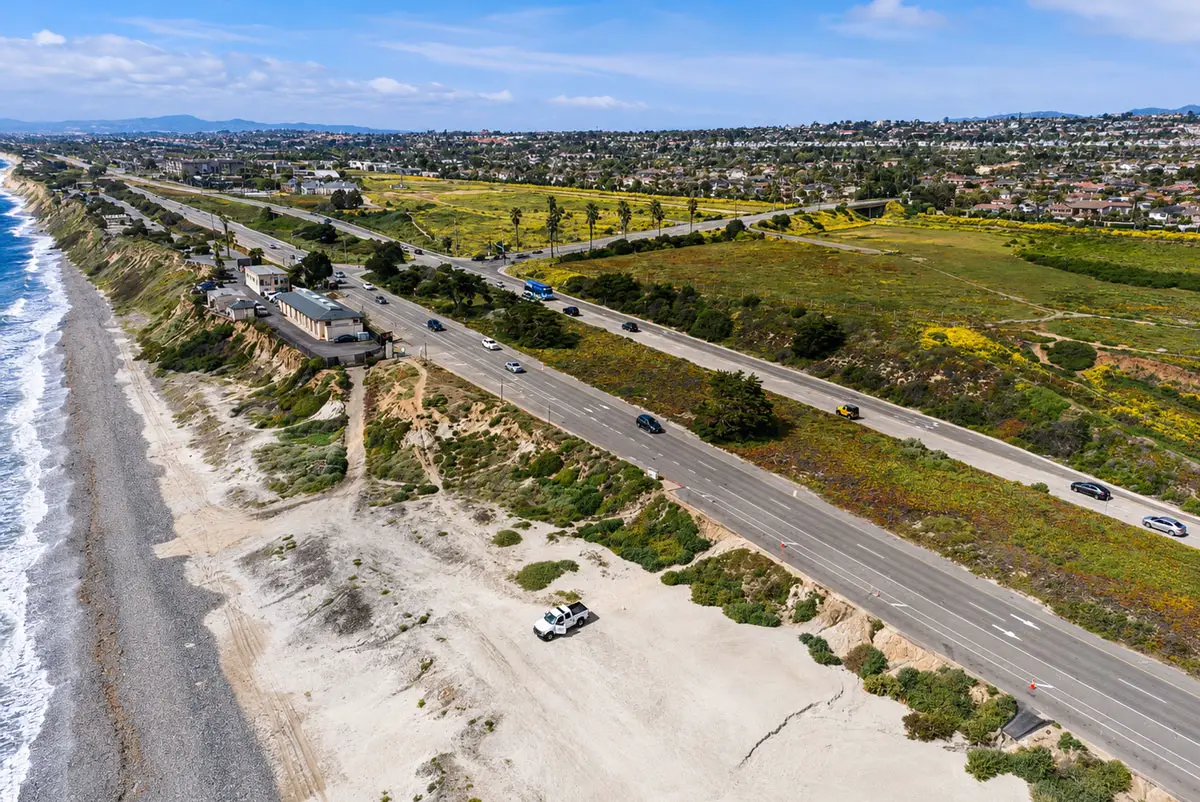

Complicating matters is the city’s 2017 Sea Level Rise Vulnerability Assessment, which projects the potential loss of roughly 32 acres of coastal open space, recreation areas and campgrounds at South Carlsbad State Beach due to erosion and rising seas.
More recent federal research suggests the impacts could be even greater. According to a 2023 U.S. Geological Survey analysis, between 24% and 75% of California’s beaches could be completely eroded by 2100.
People for Ponto argues that those projections should fundamentally change how the city evaluates Planning Area F, which it believes is one of the few remaining undeveloped coastal properties large enough to help offset future losses of recreation space due to sea-level rise.
The group also notes that the city has never fully integrated the sea-level rise findings into its 2015 General Plan, parks planning or the new proposed Local Coastal Program.
“The Coastal Act prioritizes recreation and visitor access,” Schulte said. “If we know we’re going to lose coastal recreation land in the future, we should be planning now for how to replace it.”
A decision with lasting consequences
The decades-long debate over Ponto has spanned multiple City Councils, development proposals, Coastal Commission reviews and organized citizen activism.
What remains unresolved is whether Planning Area F represents a missed opportunity or one of the last realistic chances to create a Ponto neighborhood park.
“The time to honestly and openly disclose these facts and collaboratively work with citizens is now, before the city and Coastal Commission make irreversible land-use decisions that will forever impact future generations,” Schulte wrote in a September letter to city leaders and the Coastal Commission.
Schulte and others encourage South Carlsbad residents passionate about a park in the Ponto neighborhood to speak up at Carlsbad City Council meetings, write to their city and state representatives, and attend the Coastal Commission meeting to voice their support for a Ponto park.
The People for Ponto website includes a form that submits comments to the City of Carlsbad and the California Coastal Commission.