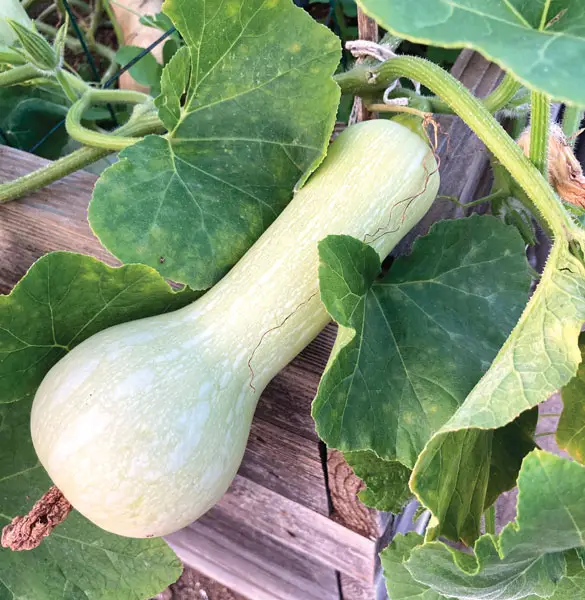
It feels like fall. The air is clear and fresh, and we can stop complaining about the heat! And finally, finally, we can heat up our stovetops to make soup. This week, I will harvest fall crops such as winter squash, onions and peppers to create my favorite butternut squash soup.
Recap of the past growing season
At the end of each growing season, those of us at the Carlsbad Senior Center community garden survey our crops to notate which have been the most successful. One of the highest-producing crops in our raised beds has been the butternut squash.
When I had the pleasure of attending the horticulture program at SUNY Cobleskill in New York, one of the skills I learned was to record successes and failures in notebooks. As gardeners, we have saved time and money by tracking our crops for the past five years. We conclude that the 20-foot beds we are happy to occupy have allowed the plants to grow over 20 feet and at times fall all the way to the ground.
Notes for next season
Looking back on the season, our observations have been that when butternut squash is planted early in springtime from starter plants, the squash has a higher chance of survival. My students in the Carlsbad Senior Garden Club practice starting our vegetables from seed in 3-inch pots.
In early May, we started seeds indoors, and after three weeks the starter plants were ready to plant in the ground. This head start always gives the slow-growing plants a chance to stabilize much more quickly than simply throwing the seeds in the ground.
The hill is the secret
We have also found that transplanting the squash from the 3-inch pots into mounds allows the leaves to have air space above ground and not be affected during watering. The hill also deters some of the in-ground insects that enjoy chewing on new growth.
Low water promotes healthy growth
This season in the garden has been a difficult one for all with high heat, humidity and little rain. One of our final conclusions is that the butternut squash can withstand periods of extended heat and dryness.
Final harvesting
After three months of growth, the fruit were ready to be harvested during September and October. When grown correctly, one vine can yield as many as 10-20 fruit. Be sure to leave the squash on the vine until they are completely ripe and the stems are dry. Store in a cool place and use in recipes when the skin is completely dark yellow.
We hope that our observations will help you create healthy crops as well!
Curried butternut squash soup
This soup is one that I have created over the years, combining recipes from “The Greens Cookbook,” by Debra Madison, and advice from a local Thai cook.
Ingredients
- One large butternut squash, 3-4 pounds
- 4 cups vegetable or chicken broth
- 1 pint heavy cream or unsweetened coconut milk
- 4 tablespoons Thai red curry paste
- 2 tablespoons dried curry powder
- 2 tablespoons brown sugar
- 2 tablespoons light soy sauce
- Vegetables – Add favorite fresh vegetables such as red peppers and carrots, diced
- One yellow onion, diced
- 4 dried pasilla or ancho chiles, soaked and seeds removed
- One bunch fresh basil
Directions
- Slice squash in half, remove seeds and place on oiled cookie sheet. Place face down on sheet, add 2 tablespoons water. Poke exterior with fork. Bake at 425 degrees until skin is soft. Scoop out pulp and place in bowl. Mash with potato masher.
- In large enamel soup pot, sauté chopped onion until soft. Add dried chile peppers, Thai curry paste and dried curry powder. Incorporate into dry sauté. Add soy sauce and brown sugar. Sauté carrots and red peppers in mix.
- Add cooked squash to pot and 3 cups stock to create thick soup. Bring to light boil, and simmer mixture for a half-hour to an hour.
- Continue to mash mixture to desired consistency.
- Taste mixture for salt and additional curry paste. Add coconut milk or cream before serving.
- Serve with Indian naan bread. Keeps refrigerated for 3-4 days.
Jano Nightingale is a horticulturist and Master Gardener who loves to cook with fall vegetables! Contact her at [email protected] for upcoming classes.