SAN MARCOS — There seems to be no shortage of martial arts studios teaching different schools of self-defense using hands, feet, elbows and knees. Numerous indoor and outdoor shooting ranges also let people improve and maintain their firearm proficiency.
But United Defense Tactical is carving out a space for itself by combining the two approaches, offering classes in both firearms and martial arts.
As Andre Wolfe, an instructor at the San Marcos franchise, which opened earlier this year, pointed out, a person might rely on a firearm for protection and have an opponent disarm them or the gun malfunction.
“Now what?”
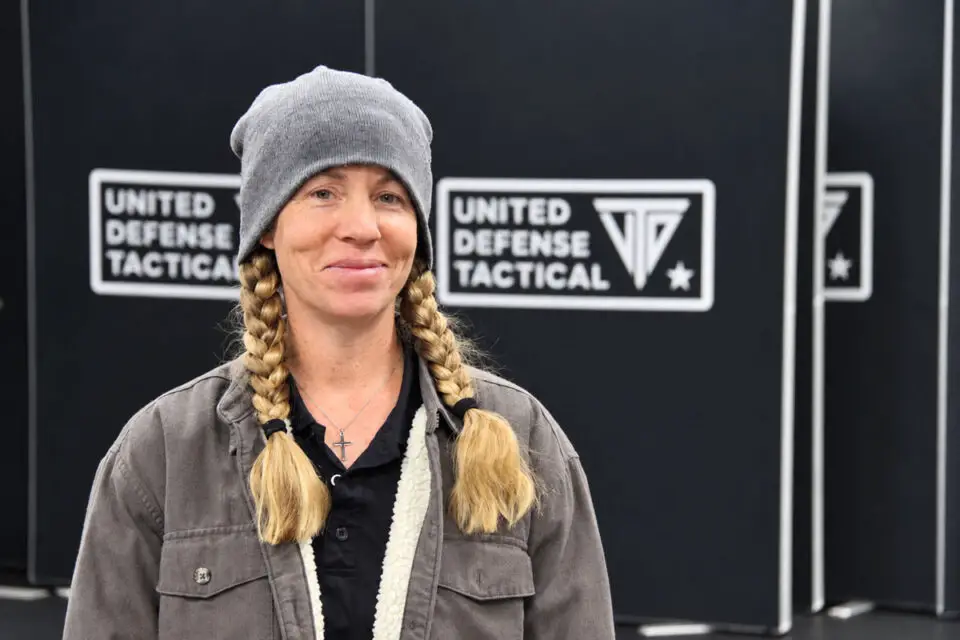
By combining firearms training with martial arts, participants can better protect themselves and their loved ones in a wider range of situations, franchise co-owner and general manager Sonya Hatch explained.
The firearms training — which includes no actual firearms, but instead uses laser simulators and air guns — focuses not only on marksmanship but also on how to move in different spaces to maximize personal safety.
Hatch described it as “reality-based training.” Instructors review how to safely carry a gun while moving and how to use cover and movement to maximize survival. Classes put members through both video simulations and unscripted scenarios with staff portraying bad guys.
Located in a former dance studio, the facility’s large rooms have been repurposed with movable walls and other objects that create a variety of layouts where members can learn how to defend their homes from a burglar or other invader.
Members can also use weight-training equipment in the martial arts studio when no classes are in session.
But more important than fighting is avoiding it in the first place. Hatch said some of the most important training offered involves situational awareness and de-escalation.
“It might be as simple as seeing something that seems off, and moving away from it,” she explained.
The facility also offers classes covering the legal framework for self-defense in the home, as well as state law regarding concealed carry permits.
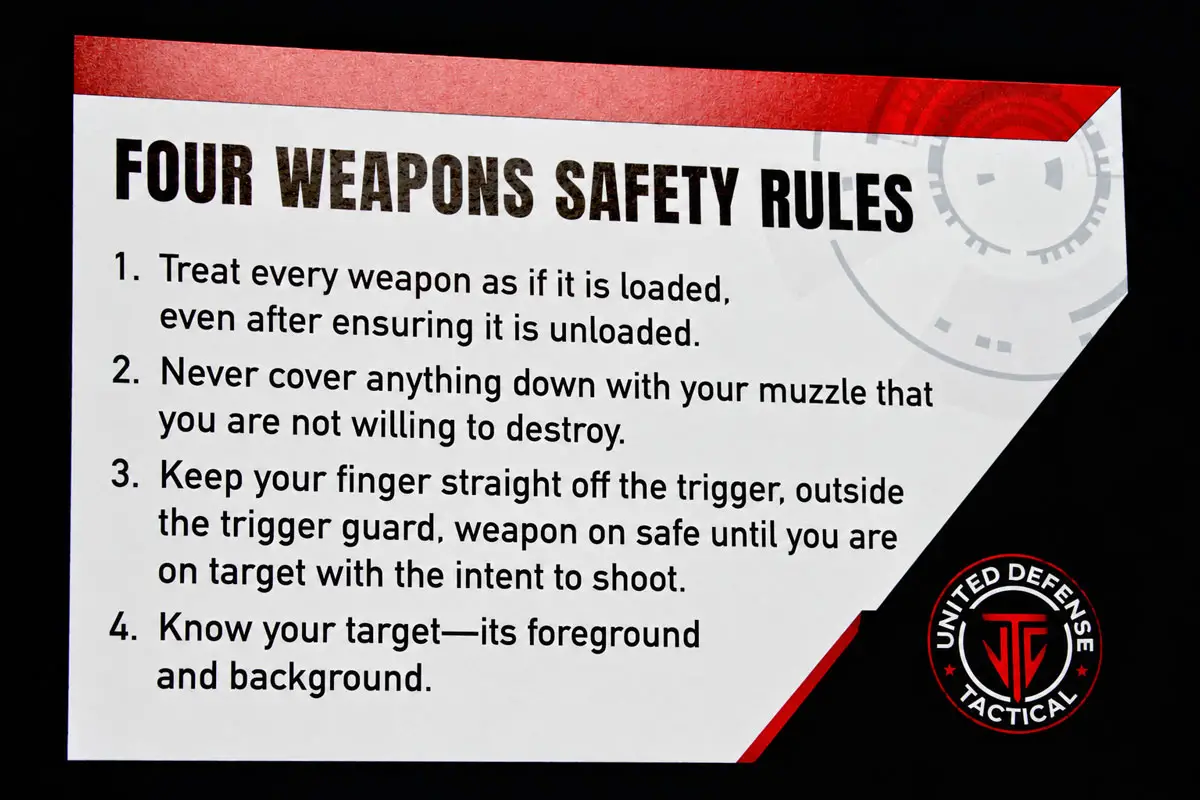
Wolfe, who served as an infantryman for four years in the Army and then did a second stint in human resources, said every class follows fundamental firearms safety rules: Goggles are always worn, even when using nonprojectile simulators. Students are also required to treat every gun as if it is loaded, even those that physically can’t be loaded.
In addition to the laser simulators and air guns, dummy guns can be disassembled and cleaned like a real gun but cannot fire a round. They use these to teach students how to quickly clear a jammed gun in a tense situation.
A portion of the parking lot can also be roped off on weekends to provide defensive driving lessons.
Richard Robello said he has been a member since the San Marcos facility opened in April.
“I wanted to be better prepared to defend myself as I get older,” he said.
Robello said he comes in one to two times a week — more when his work schedule allows.
Tamara Stapleton has her own firearms instruction business but is a member at UDT to keep her marksmanship skills sharp. While air guns and laser simulators don’t provide the same tactile feedback as shooting a firearm, she said time on the range is still an important part of her training. Stapleton also pointed out that laser and air gun range time doesn’t incur the ammunition costs of live-fire range time.
She’s a member of the “Green Team,” the second tier of the firearms training program, which Hatch said is comparable to the more familiar “belt” system of skill advancement in martial arts.
“Everyone starts at the white level,” Hatch said, including even experienced professionals like Stapleton or active military and law enforcement personnel.
Hatch and her husband, Marcus, had been members of the original UDT studio in Costa Mesa before deciding to open their own franchise, one of roughly two dozen spread across the country. It is currently the only location in San Diego County. She said a majority of their San Marcos members are women.