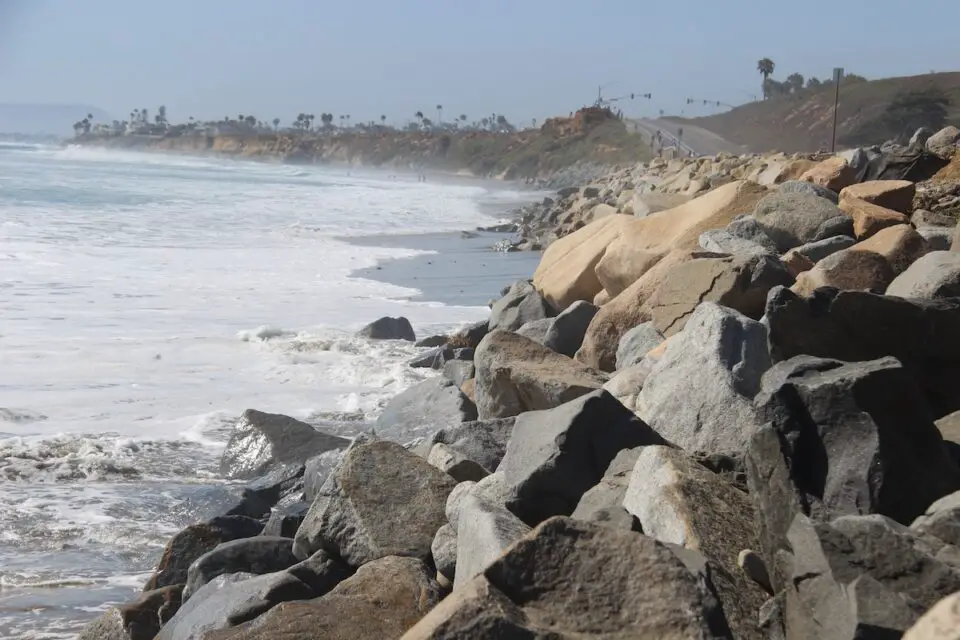
CARLSBAD — The City of Carlsbad will need a full California Coastal Commission review to extend a permit for a rock revetment along Carlsbad Boulevard, after administrative approval of a temporary extension drew objections from commissioners.
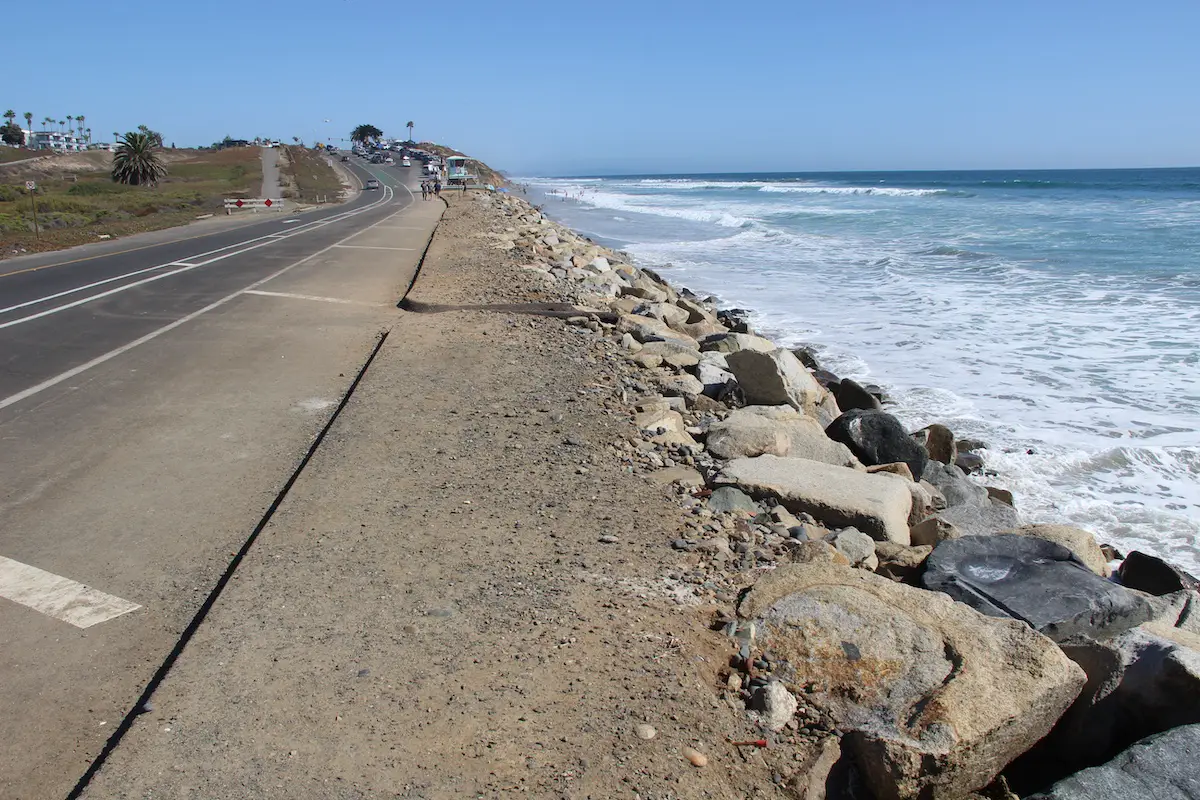
The hearing will concern a rock barrier protecting the coastal portion of southbound Carlsbad Boulevard from the Pacific Ocean. The city originally received a temporary permit in 2018 for the 530-foot stretch that straddles Encinas Creek, according to state records. The original permit expired in 2024.
San Diego Coast District Deputy Director Karl Schwing of the California Coastal Commission later determined that extending the permit by seven years, through 2031, represented an “immaterial” change and therefore would not require a full commission review.
However, the Surfrider Foundation objected, arguing that the city had not made sufficient progress toward a permanent solution and should not receive a seven-year extension without full commission review.
After more than three commissioners objected to the administrative designation during the July 9 meeting, the item was referred to the full commission for review at a future meeting. As of July 27, the item was not listed on any of the commission’s three August meeting agendas.
Arguments for extension
At the July 9 meeting, Schwing said much of his decision was based on the fact that the extension would not authorize new construction or modify any of the permit’s conditions.
He said that while “staff agrees that progress on a long-term solution has taken longer than originally anticipated,” the timeline was extended to “allow the city to obtain the funding necessary to go from feasibility level analysis to full project development.”
Schwing added that the city has already completed some of the technical studies needed to develop a long-term plan for the roadway, including cliff-erosion assessments and habitat-restoration analyses for Las Encinas Creek.
“Although the city’s made measurable progress toward meeting the requirements [of] the permit, it has not yet secured funding necessary to advance the project to final design, environmental review and preparation of the CDP application which is required under the original permit,” he said. “The seven-year extension therefore provides sufficient time for both to secure funding and to complete the required technical work before the revetment authorization expires in 2031.”
Tom Frank, Carlsbad’s transportation director and city engineer, said he is well aware of the issues along that stretch of roadway because he drives it every day after work.
“The city realizes that this is a priority project,” he said.
Frank said the city has spent decades evaluating options and developed a plan to move the southbound lanes alongside the northbound lanes farther inland, but the project is estimated to cost $280 million.
According to Frank, the city is “very well aware of the hotspots that we need to monitor” regarding erosion and thanked Surfrider for its feedback as the city works toward a permanent solution.
“While the city is responsible with their finances, there’s a lot of different responsibilities that the city needs to budget for, and we don’t have that type of money to move this project forward at this time,” he said.
Brandon Miles, an engineer with the city, said Carlsbad has received California Coastal Conservancy grant funding since 2020 and retained a consultant for the project.
Miles said the city routinely monitors the area for signs of erosion and that “monitoring shows only minor movement.”
He added that the city has completed a 30% roadway design for the concept described by Frank and has submitted seven grant applications for the project.
A city spokesperson told The Coast News on July 23 that Carlsbad had no updates on identifying a funding source but was “still actively applying for grants” to cover project costs.
Arguments for commission review
Mitch Silverstein, a policy coordinator with the Surfrider Foundation, said the issue was about city priorities rather than funding.
“I live in Carlsbad and know this stretch well,” Silverstein said. “This revetment protects a road with no viable future. A road that must and can be realigned out of harm’s way.”
He added that city staff made significant progress toward a long-term solution between 2020 and 2024, but that work had stalled since then.
Silverstein, who also shared photos of rocks and debris on the roadway following a recent swell, said he supports moving the roadway inland to combine the northbound and southbound lanes because it would “free up all that space for a natural beach resilient to 6.5 feet of sea level rise.”
Kathleen Steindlberger, a Carlsbad resident and former chair of the city’s Beach Preservation Commission, said delaying the timeline “would have adverse impacts on coastal resources, public access and recreation.”
She echoed Silverstein’s concerns that the project had made no visible progress since 2024, which she said was especially concerning given expected winter weather.
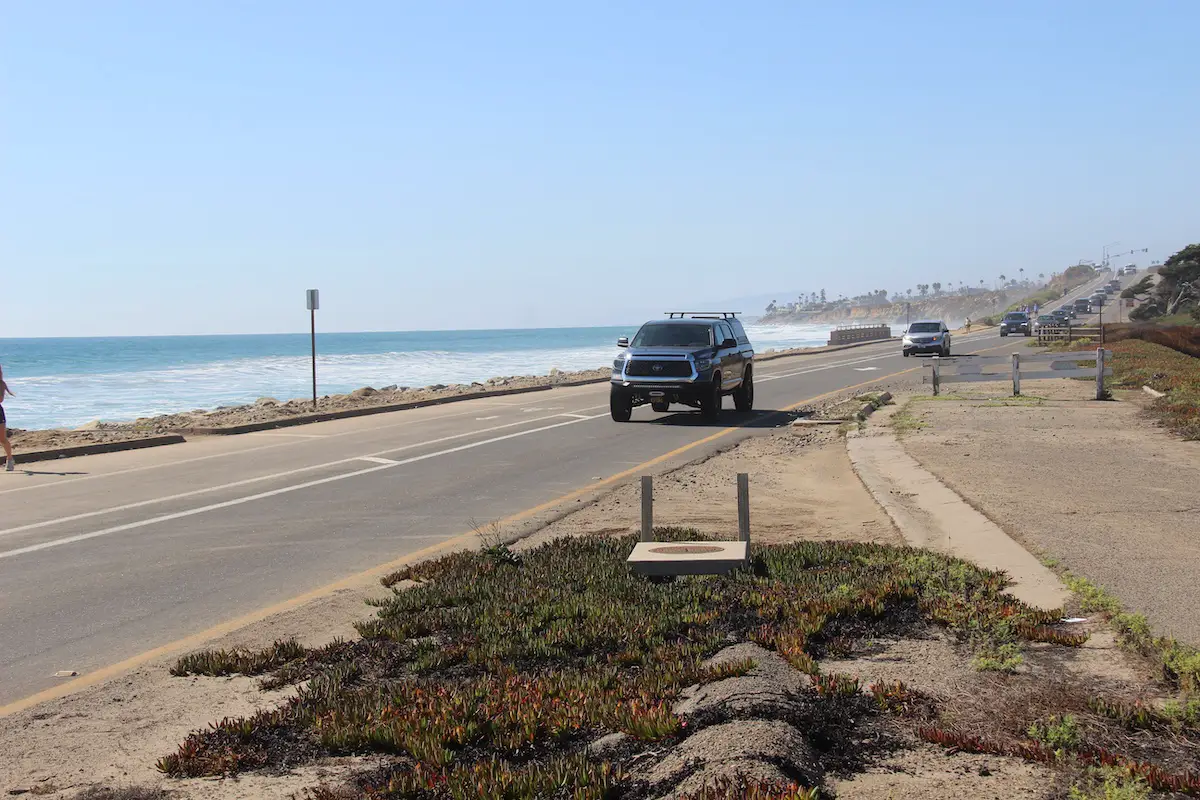
“Further storm-induced erosion and damage along this highway is foreseen, not unforeseen,” Steindlberger said. “This stretch of road already overtops during king tides and large swells at high tide. Forecasts of another El Nino this winter raise the realistic prospect of further bluff failures, road closures and potential additional emergency permit requests for more rock revetment along this stretch of Carlsbad Boulevard.”
Commissioner Matt O’Malley was the first to object to classifying the seven-year extension as an “immaterial” change to the original permit.
Commissioner Susan Lowenberg said the commission should continue looking for ways to “keep pushing” Carlsbad to complete the project in a timely manner.
“I just think seven years is too long,” Lowenberg said.
Ultimately, six commissioners objected to handling the matter administratively, more than the three objections needed to require a full Coastal Commission review.
Related Articles:
- Carlsbad declares local emergency over coastal bluff erosion September 11, 2026
- Encinitas cyclists, officials reignite debate over… April 30, 2025
- Nine illegal private beach stairways to be removed… October 23, 2023
- Vista council passes resolution affirming due process rights November 20, 2025
- Hundreds of new homes test rural Bonsall February 17, 2026
- Carlsbad weighs options to move boulevard away from… May 3, 2024