
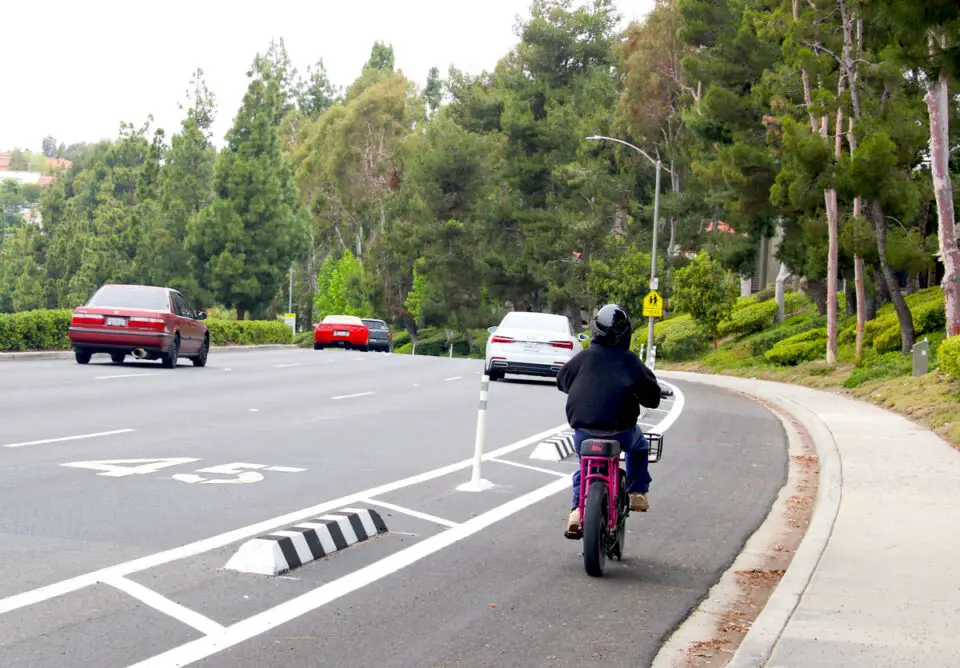
VISTA — All berms recently installed along South Melrose Drive and Sycamore Avenue for a protected bike lane project are being removed, following the Vista City Council’s recent decision to roll back major elements of the project over its last two meetings.
Construction on the protected bike lane project began in March, with the city implementing striping, flexible delineator posts and raised berms to physically separate bike lanes from vehicle lanes. Protected lanes were slated for various streets, including South Melrose, North Melrose, Sycamore Avenue, Vista Village Drive, East Vista Way, East Bobier, North Santa Fe, Taylor Street, Olive Avenue and Longhorn Drive.
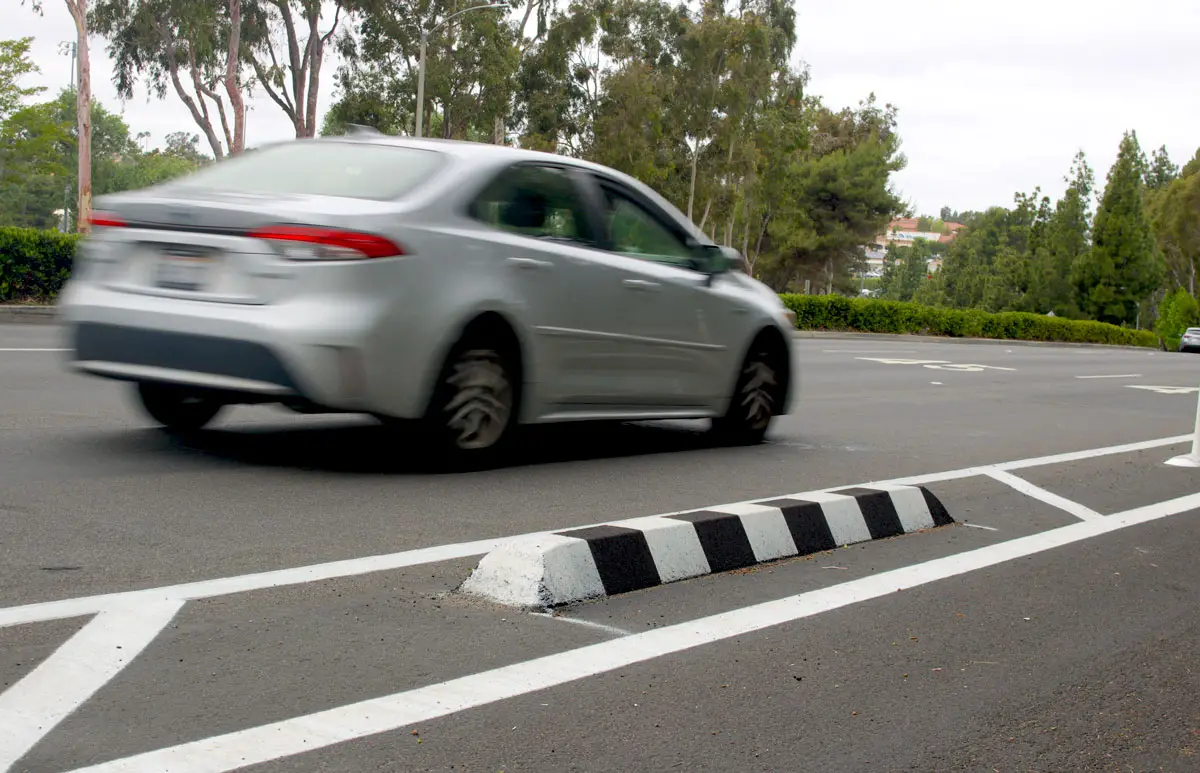
Soon after construction began, some residents in District 4 started to complain about the berms, particularly along South Melrose Drive. Drivers reported that when the berms were first installed, they were not painted or striped, which made them difficult for drivers to see and resulted in some accidents.
Others shared concerns about berms preventing cars from being able to pull off the shoulder in the event of an accident, as well as potential limitations to emergency vehicle access.
The city began rolling back portions of the project in late May, after a council majority decided to remove berms installed along a portion of South Melrose Drive between Shadowridge Drive and Faraday Avenue. All progress on the project was stopped at that point while the city awaited further direction.
In another meeting on June 24, the council voted 3-2 to remove all the remaining berms along South Melrose and Sycamore Avenue. Councilmember Dan O’Donnell, who brought forward the motion to remove the berms at both meetings, said he made his decision after speaking at length with residents, public safety officials, EDCO, the San Diego Bike Coalition, and traffic engineers.

“When I tell you that I have taken the time to make this decision that I have made, I really have. I’ve been diligent and I’ve tried to weigh not just community feedback, but the expert opinion,” O’Donnell said. “I don’t think there are flaws in the design. There are flaws in the rollout, and that is the fault of the council.”
The council majority also agreed to pause all work on the protected bike lanes on East Vista Way, except for striping, until after the installation of a raised median between Williamston Street and Taylor Street.
City staff said that the median project, funded by a $2.6 million Highway Safety Improvement Program grant, is expected to be completed in 2028, which will delay the installation of berms or delineators in the area for at least a few years.
These retroactive removals are expected to cost the city an estimated $270,000, according to Principal Engineer Matthew Atteberry. However, this will be offset by the $140,000 that the city will save by pausing work on East Vista Way, he said.
Berm removal on South Melrose and Sycamore will take place in mid-July, Atteberry said.
Both berms and delineators will be removed between Sunset Drive and Hacienda Drive along South Melrose. Delineators will remain in place from Sunset Drive to the city’s southern limit, with the exception of a 575-foot segment near Green Oak Road, as well as on Sycamore.
“The delineators still make it a protected bike lane, it’s just not as protected as if it had berms,” Atteberry said.
Councilmembers Corinna Contreras and Katie Melendez opposed removing additional berms on June 24, noting that the specific areas being considered for removal were not specified in the council agenda beforehand.
Melendez said O’Donnell was proposing the removal of a significant amount of infrastructure. She said while she appreciated his effort to speak with experts like first responders, she would have preferred to have them share their input with the rest of the council and the public as well.
“I think it is a little bit extreme to conduct a removal without some experts being available to provide us perspective, from city staff in particular,” Melendez said. “To support these items, we’re gonna need more robust conversations. We have multiple departments that could speak to this, none of which we’ve heard from tonight.”
Contreras questioned whether the rest of the council is truly committed to making streets safer for all residents.
“I think it’s really important that we maintain safety for all users on our roads,” Contreras said. “I’m not for going backwards on progress and safety on our roads.”
The decision to remove the berms was also controversial among residents, with several cyclists stating that they feel safer with the new infrastructure in place. While some drivers have complained about cars being damaged due to hitting the berms, some cyclists said that’s kind of the point.
Resident Kenneth Zuniga said he feels more secure biking through District 4 with the new lanes, and has seen cars slowing down as well since the berms were installed.
“I strongly urge this council to continue to maintain protected bike lanes, especially in District 4, where I live. I have used them daily since they were installed, and I’ve seen tangible improvements,” Zuniga said.
Resident Michelle Gonzalez is a bike commuter in Vista whose sister was struck and killed while riding a bike in 2023 in New Jersey, on a street where there were no protected bike lanes. Gonzalez said these lanes can mean the difference between life and death for cyclists.
“Removing existing infrastructure that protects more vulnerable transportation users would be a waste of taxpayer dollars, and will result in dead people. If you don’t want any of your constituents to die, you will keep and maintain the Vista bikeways and infrastructure that encourages safe and sustainable transportation,” Gonzalez said.
O’Donnell acknowledged that more people have felt safe since the protected lanes were installed. However, he said more stakeholders should have been involved earlier in the process to prevent issues, and noted that the city has already had to remove some of the berms and delineators due to unique circumstances on certain roads.
For example, berms have already been removed in front of Breeze Hill Elementary School due to complaints from the school about buses being unable to park in their usual areas. Along another part of South Melrose, delineators had to be removed on the residential side of the street as they prevented buses from picking up a special needs child, O’Donnell said.
O’Donnell also said there have been concerns about the berms preventing mail carriers, trash collectors with EDCO, and first responders from being able to pull over and access the areas they need to.
“I was trying to weigh the totality of all of that information and maintain some of the protection, while alleviating some of the safety concerns,” O’Donnell told The Coast News.
He added that individual council members know their districts best, which is why he recommended removing only the berms in District 4. The district also has different topography than other parts of the city, he said, with steep hills where cyclists tend to gain speed and could be severely injured if they hit a berm.
Mayor John Franklin and Councilmember Jeff Fox supported pausing the project throughout the whole city, which other council members did not support.
“I am for the reduction, although I wish we were taking them all out,” Franklin said.
Along with protected bike lanes, the city is adding painted green bike lanes to intersections along certain portions of West Bobier Drive, West Vista Way, South Santa Fe Avenue, Civic Center Drive, Live Oak Road, Lupine Hills Drive, Shadowridge Drive and Business Park Drive.


