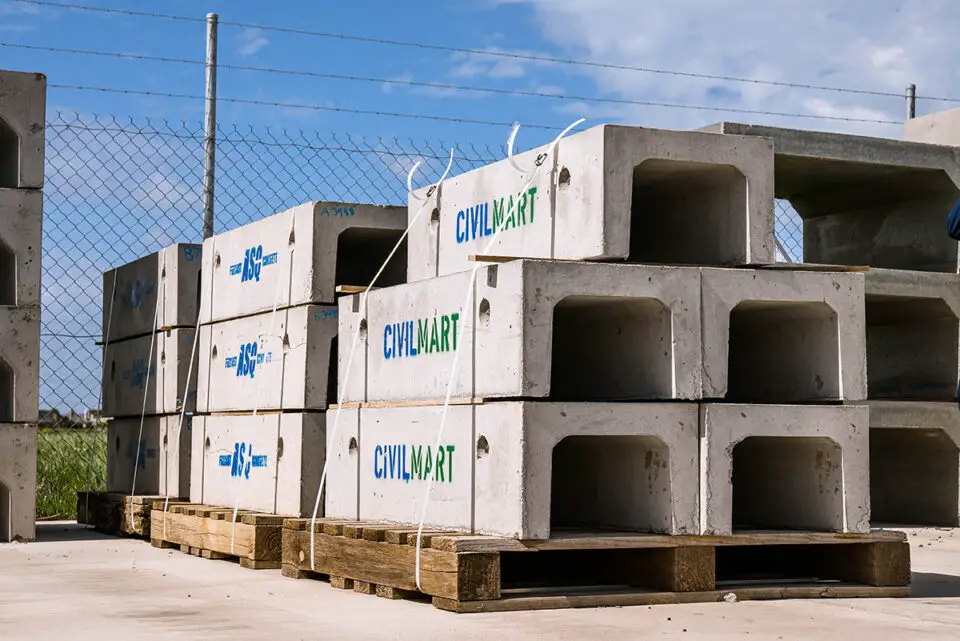
Small concrete box culverts play an important role in modern infrastructure projects, even though they often go unnoticed. These compact drainage structures help manage water flow beneath roads, driveways, pathways, rail lines, and other built environments. Their strength, durability, and versatility make them a popular choice for civil construction, landscaping, agricultural projects, and stormwater management.
Whether supporting a residential development, a rural access road, or a commercial construction project, small concrete box culverts provide a practical solution for controlling water movement and protecting infrastructure from erosion and flooding.
What are small concrete box culverts?
A small concrete box culvert is a reinforced concrete structure with a rectangular or square-shaped opening designed to allow water to pass underneath an obstacle such as a road, embankment, or pathway. Unlike round pipes, box culverts provide a wider flow area and can accommodate varying water volumes while maintaining structural strength.
These culverts are commonly manufactured as precast units, allowing them to be transported to a site and installed efficiently. Their modular design makes them suitable for projects where speed and reliability are important considerations.
Why small concrete box culverts are widely used
Effective stormwater management
One of the primary functions of small box culverts is managing stormwater runoff. By directing water beneath roads and other structures, they help prevent water accumulation that could otherwise lead to flooding, property damage, or unsafe conditions.
In urban and suburban developments, proper drainage is essential for maintaining road safety and protecting surrounding infrastructure.
Strong structural performance
Concrete is known for its ability to withstand significant loads and environmental pressures. Small concrete box culverts can support traffic loads from vehicles, machinery, and equipment while continuing to provide reliable water flow beneath the structure.
This combination of hydraulic capacity and structural strength makes them suitable for a wide range of applications.
Long service life
Infrastructure projects often require solutions that will perform for decades. Reinforced concrete offers excellent durability and resistance to weathering, making box culverts a long-term investment. With proper installation and maintenance, they can provide reliable performance for many years.
Common applications for small concrete box culverts
1. Residential developments
Housing developments frequently use small box culverts to manage stormwater and maintain drainage channels beneath access roads and driveways. They help ensure that natural water flow is preserved while allowing safe vehicle access.
- Rural and agricultural properties
Farm roads, access tracks, and irrigation systems often require culverts to transport water safely beneath crossings. Small concrete box culverts provide a durable solution capable of handling varying water levels and heavy agricultural equipment.
- Road and driveway crossings
Many local roads and private driveways cross drainage channels or small waterways. Box culverts allow traffic to pass safely while maintaining uninterrupted water flow below.
- Commercial and industrial sites
Commercial facilities often require effective drainage systems to manage runoff from large paved surfaces. Small box culverts can be incorporated into site drainage designs to protect buildings, parking areas, and surrounding infrastructure.
- Landscaping and environmental projects
Box culverts can also support environmental and landscaping initiatives by directing water through parks, recreational areas, and restoration projects while minimizing disruption to natural drainage patterns.
Key benefits of small concrete box culverts
Efficient water flow
The rectangular design of a box culvert allows water to move efficiently through the structure. This shape can often provide greater flow capacity compared to some alternative drainage options of similar size.
Versatile design options
Small box culverts are available in various dimensions to suit different project requirements. Their flexibility allows engineers and contractors to select a size that matches expected water flow and site conditions.
Reduced maintenance requirements
Concrete structures generally require less ongoing maintenance than some other drainage solutions. Their resistance to corrosion, weather exposure, and heavy loading contributes to lower lifecycle costs.
Faster installation
Precast concrete units can often be installed more quickly than structures built entirely on-site. This can reduce construction timelines and minimize disruption to nearby roads, businesses, or residents.
Factors to consider before installation
Site conditions
Every project site is unique. Soil characteristics, groundwater levels, drainage patterns, and surrounding infrastructure should all be evaluated before selecting a culvert solution.
Water flow requirements
Accurately estimating water volumes is critical. An undersized culvert may struggle during heavy rainfall events, while an oversized structure may increase project costs unnecessarily. Proper hydraulic design helps ensure effective performance.
Load requirements
The intended use of the area above the culvert influences design requirements. A culvert beneath a pedestrian pathway may require different specifications than one supporting a busy roadway or industrial facility.
Future growth and development
When planning drainage infrastructure, it is often wise to consider future land use changes. Expanding developments or increased surface runoff may affect long-term drainage needs.
Conclusion
Small concrete box culverts are an essential component of modern drainage and infrastructure systems. Their ability to manage water flow, support heavy loads, and provide long-lasting performance makes them a valuable solution for residential, commercial, agricultural, and civil construction projects.
By understanding their applications, benefits, and design considerations, project planners can make informed decisions that support effective drainage, protect infrastructure, and contribute to the long-term success of construction projects. Whether used beneath a driveway, local road, or larger development, small concrete box culverts continue to play a vital role in creating safer and more resilient infrastructure.