OCEANSIDE — The City Council recently approved modifications to its downtown density cap and inclusionary housing requirements, as recommended by the California Coastal Commission, and adopted a phased plan to comply with Senate Bill 79, a state law designed to boost housing production near transit.
The council’s actions finalized previously approved housing policies and established a roadmap for complying with new state housing mandates that could affect future development throughout the city.
The Oceanside City Council first established an 86-dwelling-unit-per-acre maximum in the downtown zoning district in October 2023. In January 2024, the council then voted to increase the city’s inclusionary housing requirement from 10% to 15%, requiring residential developers to designate at least 15% of proposed units as affordable housing.
At the time, the inclusionary housing amendment applied citywide except in the coastal zone, which required approval from the California Coastal Commission.
The Coastal Commission approved both the downtown density cap and the inclusionary housing amendments in February, but included several recommended modifications for the city to consider.
Under the downtown density cap, the modifications add language clarifying that 86 dwelling units per acre is the maximum base density, exclusive of any density bonus units. The revisions also clarify that, while the downtown area has a target cap of 5,500 units, the cap may still be exceeded.
The suggested changes to the inclusionary housing amendment include:
- Lowering the threshold for applicability from projects with 10 or more units to projects with seven or more units.
- Adding the state’s new “acutely low-income” category, which includes households earning up to 15% of the area median income.
- Clarifying that affordable units must remain affordable for a minimum of 55 years, rather than establishing a maximum term.
- Clarifying that accessory dwelling units may be used to satisfy inclusionary housing requirements for residential developments regardless of whether they are single-family or multifamily projects.
“This has been a long time coming,” Deputy Mayor Eric Joyce said at the June 3 council meeting.
While supportive of the changes, Joyce said he was disappointed they were not applied to the coastal zone sooner.
“It’s unfortunate that we have adopted this now after we’ve approved thousands of units,” Joyce said. “We’ve lost hundreds of affordable homes that we could have included.”
The City Council also approved a phased approach to implementing Senate Bill 79, a new state law intended to increase housing production through transit-oriented development. The law permits low- and mid-rise housing on sites within one-half mile of designated major transit stops, overriding certain local zoning restrictions.
Metropolitan planning organizations, such as the San Diego Association of Governments, are required to publish maps that identify officially designated transit-oriented development stops. Because SANDAG has not yet published such a map, Oceanside created its own for planning purposes.
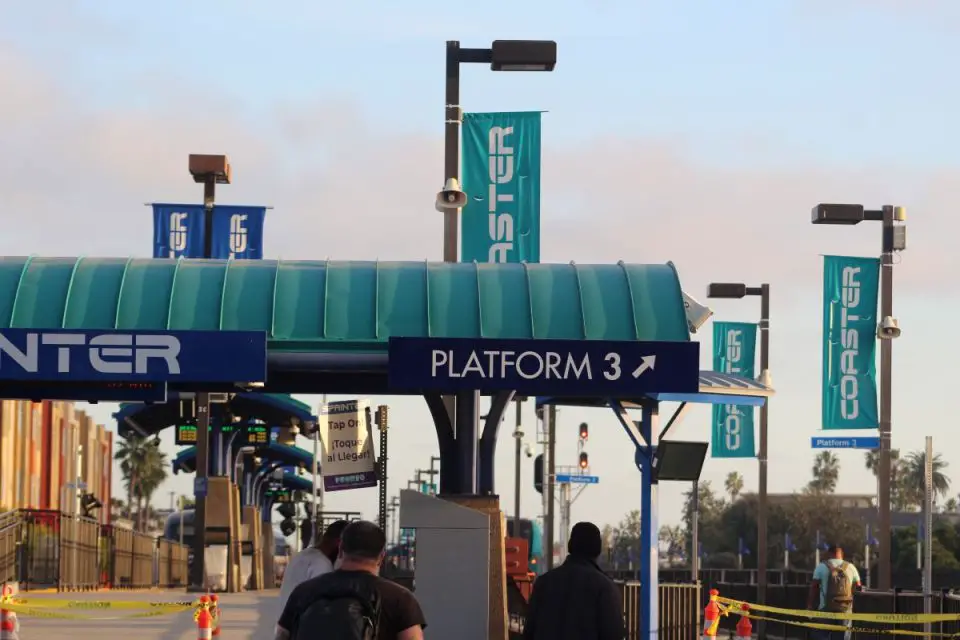
According to staff’s map, the city contains seven potential transit-oriented development zones, each centered around a Sprinter station: the Oceanside Transit Center, Coast Highway, Crouch Street, El Camino Real, Rancho Del Oro, College Boulevard and Melrose Drive stations.
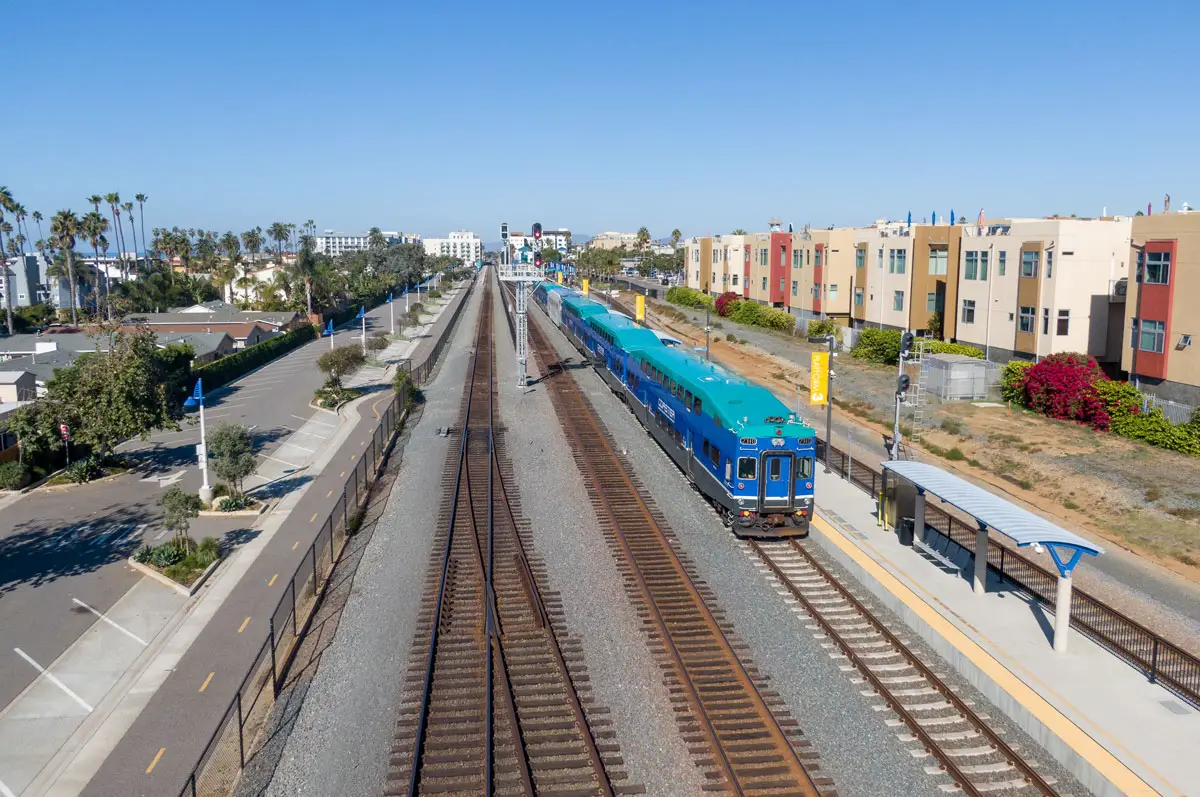
Senate Bill 79, authored by Sen. Scott Wiener, D-San Francisco, was signed by Gov. Gavin Newsom last year and takes effect July 1 in counties with at least 15 passenger rail stations, including San Diego County. The law allows denser multifamily housing near qualifying transit stops and has drawn criticism from Oceanside and other North County cities that argue it weakens local control over land-use decisions.
The law allows local governments, through a local phasing ordinance, to exempt or defer implementation at sites that meet certain criteria. As part of that process, cities must identify sites that are ineligible, exemptible or eligible for deferral under the law.
Ineligible sites include properties located more than one-half mile from a transit-oriented development stop; sites that do not permit residential, mixed-use or commercial uses; properties containing more than two housing units where implementation would require demolition of housing subject to rent or price controls; sites containing wetlands, including a 100-foot buffer; and properties identified in the city’s Vital and Sustainable Resources Element as habitat preserves.
Sites eligible for deferral until 2032 include properties that already permit at least 50% of the density and floor-area ratio allowed under Senate Bill 79; sites within transit-oriented development zones designated as low-resource areas that already allow at least 40% of the aggregate density permitted under the law; properties located within a very high fire hazard severity zone or state responsibility area; sites containing locally designated historic resources; and properties vulnerable to one foot of sea-level rise.
Exemptible sites include properties that lack a pedestrian path of travel along a continuous paved segment within one mile of a transit-oriented development stop.
Mayor Esther Sanchez praised staff’s work but acknowledged that, while adoption of the item was necessary, she was not enthusiastic about the mandate itself.
“If we did nothing, we would have more than doubled our population,” Sanchez said. “I don’t think anybody likes it. I think this is very unfair.”