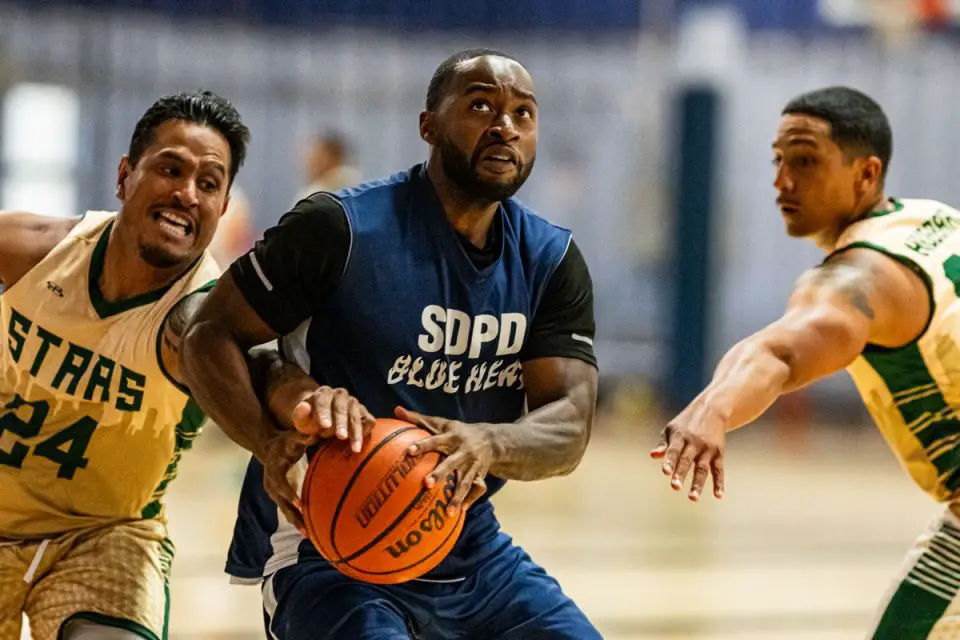
North County will host multiple events during the 59th annual United States Police & Fire Championships, which run June 13-20 across San Diego County.
Mountain biking, cycling and disc golf competitions will take place in Escondido as thousands of first responders from around the country gather to compete in 40 Olympic-style sports. According to California Police Athletic Federation President Jim King, more than 2,700 athletes had registered as of late May, with participation expected to approach 3,000 competitors by the start of the games.
King said participation from San Diego County agencies has increased this year, particularly among larger departments such as police, sheriff’s and fire agencies, which tend to have stronger representation in team sports, track and field and swimming.
San Diego’s larger agencies, he said, naturally generate higher turnout because of their size, though smaller departments continue to produce competitive athletes across multiple events.
“We’ve seen San Diego Police, the Sheriff’s Department and Cal Fire really do well,” King told The Coast News. “They’re showing up in the bigger team sports, but also in track and field and swimming. That’s not surprising because they’re the largest agencies by number, so you would expect that kind of turnout. But some of the smaller departments have really, really good athletes too — they’re very competitive and make it a lot of fun.”
While competitors will travel from across the country, King said that larger agencies, such as the Los Angeles Police Department, traditionally field some of the strongest contingents because of their extensive sports programs and intramural leagues.
“LAPD has always been really, really strong in supporting our games,” King said. “They’re involved in the relay races, soccer, basketball and a lot of those sports.”
Beyond the competition, King said the championships provide a chance for first responders to connect with colleagues from other agencies while giving host communities an economic boost through hotel stays, dining and tourism spending.
“The outlet that we provide for our public safety folks is really important,” King said. “We hear that from them.”
Salk neuroscientist studies World Cup players
When Egypt returns to the World Cup on June 11, Salk Institute associate professor Eiman Azim will be watching as both a fan and a neuroscientist studying how elite players move before they know they’re going to move.
Azim, whose lab at the Salk Institute for Biological Studies in La Jolla studies how the brain and spinal cord control movement, said the difference at the highest level of soccer is not just speed or skill, but prediction — and how that prediction is constantly updated.
“At any given moment on the field, players aren’t just reacting; their brains are actively predicting the future,” he said.
That system is necessary, Azim said, because the brain is always working with delayed information. Sensory signals from the body take time to arrive, meaning real-time feedback is already outdated by the time it is processed.
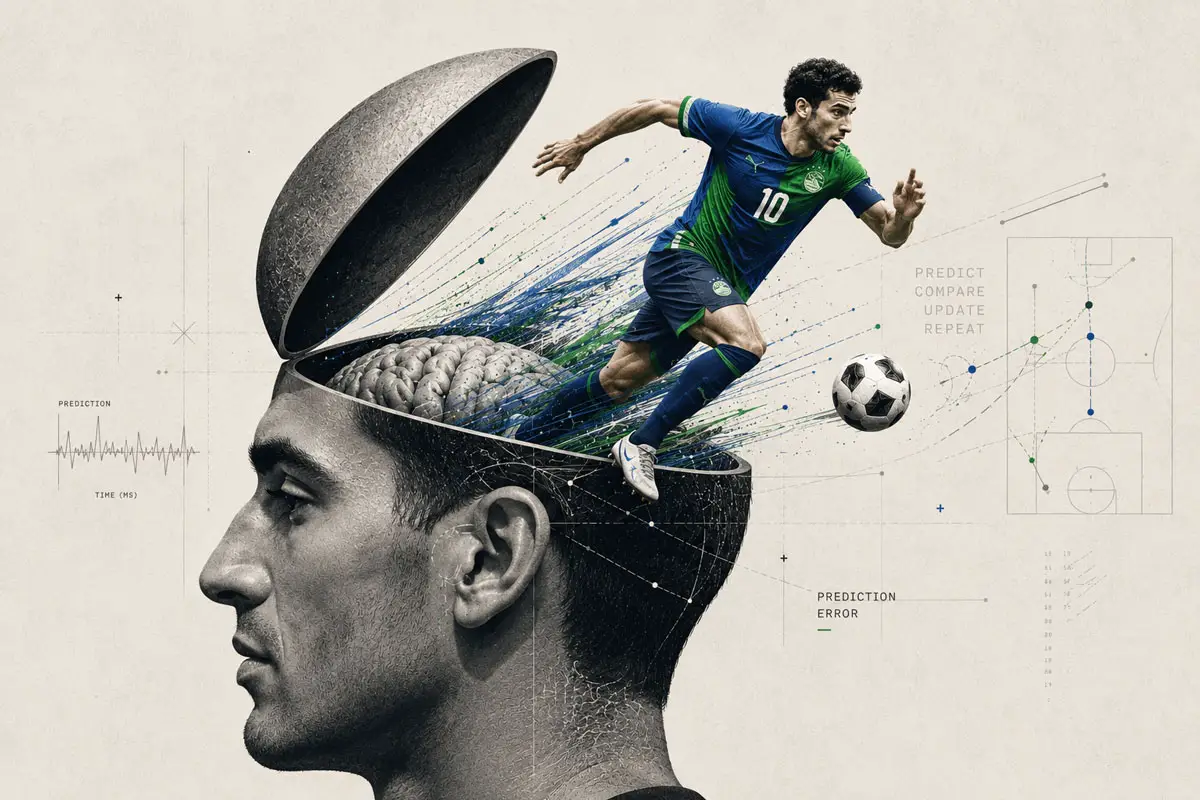
“All of these sensory systems are delayed,” he said. “By the time the brain registers what just happened, that information is already outdated.”
To keep up, the brain builds internal models that simulate what the body and environment will do next. When those predictions are wrong, the brain updates them through what Azim described as a continuous prediction-error loop — comparing what was expected with what actually happened.
Learning, he said, happens in two ways. One is explicit, where athletes consciously adjust after mistakes. The other is implicit, a subconscious system that automatically updates those internal models without awareness.
“That mismatch between what you predicted and what actually happened — those are errors,” he said. “And your brain fixes them all the time without you even being aware of it.”
Central to that process is the cerebellum, a densely packed brain region that helps refine movement through repetition and experience.
“The cerebellum builds a model of your body and how it moves through the world,” Azim said. “Practice makes that model better. Elite players aren’t just reacting faster — they’ve built more precise predictions of what’s about to happen.”
Azim said that the system is running constantly in everyday life — from walking and typing to reaching for a coffee cup — but becomes most visible under World Cup pressure.
“Even just reaching for a coffee cup or kicking a soccer ball, you’re coordinating dozens of muscles without thinking about it,” he said.
He added that stress can sometimes disrupt those finely tuned predictive systems, helping explain why even elite athletes falter in high-pressure moments.
“Something can interfere with those signals,” he said. “And when that happens, even top players can’t perform the way they normally would.”
CSUSM Softball
Two Cal State San Marcos stars earned national recognition following the most successful softball season in program history.
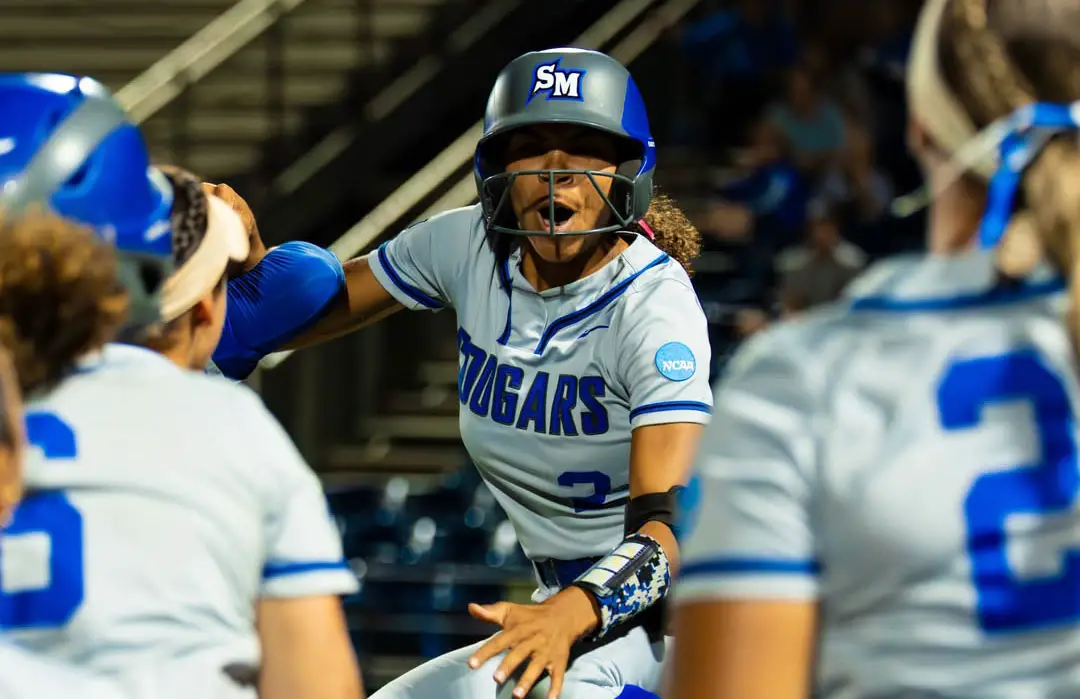
Senior shortstop Jillian Albayati and senior center fielder Czar Fleischman were named to the 2026 NCAA Division II Softball Championship All-Tournament Team after helping lead the Cougars to the national semifinals in Chattanooga, Tennessee. Fleischman hit .400 during the tournament with six hits, five RBIs and a home run, while Albayati batted .333 with three home runs and five RBIs.
The pair, who also helped CSUSM reach the national championship finals site as freshmen in 2023, became just the second and third players in program history to earn all-tournament honors.
Back in March, Cougars head coach AJ Robinson told The Coast News that Albayati — who finished among the nation’s leaders with a .514 batting average, 20 home runs and 82 RBIs — belonged on softball’s Mount Rushmore. “Who’s the greatest hitter of all time? Who’s on that Mount Rushmore?” Robinson asked. “You need to make room for Jill.”