I am a doctoral candidate at UCLA’s Institute of Environment and Sustainability and an expert on transportation decarbonization, with a focus on rail. I am originally from San Diego and care deeply about this region, which I call home.
The Sprinter rail service is struggling, as its trains are facing maintenance issues and nearing the end of their useful lives. For that reason, the North County Transit District will soon need to order new trains for the Sprinter.
The Coast News recently reported that NCTD plans to pilot hydrogen trains for the Sprinter. However, hydrogen is not as great as it seems. Most hydrogen is made from fossil fuels through a process called steam methane reformation, which generates carbon emissions. Hydrogen can also be produced through green electrolysis, but this process requires a significant amount of energy and water.
For some applications, hydrogen is the best available option because better ones are not yet viable. But for trains, there are better choices.
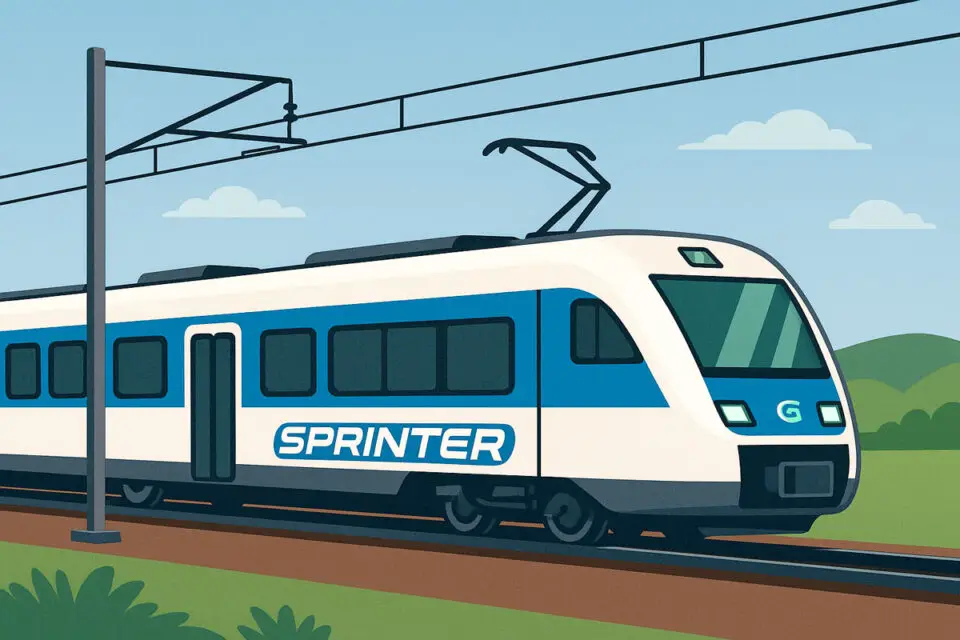
A superior option is electrification. It is far more efficient, economical and environmentally friendly to use electricity directly from overhead wires.
The San Diego Trolley uses overhead wires, as do countless railroads around the world — both large and small. In some countries, entire rail networks are electrified.
Although installing wires incurs an upfront cost, it significantly improves service. Electrification allows trains to run more frequently, with better speed and acceleration, and with less noise and pollution. Railroads that are electrified attract more riders because the service is better.
When Caltrain in the Bay Area electrified its service, ridership increased by 76%. The Sprinter could achieve similar success.
Ridership could grow even more by adding bike parking at stations and creating more space for bikes on trains, allowing people to bike to the station. The SMART train in the Bay Area successfully increased ridership through this strategy.
Electrification would also support the development of dense, walkable communities near Sprinter stations, many of which are surrounded by vacant lots ideal for housing. This could help address the region’s housing crisis and transform North County.
It would also ease traffic along state Route 78, providing commuters with a viable alternative and further reducing emissions from cars — key steps toward a sustainable future.
Now that the state has reauthorized its cap-and-invest system, funds will be available for projects like this that reduce carbon emissions and improve the quality of life.
The Affordable Housing and Sustainable Communities Program also funds housing development near rail stations to address housing shortages and lower emissions.
This program prioritizes housing that cuts the most emissions, so if the Sprinter electrifies, it would be more competitive for those funds — helping North County secure its fair share from Sacramento.
Meanwhile, SANDAG plans to spend hundreds of millions of dollars on highway expansions. If even a fraction of that were used to electrify the Sprinter, it would transform the region by reducing pollution, improving rail service and fostering walkable communities.
North County deserves to have nice things. NCTD can — and should — electrify the Sprinter to build a brighter, cleaner future for this region.
Narayan Gopinathan is a doctoral candidate at the UCLA Institute of Environment and Sustainability.