
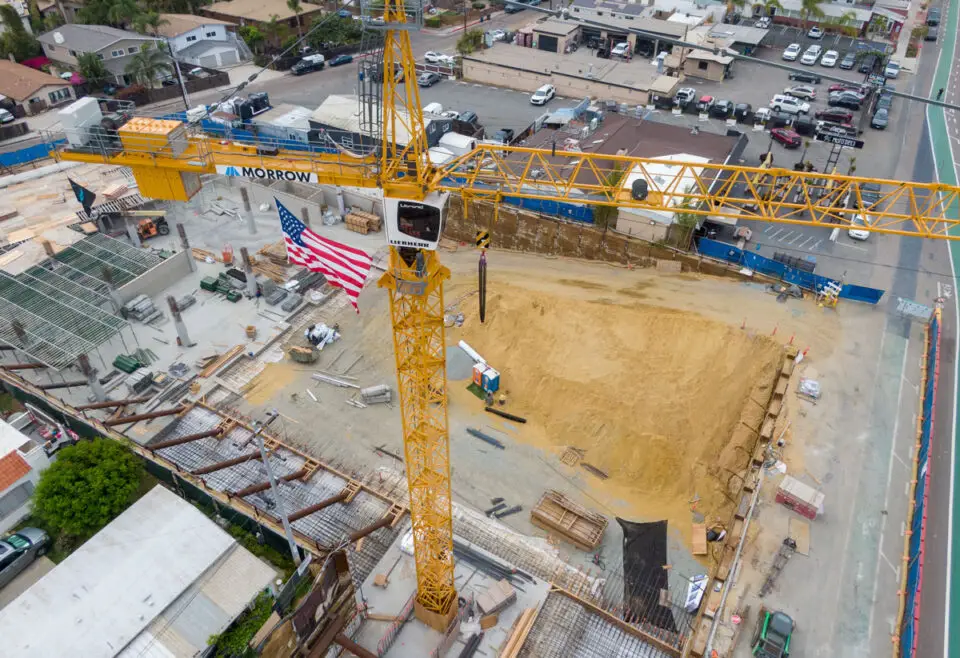
ENCINITAS — Recent analysis by The Coast News found that while three new Encinitas housing developments generated additional property tax revenue, the increase does not appear to offset the estimated cost of providing city services to new residents.
The analysis examined the break-even point between increases in property tax revenue from higher assessed land values and the estimated municipal costs of population growth.
Because there is no direct way to assign police, fire, parks, roadway maintenance and other city services to individual developments, the analysis used Encinitas’ average budgeted spending per resident as a proxy for those costs.
The analysis did not include broader economic effects such as sales tax revenue, permit fees, utility revenues, business activity or long-term economic growth. Nor did it consider factors such as housing demand, community character or other quality-of-life impacts.
Instead, it focused solely on the relationship between property tax revenue and estimated city expenditures.
Edward Erfurt, chief technology officer for Strong Towns, a grassroots urban planning organization, told The Coast News that the group has found cities should seek a ratio of $40 in private development for every $1 of public investment.
“If you have a mile of road that costs a million dollars to build, along that mile of road adjacent to it, you would need to see over forty million dollars worth of private investment at the time that road opened up,” Erfurt said. “And that is not the development pattern we’ve seen for the last eight decades.”
He added that the most financially responsible forms of development involve infill and “thickening up” existing infrastructure with incremental housing and business opportunities that fit local needs.
“It has to start at the most local level and for some communities, even city council is not local enough,” Erfurt said. “Doing it at that local level – that is the only way we can start to rebuild trust and learn how to do this type of incremental bottom-up development again.”
Mayor Bruce Ehlers pointed to the city’s increase in development fees in May — in some cases by more than 500% — as one way the city sought to ensure everyone pays their fair share and that current residents do not end up subsidizing housing for future residents.
“To the city, the question is which is greater: the cost or the taxable income?” Ehlers said. “If the taxable income was greater, then … we’d all be swimming in money and not going back to basics to get basic infrastructure.”
Building benefits
The analysis compared the county’s assessed value of individual properties in Encinitas with the cumulative assessed value of residential properties citywide. Property acreages were identified using city planning documents, while citywide comparisons relied on all residentially zoned parcels in Encinitas’ GIS Data Hub.
The San Diego County Assessor’s Office reevaluates property values as development, inflation and other factors affect land values for tax collection purposes.
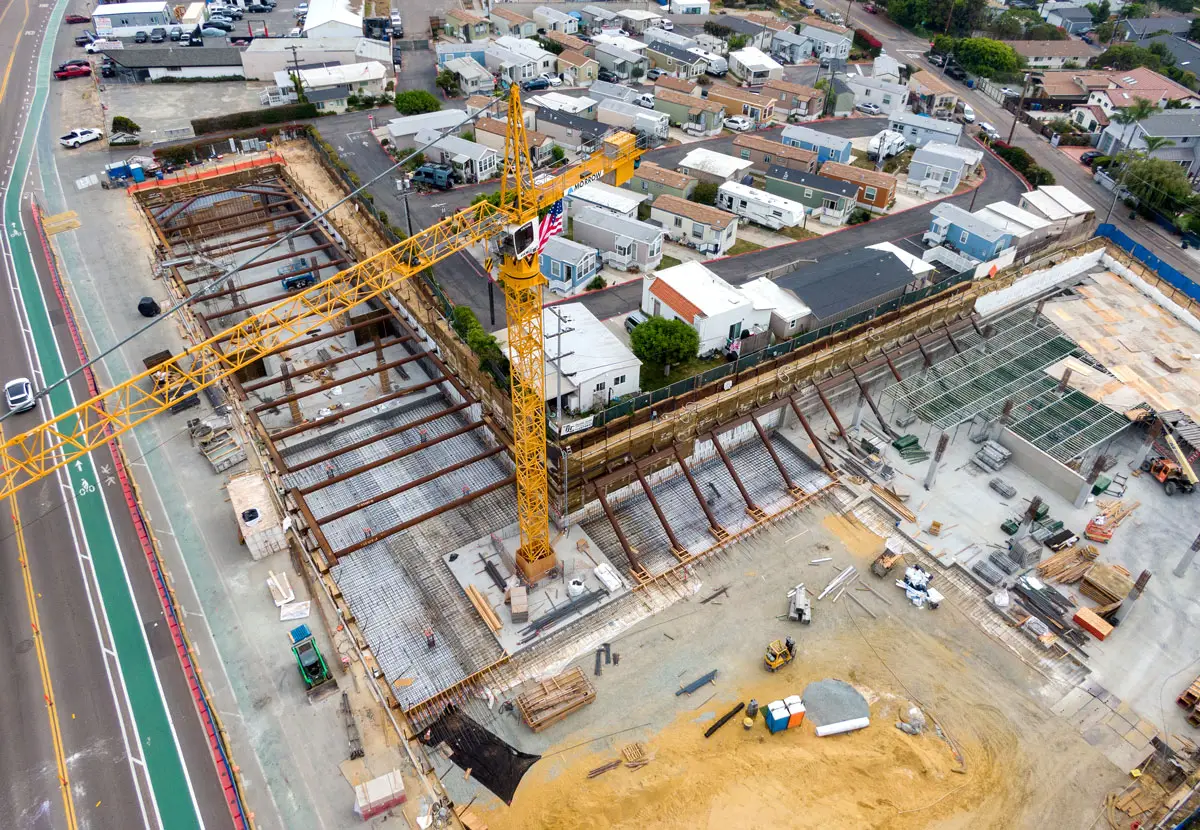
The review focused on three recent developments — Fox Point Farms, The Cove and The Captain — to examine their financial impacts on the city. All three are located along major roadways, which, in theory, could provide economies of scale benefits not captured in this analysis.
The analysis found that each property experienced a substantial increase in assessed value per acre following development.
The City of Encinitas receives most of its revenue from property taxes. In the fiscal year that just ended, property taxes accounted for 63% of the city’s General Fund revenue.
Among all property types, including commercial, industrial and others, approximately 88% of Encinitas’ total taxable assessed value is classified as residential property.
In the fiscal year ending in 2021, the average assessed value of a residential property in Encinitas was $1.18 million per acre.
During that same fiscal year, the 9.9-acre property between La Costa Avenue and the Batiquitos Lagoon near Interstate 5 had an assessed value of $131,114 per acre. After The Cove came online in the fiscal year ending in 2023, that figure increased to approximately $3.2 million per acre.
The land that became Fox Point Farms increased from roughly $500,000 per acre in assessed value to approximately $4.3 million per acre.
The former Captain Keno’s property along North Coast Highway 101 in Leucadia, which became The Captain, increased from roughly $3.5 million per acre to approximately $10.8 million per acre after redevelopment, according to the county assessor’s office.
The analysis then examined the four-year average — from the fiscal year ending in 2022 through the fiscal year ending in 2025 — of property tax revenue collected relative to residential assessed value to estimate each project’s annual contribution to city revenues.
Based on that analysis, Fox Point Farms increased the city’s annual property tax revenue by approximately $260,000. The Cove generated more than $100,000 in additional annual tax revenue, while The Captain experienced more than a 200% increase in annual tax value.
Collectively, the three developments generated more than $400,000 in additional annual property tax revenue during the first year after redevelopment.
Break-even point
To determine whether current development patterns generate sufficient revenue to cover the city’s long-term municipal expenditures, the analysis also examined the city’s annual operating budget.
As previously noted, police, fire, parks, street maintenance, stormwater, administrative services and other public expenditures cannot be directly attributed to individual developments. Instead, estimating those impacts requires the use of proxies.
These limitations reflect a well-known aphorism in statistics: “All models are wrong, but some are useful.” While nothing perfectly captures real-world complexities, careful estimates can still provide meaningful insights.
Erfurt said the responsibility to maintain what a city builds means that “roadways and pipes are a liability, not an asset.”
Ehlers agreed that every new public asset carries long-term obligations.
“Every time you build an asset, there’s a maintenance cost that’s generated along with that,” he said. “That includes paint on pavement.”
To estimate those expenditures, the analysis used the city’s adopted operating budget, divided by its population, to derive an average annual municipal expenditure per resident.
Encinitas had a population of 60,736 in July 2025, according to U.S. Census data.
The City Council recently approved an operating budget that includes $149.2 million in expenditures.
Based on those figures, the city plans to spend an average of $2,457 per resident across all municipal services during the upcoming fiscal year.
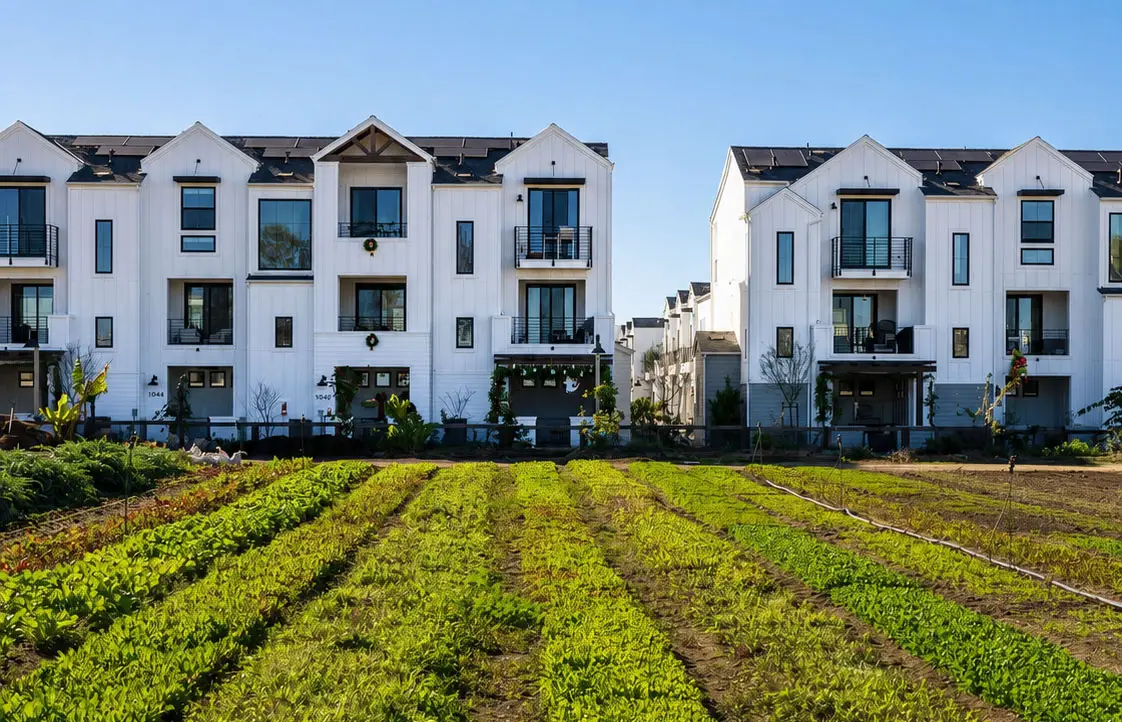
The three developments examined in this analysis added an estimated 337 housing units to Encinitas’s housing stock — 250 at Fox Point Farms, 45 at The Captain and 42 at The Cove.
According to Census data, an average of 2.54 people live in each home in Encinitas. The analysis applied that figure under the assumption that even if some existing residents moved into the new developments, those vacancies would eventually be filled, resulting in a comparable long-term increase in population.
Assuming all 337 units are occupied by an average of 2.54 residents, the estimated annual municipal expenditures associated with those additional residents would exceed $2.1 million.
Even under a more conservative scenario in which only one person occupies each new unit, the estimated annual municipal expenditures would exceed $827,000.
Using either occupancy scenario, the estimated increase in annual municipal expenditures exceeded the additional property tax revenue generated through higher assessed land values.
Since many municipal costs are fixed and do not increase proportionally with each additional resident, these figures should be viewed as estimates rather than precise accounting. Likewise, the analysis does not account for broader economic activity or other revenue sources that could help to offset those expenditures.
What’s next
Ehlers pointed to roadway pavement improvements, stormwater infrastructure and other maintenance projects as continued priorities.
“This gets back to what I ran on: basic infrastructure improvements,” he said. “Prior councils had been focused on bright and shiny objects.
“That is ‘City 101’ … we just have to keep thinking that way that we have to allocate for maintenance as well as the capital costs.”
Ehlers said he hopes to continue investing in those projects without increasing costs for existing taxpayers, comparing the issue to a homeowner building on a vacant lot in an established neighborhood.
“How much should you have to pay to develop that land?” Ehlers said. “You should pay your portion of the development costs to the city.”
While The Coast News analysis focused on city finances, Erfurt argued that the broader conversation should center on allowing neighborhoods to evolve gradually through small-scale redevelopment instead of relying primarily on large projects.
He said residents should play a more active role in shaping their communities because they interact with those neighborhoods every day.
“There is a whole lot that comes along when we allow people to take our neighborhoods that are currently locked in amber and allow them to naturally grow and mature over time,” he said. “We’re not talking about giant leaps. What is that next smallest step that can occur in the community?”
Erfurt added that governments should act less as gatekeepers and more as navigators of local regulations.
City staff — “the most knowledgeable people of all of our codes and all of the processes,” he said — should help guide residents toward a yes, whether they are proposing a new business or an addition to their home.
Erfurt also offered advice for residents seeking to influence local officials, suggesting they use public comment periods to highlight what already works in their communities.
“Go and share something you love about your community,” Erfurt said. “Doesn’t matter what it is. Share something about that. It’s not an ask. It’s not a complaint. It’s just something you love.
“Describe it in as much detail as you possibly can, in two to three minutes and sit down. That kind of positivity is not what we see in local government, in those public comment sessions, so you will all of a sudden get everybody’s attention.
“What I found with that is that it starts to help a conversation in your community because there’ll be somebody else who will agree with you. That’s their favorite thing about the community.”



1 comment
Once again, “Strong Towns” is on a tirade against our established residential neighborhoods, which are attractive and in demand precisely because they are not overpopulated. They do not need to “be allowed to evolve naturally” into something denser, with a lack of off street parking and loss of vegetation, permeable ground cover, privacy, and solar easements. There are lots of us who want to own our land, our exterior walls, and our roof, which no one living above, below, or adjacent to us and compromising our 360-degree natural light and ventilation. They have declared war against the type of housing 70 percent of Americans greatly prefer. Lots needn’t be half-acre or larger, homes needn’t be McMansions, they needn’t be custom stick-built, and the entire post-WWII concept of starter-homes is far from obsolete. Encinitas is rapidly approaching buildout, and most of our local neighborhood streets (and major intersections) can’t handle much more traffic than they already do.