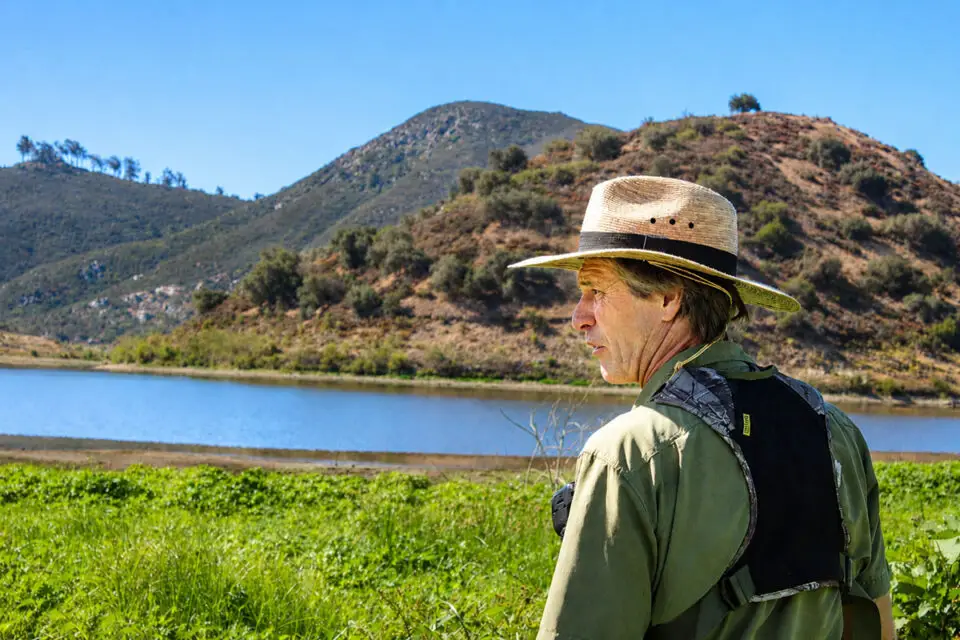
DEL DIOS — As the water level at Lake Hodges remains low, neighbors fear what could happen if a wildfire tears through their valley again, as it did nearly two decades ago — this time with a much smaller water barrier to slow the spread.
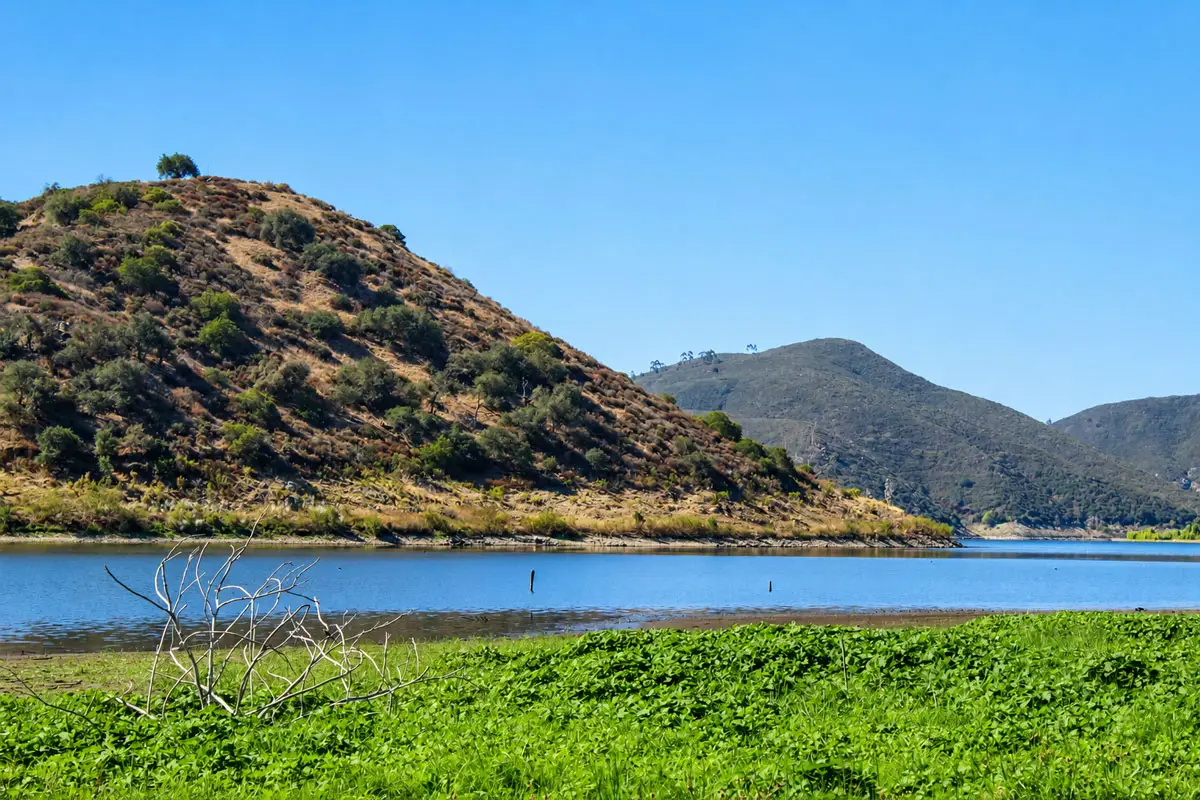
Efforts continue to urge the City of San Diego, which owns Hodges Dam, to raise the lake level from 280 to 295 feet. The lake’s maximum capacity is 315 feet.
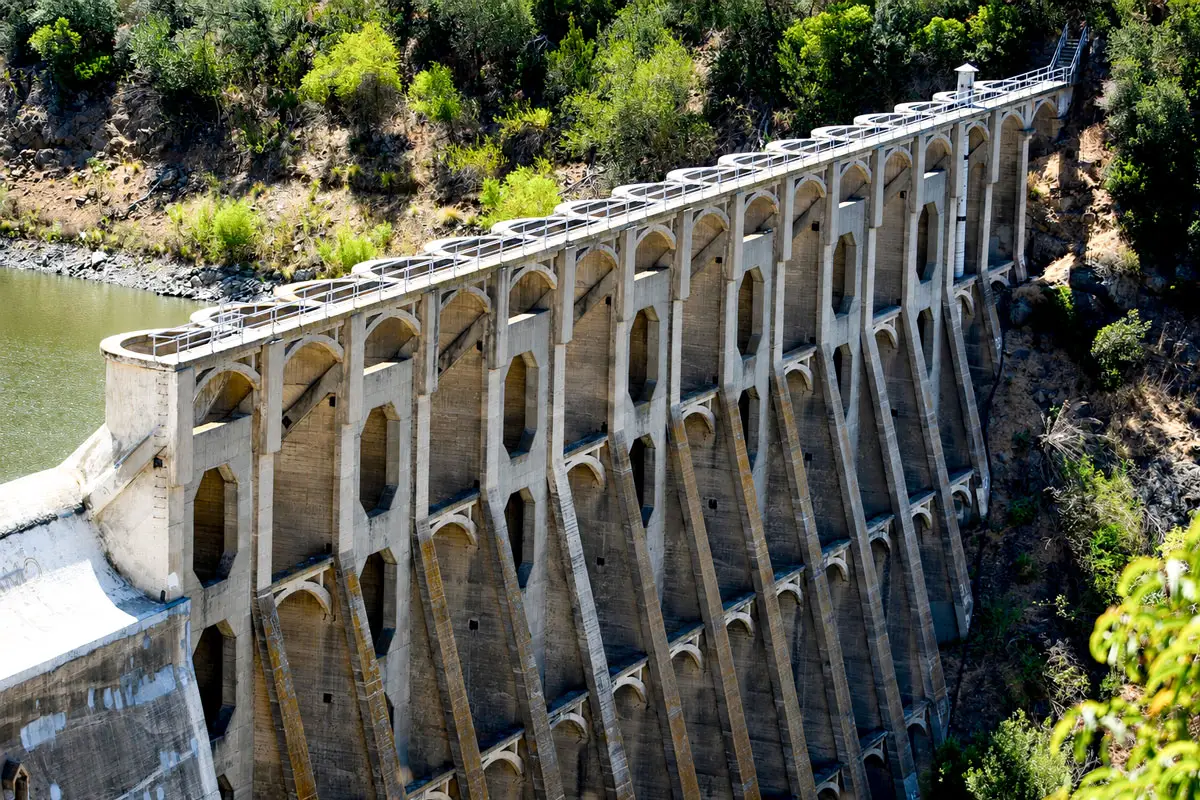
Four years ago, the city completed a risk assessment for Hodges Dam that found its risk score exceeded industry standards. The assessment also identified potential failure scenarios in the event of a major earthquake or a significant multiday rain event.
During repairs, crews found the dam’s concrete was more deteriorated than expected. The California Division of Safety of Dams then directed the city to evaluate the downstream consequences of a dam breach.
According to the city, the report concluded that lowering the lake to no more than 280 feet was necessary to reduce “potential life loss in the event of a dam failure.”
“The 280-foot restriction is not an arbitrary constraint, and raising the water level is not something we are willing to pursue given that finding,” said Jennifer McBride, a city spokesperson.
The lake currently sits at about 272 feet, according to the city’s website.
Although the city is not considering raising the lake level at this time, that has not dissuaded the Raise Lake Hodges group from continuing to build support for its cause.
According to RaiseLakeHodges.org, the Rancho Bernardo Community Council, Rancho Santa Fe Association, Del Dios Town Council and the Citizen Advisory Committee for the San Dieguito River Park — together representing more than 80,000 residents — support raising the lake’s water level.
Paul Bernstein, whose home overlooks the lake, along with Del Dios Town Council President Kevin Kidd and Councilmember Brian Caldwell, believes the city’s analysis, which led to the lower water level, was flawed and failed to consider important upstream impacts that would result if the lake level dropped.
“They made the decision to lower the dam without looking at any upstream risk, so what they did has created a fire hazard,” Bernstein said. “In addition to that, they didn’t do an environmental impact study. This is a state that supposedly values the environment, but after lowering the water levels, all of the nesting birds are now gone.”
Bernstein and Caldwell point to the lake’s population of grebes — birds with bright red eyes, black-and-white plumage and sharp beaks that appear to walk across the water — as being nearly nonexistent.
Kidd, who previously worked as a diver inspecting the dam for the City of San Diego, said the analysis also contained errors that overstated the risk of failure for a seven-arch concrete dam like Hodges.
While the environmental impacts are significant, the group said its greatest concern is what could happen if another major wildfire swept through the area.
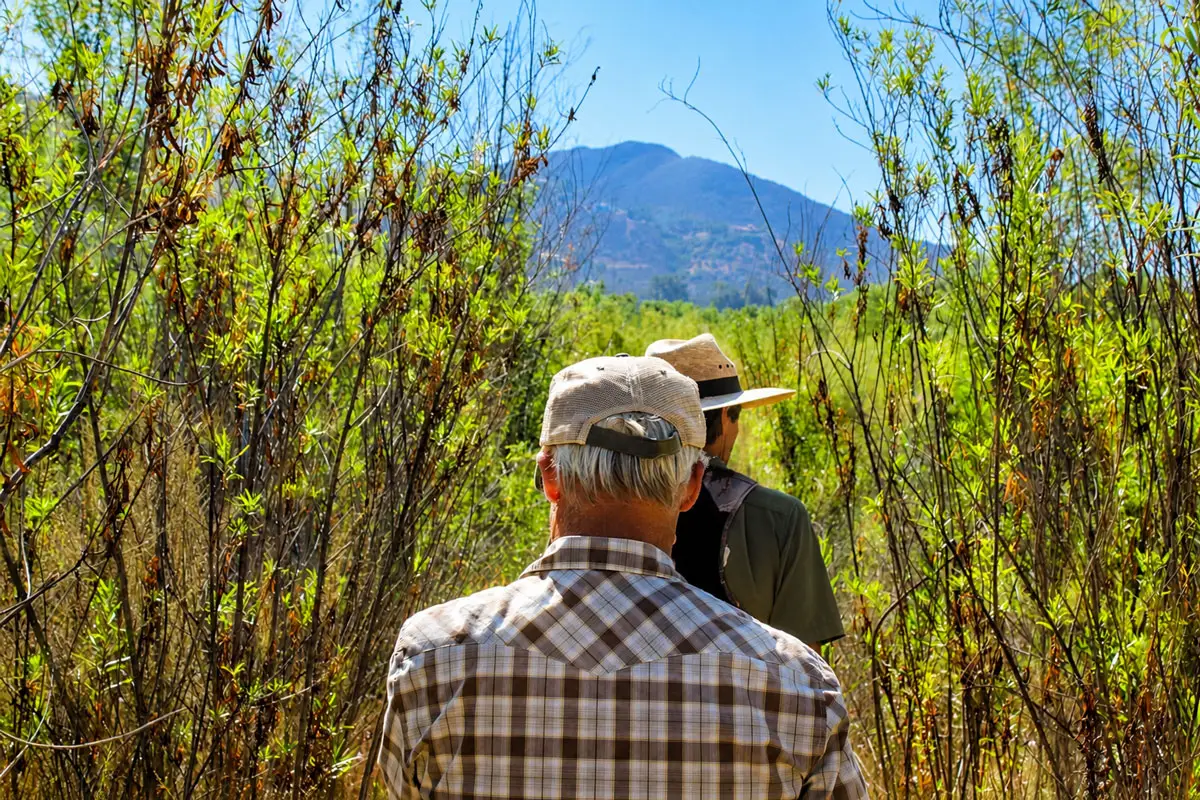
All three men lived through the 2007 Witch Creek Fire, which destroyed many nearby homes.
Caldwell believes the lake’s higher water level at the time helped save his home. He said the fire was temporarily slowed when it reached the water near Interstate 15, giving him time to rig his irrigation system and soak his house.
Others in the neighborhood were not as fortunate. Caldwell said several friends, neighbors and his in-laws lost their homes, but the extra time allowed him to save his own.
“My friend had two hours to prepare and his house burnt down. I had 26 hours,” he said. “If that fire came through now, Del Dios would be gone completely.”
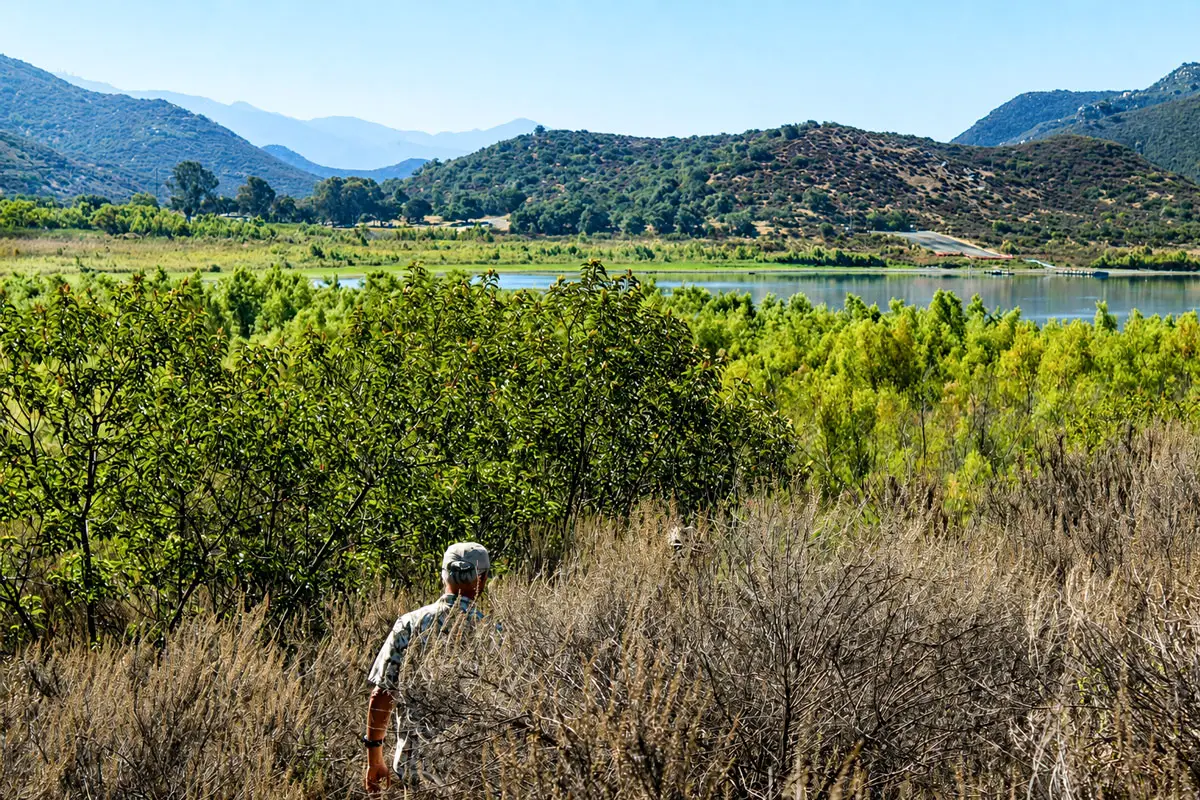
After years of exposed lakebed, vegetation has grown tall and dense in the nutrient-rich soil. While much of it remains green for now, the group said it will soon dry out and become fuel for any wildfire that moves through the area.
Much of that vegetation is protected within the San Dieguito River Park and cannot be removed.
Kidd said that if a wildfire were to burn through the area, there would be little habitat left to protect. Some nearby hillsides have yet to fully recover their prickly pear cactus populations since the Witch Creek Fire.
The lower water level has also shut down the pump station that transfers excess water from Lake Hodges to Olivenhain Reservoir just over the hillside. When operational, the facility generated enough clean energy to power nearly 30,000 homes in the Escondido area.
The $196 million pump station opened in the early 2010s but operated for only a little more than a decade before shutting down due to low water levels.
According to the San Diego County Water Authority’s 2025-26 Aqueduct Operating Plan, “discussions are on-going to determine how this facility will be utilized while Lake Hodges Dam is under construction.”
For Caldwell, the pump station issue is personal. Construction of the facility forced his lakefront windsurfing business to close because the water level was lowered, and he was not allowed to reopen in the same location after construction was complete. If the pump station operated for only a little more than a decade before being taken out of service, Caldwell said it would add insult to injury.
The Coast News has reached out to the San Diego County Water Authority for clarification on the pump station’s future.
Replacement of the 106-year-old Hodges Dam is expected to be completed in 2034, although securing funding could prove challenging.
Last year, the San Diego County Water Authority informed the City of San Diego that it no longer believed it had a financial obligation to fund half of the replacement project. Until then, the project anticipated the water authority would cover 50% of the cost, with the city paying 25% and the remaining 25% split between the Santa Fe Irrigation District and the San Dieguito Water District.
Construction costs have also risen sharply. The project was initially estimated at $275 million but is now expected to cost between $474 million and $697 million.

“In light of the changed position of SDCWA and the updated cost estimate, the City of San Diego will evaluate potential alternatives to full replacement to ensure that ratepayer dollars are used effectively while maintaining downstream safety,” McBride said. “All alternatives will be thoroughly evaluated, and there is no current plan to close Hodges.”
Bernstein, Caldwell and Kidd want the city to revisit its analysis to account for upstream impacts and weigh the greater likelihood of a catastrophic wildfire against the relatively low probability of dam failure. In the meantime, they want the lake level raised.
Bernstein said 295 feet is the “sweet spot” because it would allow the pump station to resume operations while providing a larger firebreak in the event of a major wildfire. A higher lake level would also allow local fire agencies to draw more water from the lake during emergencies.
According to McBride, the lake “remains fully accessible as a water source for firefighting operations” at its current level.
“Both SDFD and Cal Fire have confirmed that their equipment can access water at Hodges, in addition to multiple other surrounding water sources, as operational needs require,” McBride said in an email.
Cal Fire and San Diego Fire-Rescue had not responded to The Coast News’ requests for comment by press time.
McBride also noted that Lake Hodges is not connected to the city’s drinking water system, and current lake levels do not affect water availability at city fire hydrants.
While Bernstein, Caldwell and Kidd continue to rally support from neighbors, they said their concerns have largely gone unheard at the state level.
“Even with 80,000 people backing us, we’re still going nowhere,” Bernstein said. “The challenge is trying to get the state to own this and prevent this before it becomes another Palisades.”
Related Articles:
- Escondido hires new consultant for Lake Wohlford Dam… March 12, 2024
- Local water agencies sue San Diego over Lake Hodges… August 6, 2024
- San Dieguito Dam repairs could lower water costs for… June 26, 2026
- Eighth year of Coast to Crest Trail Challenge begins in July June 28, 2024
- North County firefighters warn of local wildfire… February 4, 2025
- Election Q&A with Oceanside City Council candidates October 22, 2024