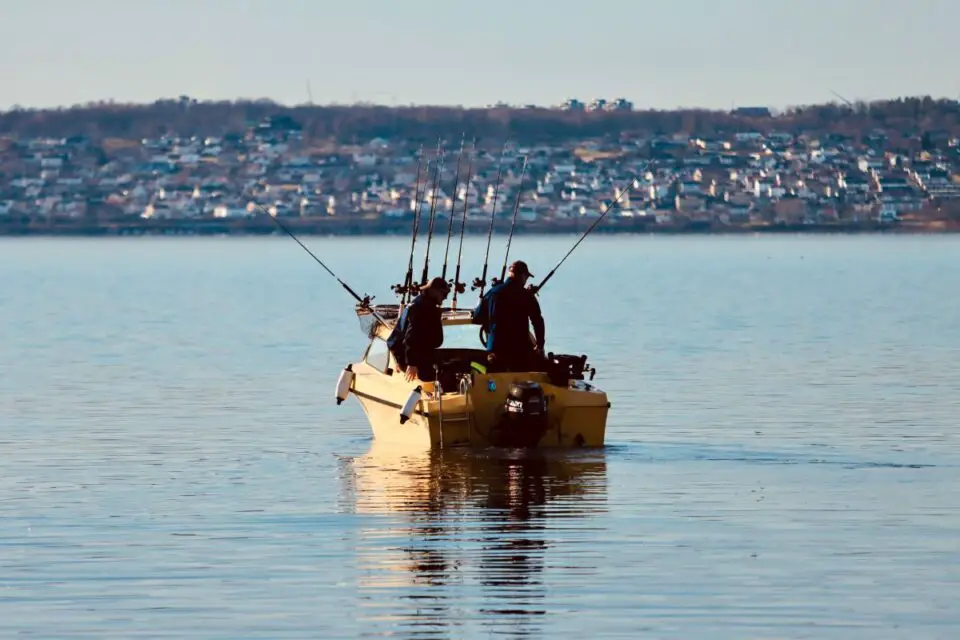
A trolling motor can change how an angler works a kelp edge, approaches shallow structure, or holds over a productive patch of water. For North County boaters, however, choosing one involves more than comparing thrust numbers. Salt exposure, afternoon wind, deck layout, battery capacity, and fishing style all shape the right setup.
How to choose a trolling motor for coastal and inshore fishing
Start with the boat as it is actually used. Record its length, loaded weight, freeboard, available deck space, and normal passenger and gear load. Decide where the motor can be mounted without interfering with an anchor locker, navigation lights, bow rails, or access around the deck. Compare Minn Kota trolling motors only after those physical and electrical requirements are clear.
The following table turns familiar fishing situations into practical equipment questions:
| Fishing situation | Motor consideration | Feature to verify |
| Working kelp edges or nearshore structure | Precise control from the bow | Bow-mount design and suitable shaft length |
| Fishing from a small skiff or utility boat | Simple installation and direct steering | Transom mount, tiller reach, and mounting clearance |
| Holding over a reef or productive depth contour | Less manual correction | Spot-Lock or compatible GPS positioning |
| Operating in wind, chop, or current | Adequate control under load | Manufacturer-recommended thrust and voltage |
| Regular brackish or coastal use | Resistance to marine exposure | Explicit saltwater rating |
| Long fishing days | Sustainable electrical supply | Battery capacity, charger compatibility, and wiring |
Thrust should be selected using the manufacturer’s guidance for the boat, not by assuming that the largest motor is automatically best. A heavier center console carrying fuel, tackle, and several anglers has different demands from a lightly loaded aluminum skiff. More thrust can also mean a higher-voltage system, additional batteries, greater weight, and more complicated cable routing.
Shaft length matters just as much. The propeller must remain submerged when the bow rises and falls, but an unnecessarily long shaft can create handling or stowage problems. Measure from the proposed mounting surface to the waterline, then apply the manufacturer’s recommendation for the boat and expected conditions.
Why water type and boat control matter more than buying the most features
North County anglers may leave Oceanside Harbor for nearshore structure, drift along a kelp line, or spend a quieter day in protected water. Each situation places different demands on the motor. A feature list cannot account for deck space, current, windage, or how often the angler needs to reposition.
Saltwater suitability is a basic requirement, not an optional upgrade. Coastal and brackish water can be hard on exposed metal, electrical connections, and internal components. A freshwater-only motor should not be treated as saltwater-ready simply because it will be rinsed after use.
Questions to answer before buying
Write down the answers before comparing individual motors:
- Where will the boat fish, and is the selected model approved for that water type?
- Can the bow or transom accept the mount, shaft, wiring, and stowed motor?
- What thrust, voltage, and shaft length does the manufacturer recommend?
- Which controls will be convenient while casting, handling a fish, or moving around the boat?
- Are GPS holding, route control, or remote operation genuinely useful?
- What batteries, charger banks, cables, breakers, plugs, and brackets will complete the installation?
Why matching the motor to the fishing style pays off
The right motor should remove work from the day. An angler repeatedly casting at structure may benefit from bow control and GPS holding. Someone running a compact skiff in sheltered water may prefer a straightforward transom motor that is easy to remove.
Think through the difficult moments rather than the ideal ones. Who controls the boat while another person lands a fish? Will the propeller stay submerged when the afternoon chop reaches the bow? Can the motor be deployed without moving rods or opening a locker? Those questions reveal more than a long list of premium functions.
Control preferences matter, too. A foot pedal can keep both hands available for fishing, but it needs usable deck space. A remote frees the operator to move around, though it must be charged or fitted with a good battery and kept accessible. The most useful interface is the one that fits the boat’s normal routine.