
VISTA — The City of Vista and the Vista Fire Protection District adopted new vegetation management and defensible space ordinances this month to decrease local fire risk and protect local homes.
Under the ordinances, homes in the moderate to severe fire hazard severity zones will have to abide by new requirements for defensible space, which is the buffer area within 100 feet of a home where vegetation is treated or cleared to slow the intensity and rate of fire.
The Vista Fire Protection District (VFPD) is a separate agency from the city, but the Vista Fire Department serves both. VFPD covers around 17 square miles of unincorporated area east of the city of Vista and west of Interstate 15, including portions of Bonsall, Twin Oaks, Gopher Canyon and Buena Creek.
The new ordinances provide consistency between the city and district to provide more robust fire hazard protection, officials said. The VFPD Board of Directors adopted their ordinance via a second reading on April 16, and it goes into effect on May 16. The Vista City Council unanimously adopted the citywide ordinance on Tuesday.
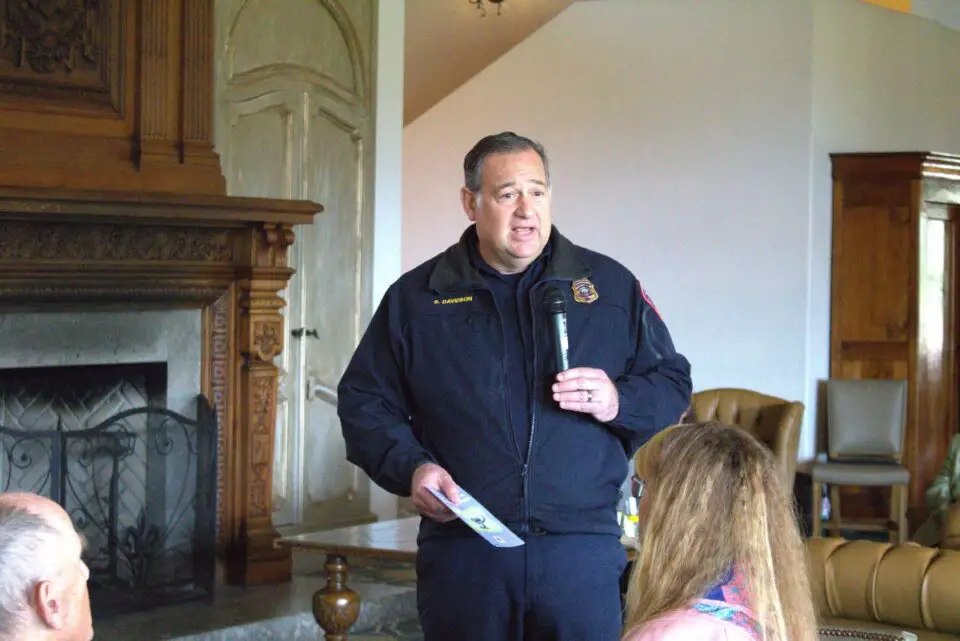
“We are so fortunate that we are aligned with the fire district, because most cities aren’t allowed to do any fuel abatement outside the city. The majority of our fuel abatement is in the district, but the district is the key to protecting the city, because the fire is gonna come from the east,” said Vista Fire Deputy Chief Bret Davidson.
Updated hazard zones are outlined in the state’s new Fire Hazard Severity Zone map, which all localities will be required to adopt in the coming months.
A majority of the VFPD is considered a very high fire hazard severity area, with the remainder considered high to moderate severity. The southwestern area and northeastern edge of Vista are also moderate to very high severity areas.

The Vista Fire Department and VFPD have held two large community outreach events to raise awareness about the ordinance, and are planning another in the next month or so. The most recent community event at the Vista Valley Country Club drew an estimated 70 attendees, many of whom reside in the Gopher Canyon area.
Fire officials recognized that the ordinance will require a lot of work for residents in higher severity zones, and emphasized that they are seeking voluntary compliance rather than pursuing punitive measures.
Residences in the moderate to high severity zones will receive notices from the fire department regarding the ordinance requirements and will also undergo inspections by the Vista Fire Department. Last year, the number of inspections rose from around 1,900 to 7,100.
“We ask for patience, understanding, and I promise you we will work with you, because this doesn’t get done without everyone working together,” said Vista Fire Chief Gerard Washington.
Council members thanked fire officials for their work to inform residents and protect the community.
“Obviously, an ordinance people don’t know about can’t be followed,” said City Councilmember Jeff Fox. “I want to thank the Vista Fire Protection District for being ahead of the game and adopting that ordinance as well.”
Requirements
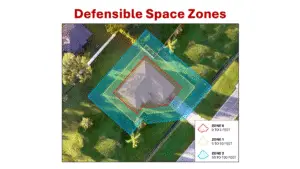
The ordinances establish specific requirements for clearing vegetation within a certain distance from the home. Zone 0 is within zero to five feet of a house, Zone 1 is within 5 to 50 feet, and Zone 1 is within 50 to 100 feet.
Zone 0 is the most restrictive, prohibiting any vegetation in direct contact with the structure and requiring all trees, except existing mature trees, to be free of branches below the roofline height. Combustible mulch, made from materials like wood bark, is also not permitted.
Combustible items and decor, such as firewood, shade sails, awnings, arbors, and fences, are not permitted to be in contact with the structure.
Enforcement of Zone 0 standards will be deferred for three years, due to the costs and effort associated with removal. The city is also seeking grants to help lower-income residents meet these requirements.


This timeline will also align with the rollout of the state’s “ember-resistant zone” standards, according to VFPD. The state first adopted a law requiring these five-foot zones in 2020, but it has yet to be rolled out and enforced.
Within Zones 1 and 2, any brush or chaparral must be cleared or trimmed and limited to a height of five feet and width of ten feet, and must be at least 30 feet from the home.
All zones will require the clearing of all dead vegetation. This includes dead palm fronds, which can form a “skirt” around the tree, presenting a fire hazard.
Along with individual homeowners, the Vista Public Works Department will need to ensure that city properties comply with the ordinance. Davidson said the city is also preparing to clear fuel from local creek beds, where invasive plant species and a significant homeless population are present.
The first creek bed they will prioritize is near the Buena Vista Creek Trail along Hacienda Drive, where the city is seeking fuel abatement grants and workforce development opportunities to make the creek beds more fire-resistant.
“Last year we had 35 fires in that area, and I feel like we’re playing Russian roulette with the weather. All we need is really a high wildland day on one of the 35 days we have one of those fires, and that fire’s gonna run the distance of wherever it starts in that creek bottom,” said Davidson.
Insurance benefits
In addition to mitigating the spread of fire, the ordinances can also increase residents’ eligibility for fire insurance.
Davidson said the city is applying to be recognized by the state as a Fire Risk Reduction Community, which are agencies in high-severity fire zones that meet best industry practices for local fire planning.
This recognition decreases residents’ chances of losing their fire insurance and helps them to obtain better coverage.
“A lot of people are struggling with that, especially in that urban interface zone,” said Davidson.


