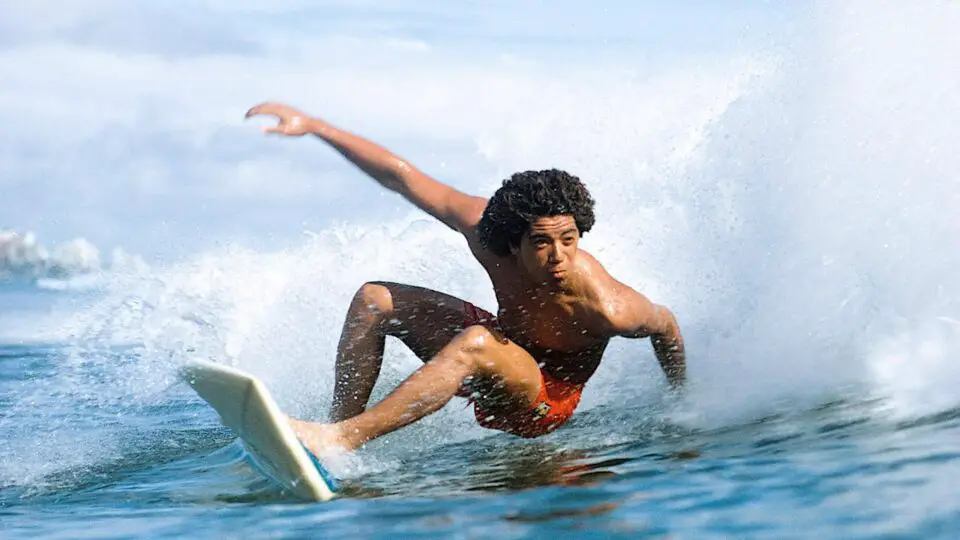
In 1975, I returned to Encinitas after two years overseas. Broke as always, I was blessed to find shelter with local ripper and Sunset Surfboards shaper Syd Madden and his roommate, recently deceased shaping legend Bill Shorsbree, in their quaint little cottage near the beach.
The next morning, I wandered down to ride the beach break at D Street. While little had changed in the lineup during my absence, the better surfers in the water had adapted a method unlike any I had seen before. After riding in a low crouch, they would spring into their turns in what would later be termed a “low, rotational style.”
When I asked a friend about the way he was riding, he told me about a young Hawaiian surfer named Larry Bertlemann, who had recently been visiting our town. My friend’s face lit up as he explained that Bertlemann, whom he alternately called “The Rubberman,” did moves once considered impossible.
Slow to adapt, I kept surfing as I always had, in a style sometimes derogatorily called “Standing tall and do nothing at all.”
Later that year, when I saw the Rubberman in surf magazines and surf films, I was confused. Bertlemann’s style was a slap, a blasphemy in the face of what elegant riders like California’s Phil Edwards and Hawaii’s Paul Strauch had perfected.
I didn’t see the value of Bertlemann’s contribution to our sport then, but I can now see that he had launched a movement that would eventually lead to radical modern surfing and the high-performance surfboards that followed.
It took me years to understand and appreciate it all, but now I see what I was blind to then — that the rigid lines we had been carving had been broken and set free in a sea of joy.
Bertlemann, who had developed his method in the hot seedbed of Waikiki, would polish his unique tricks not on waves of water, but on concrete waves, on a skateboard. California surf skaters like “Dogtown” sweetheart Jay Adams later adapted his moves, and he is credited with changing skateboarding’s direction.
By his early 20s, Bertlemann’s image was omnipresent, and he was making a living through pro surfing sponsorships with companies like Pepsi, United Airlines and Toyota.
Then, just as quickly as he burst onto the scene, he disappeared. After a series of injuries took their toll, a new crew of Hawaiian surfers, including Dane Kealoha, Michael Ho and “Buttons” Kaluhiokalani, took over.
A few years later, after international pro surfing became firmly rooted, Bertlemann was out of the picture, and the Australians took home most of the available cash. The Rubberman was gone, but he would never be forgotten.
After living quietly out of the spotlight, Bertlemann died last week. His greatness, however, still shows in every electrified turn and cutback by today’s pro surfers.
His motto, “Anything is possible,” is an anthem to those breaking the rules and discovering ways of surfing never before dreamed of.
While not as famous as Bertlemann, local and beloved surfer Garth Murphy also recently died.
While a brilliant surfer, Garth’s biggest influence on our sport was as a pioneer of surf products through a brand called “Surf Research,” where he, Mike Doyle, Rusty Miller and Fred Ryan introduced the surfing world to custom surf wax and other items that have improved our wave-riding experience.
Aloha, Garth.