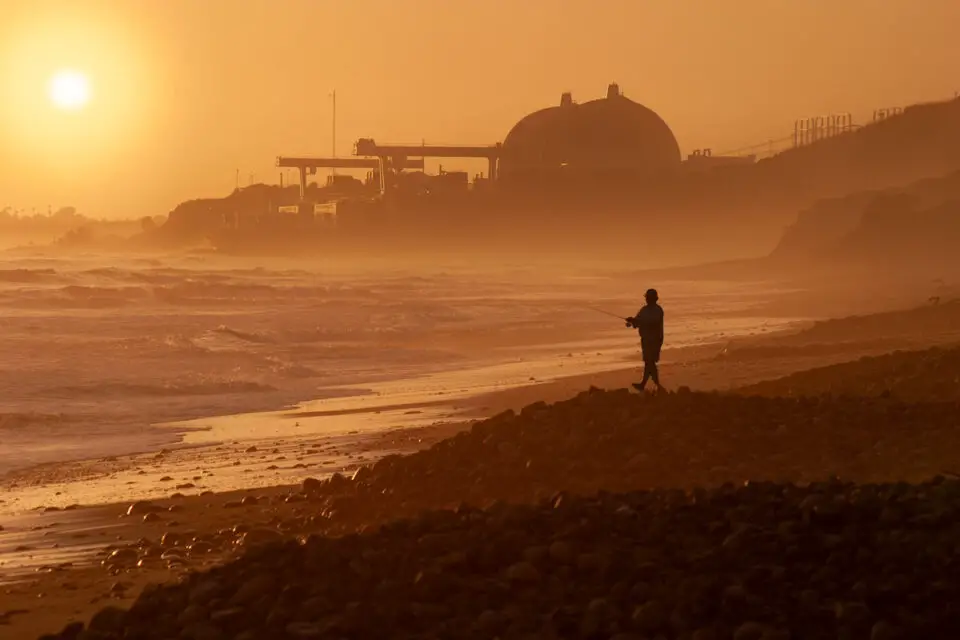
REGION — Most structures at the San Onofre Nuclear Generating Station have been demolished, but removing more than 1,600 tons of spent nuclear fuel from the Southern California coast still hinges on federal action and finding a permanent storage site, according to a new report from Rep. Mike Levin’s office.
The report, released during an Oct. 28 press conference at the shuttered plant, details demolition progress, federal funding and waste relocation options, updating 30 recommendations issued by Levin’s task force in 2020.
“None of this means our task is finished,” Levin wrote in the report’s introductory letter. “Spent fuel still sits on our coastline, and it will remain there until the federal government fulfills the obligation it took on more than forty years ago.”
San Onofre stopped producing electricity in 2012, and Southern California Edison announced the permanent retirement of its two remaining reactors in 2013.
Crews have demolished 52 of the site’s 62 structures and removed more than 700 million pounds of material, the report says. By August 2020, all spent fuel had been transferred from cooling pools into dry storage.
The two containment domes are expected to be demolished by the end of 2027, with major decommissioning work scheduled to finish by the end of 2028. The spent fuel storage installation would remain, along with a protective seawall, waterfront walkway and switchyard.
“But more than 1,600 tons of spent nuclear fuel still sit just 100 feet from the Pacific Ocean,” Levin said. “We cannot mistake progress for a permanent solution.”
Safety concerns surrounding fuel transfers have shaped Levin’s legislative efforts. On Aug. 3, 2018, a loaded canister became stuck as workers lowered it into a storage vault. The report describes a near miss in which the canister could have dropped 18 feet. Edison subsequently adopted additional training, procedures and technology.
In 2023, Levin and Rep. Mike Lawler, R-New York, reintroduced the INSPECT Act, which would require resident Nuclear Regulatory Commission inspectors at decommissioning plants until all spent fuel is transferred from pools into canisters. San Onofre had completed those transfers, but the proposal sought oversight of similar operations elsewhere.
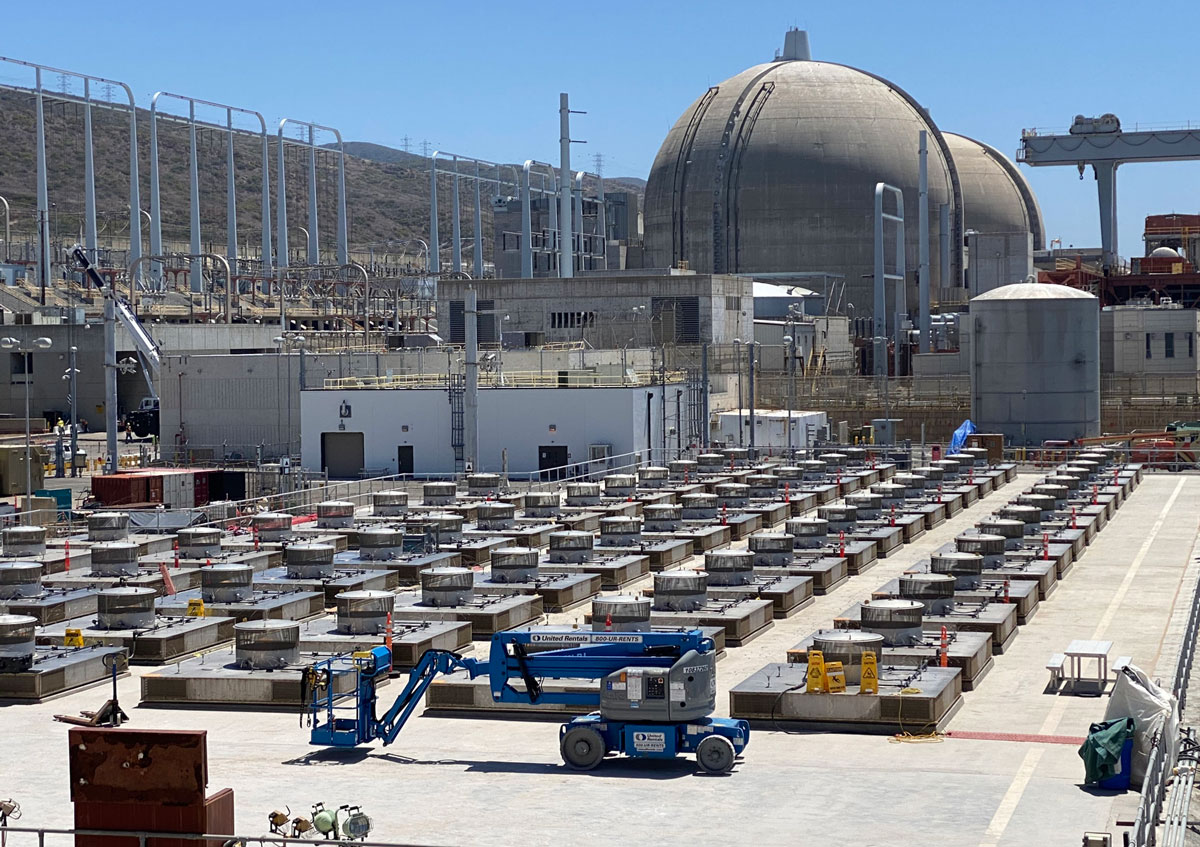
Efforts to prepare for removal have also involved utilities and local governments.
Edison released a three-part relocation plan in 2021 addressing federal policy, storage options and transportation preparations. The utility also helped form a coalition advocating for federal funding and legislation to advance interim storage and permanent disposal.
In March 2022, the Oceanside City Council directed staff to coordinate with San Diego County and return with a resolution to join the coalition. The county and several North County cities, including Carlsbad, Escondido, San Marcos and Vista, were already members.
The approach has drawn debate over whether temporary storage would expedite removal or divert attention from permanent disposal. In 2021, the Samuel Lawrence Foundation criticized interim storage because it would require moving the waste twice. Edison argued that storage in a willing host community offered the quickest route to clearing San Onofre while a permanent repository was developed.
The new report identifies two potential destinations for San Onofre’s spent fuel: an off-site interim storage facility or a permanent underground repository.
“To move the waste away from SONGS, DOE must have a location to move the waste to,” the report states.
Levin’s office said he has helped secure nearly $250 million for spent nuclear fuel management nationwide since taking office in 2019, including $100 million in fiscal 2026. The funding supports community engagement, storage planning, research and transportation preparations.
One potential pathway involves the Energy Department’s proposed Nuclear Lifecycle Innovation Campuses, which could combine fuel production, enrichment, reprocessing and waste management.
The report identifies five states that signed preliminary agreements in July to explore hosting campuses. Those agreements do not establish a destination for San Onofre’s waste. The report says binding hosting agreements, changes to state laws and amendments to the Nuclear Waste Policy Act would be needed.
San Diego County supervisors have also pursued recycling research. In December 2025, the board unanimously supported a proposal from Supervisor Jim Desmond, whose district includes San Onofre, to encourage research and development of spent fuel recycling.
Desmond described the effort as a “parallel path” to finding permanent storage.
“Reprocessing it could unlock enormous amounts of energy,” Desmond said at the time. “It’s time we use technology as it keeps improving to make our community safer, reduce costs, and hopefully give families a break.”
An amendment from Supervisor Paloma Aguirre also committed the county to supporting the Nuclear Waste Administration Act, introduced by Levin and Rep. August Pfluger, R-Texas. The bill would establish an independent waste management agency, a consent-based siting process and reliable funding.
The new report cautions that San Onofre’s fuel may be a weak candidate for commercial reprocessing because of its age, physical characteristics and placement in sealed storage canisters.
“Regardless of if the United States pursues reprocessing or not, a permanent disposal pathway will still be required,” the report states.
The report recommends continued congressional oversight, increased funding and an organization dedicated to nuclear waste management, with priority given to removing fuel from closed plants.
It provides no firm date for removing San Onofre’s spent fuel.