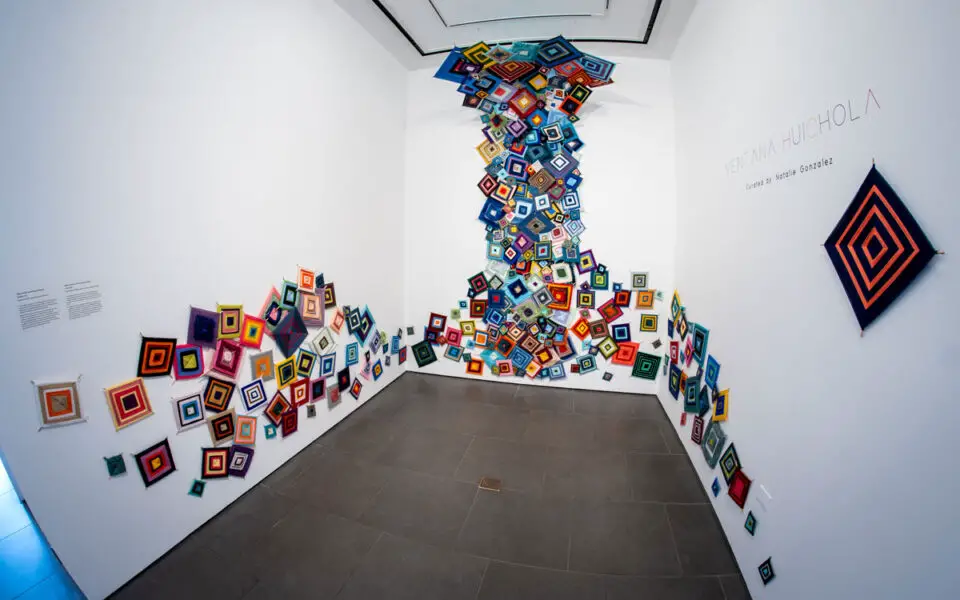
OCEANSIDE — For the rest of the summer, an Oceanside Museum of Art exhibit will pay homage to a sacred spiritual symbol through the work of local community members.
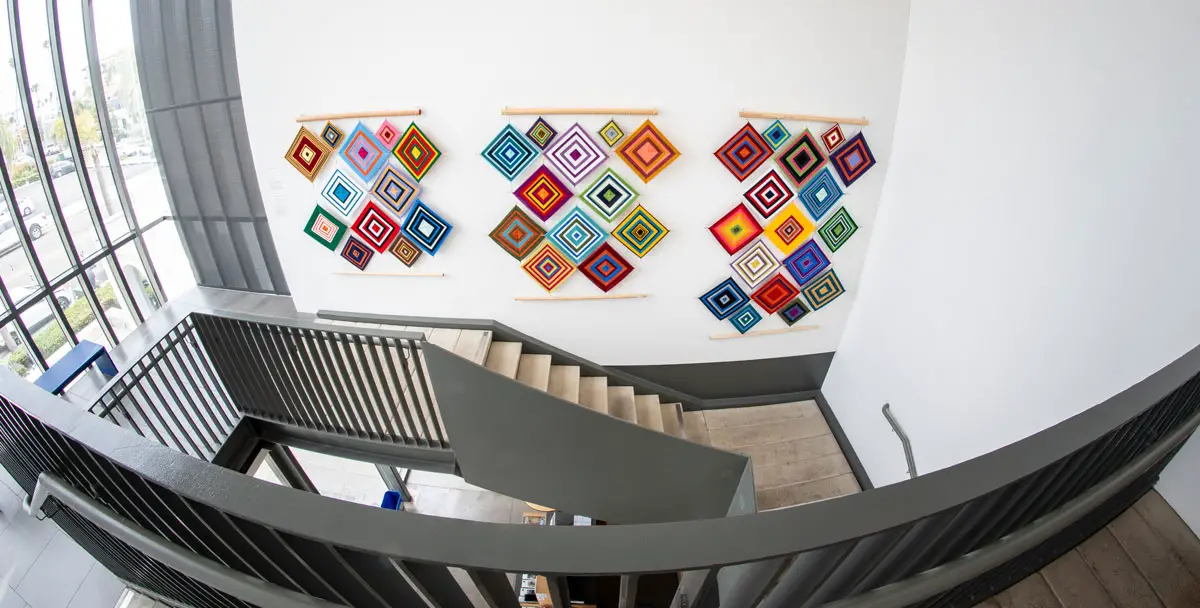
The exhibit, “Ventana Huichola,” showcases the work of over 80 people from Oceanside and other North County communities who participated in a series of workshops where they learned how to craft “tsikuris,” also known as “God’s Eyes” or “Ojos de Dios.”
These sacred spiritual symbols originate from the Huichol people, an indigenous tribe residing in central western Mexico, specifically in the Sierra Madre Mountains. According to the Dance of the Deer Foundation, they are said to be the last tribe in North America to have maintained their pre-Columbian traditions.
A tsikuri, which means “the power to see and understand things unknown” in the Huichol language, is a significant symbol of protection and spiritual connection, according to Natalie Gonzalez, curator of the exhibit.
Gonzalez also curates the museum’s satellite gallery at the Seabird Resort, OMA West, and serves as gallery manager and associate curator of Sparks Gallery in downtown San Diego.
Traditionally, tsikuris are woven using brightly colored yarn by families to mark milestones in a young child’s life. Each color on the tsikuri represents another year of life. Typically, this would be done until the child reaches 5 years of age, as the younger years are among the most vulnerable periods of a child’s life.
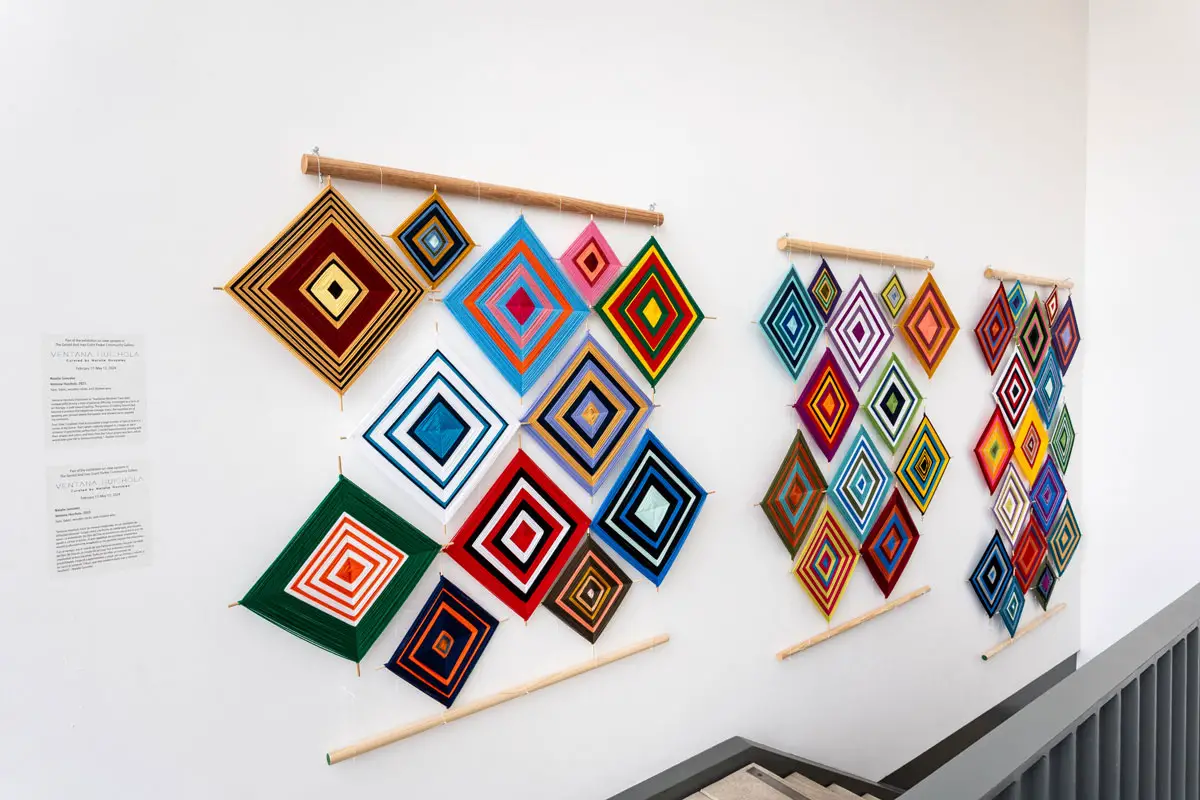
Tsikuris were often worn by children but also placed in spaces where people worked or traveled as a means of protection.
Gonzalez, who was born in Los Angeles and raised in Mexico, first encountered the Huichol people from a community outside of Guadalajara, where she studied.
While she became interested in learning more about the Huichol people at the time, her idea for the exhibit didn’t come until years later when she was living in San Diego.
One evening, while she was feeling overwhelmed, she took two pairs of chopsticks and began weaving yarn around them, creating a God’s Eye.
“I started as a form of art therapy, not thinking that I would create an art installation,” she said.
She continued making more until her entire living room and dining room were filled with God’s Eyes.
In 2023, she submitted a proposal for an art installation featuring the symbols and was selected to curate an exhibit in the Contemporary Latin American Art Show at the Borrego Art Institute in January 2024.
Before the show, she conducted as much research as possible to ensure she wouldn’t be disrespecting or appropriating from the Huichol people.
“I wanted to do this right,” she said.
Through the exhibit, Gonzalez invited locals to contribute to the larger installation, connecting with fellow community members and exploring the ancient traditions of the Huichol people. She aims to reflect on Southern California’s binational character, bridging cultures through community, and resonating with both the past and the present.
She also emphasized the importance of community and human connection in a place as diverse as the San Diego region – and the country as a whole – where many different stories and cultures converge.
“Working with the community is everything. We have been surviving together since the beginning – we need each other,” she said. “Seeing people from all ages with different abilities come together to create something together – it’s magical.”
The exhibit will be on display at the Oceanside Museum of Art until Sept. 21.