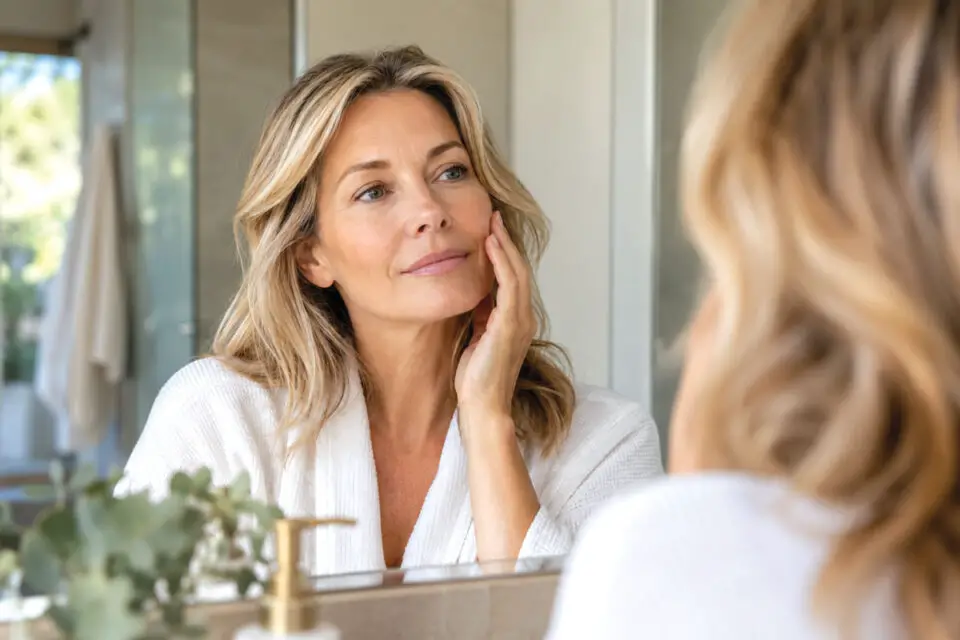
For years, women were told that hot flashes, disrupted sleep, mood changes and a long list of other symptoms were simply things they had to endure during menopause. Changes in the skin were often treated the same way: just another inevitable part of getting older.
We now know the story is much more interesting than that.
Menopause is not a single moment. The transition begins during perimenopause, up to 10 years before the final menstrual period, as estrogen, progesterone and testosterone begin to fluctuate and decline. Those hormones affect nearly every organ in the body, including our largest one: the skin.
Estrogen, in particular, helps maintain collagen, skin thickness, hydration and blood supply. As estrogen levels fall, collagen loss accelerates dramatically. Women may lose approximately 30% of their skin collagen during the first five years of menopause, helping explain why skin changes can seem to happen so suddenly in the 40s and 50s.
Skin may become thinner, drier and more sensitive, with more visible fine lines and laxity. Shifts in facial fat and bone can contribute to volume loss and changes in facial shape. Some women also notice more pigmentation, acne or unwanted facial hair as the balance between estrogen and androgens changes.
These changes are not simply cosmetic, nor are they all caused by just sun exposure or time. Hormonal changes are part of the biology.
So what can help?
The basics still matter. A gentle cleanser, moisturizer, sun protection and a topical retinoid, when tolerated, can go a long way. Retinoids remain one of our best-studied topical tools for supporting collagen and improving skin texture. Peptides and other cosmeceutical ingredients may also help, although the evidence varies.
There is also growing interest in treatments that more directly address estrogen-deficient skin. Hormone replacement therapy may improve skin collagen and hydration in women who are appropriate candidates for treatment of menopausal symptoms, although it is not currently recommended solely as a skin treatment.
Because benefits and risks vary by patient and formulation, HRT should be managed by a clinician with expertise in menopause care. Topical estrogen and estrogen-like ingredients are also being studied, but we still need better research on their effectiveness and long-term safety.
For more established collagen loss, laxity or volume changes, treatments that stimulate collagen or restore structure, including lasers, energy-based devices and injectables, can also play a role. The best approach is rarely one treatment. It is understanding what has changed and choosing treatments that address those changes thoughtfully.
Perhaps the most encouraging development, however, has nothing to do with a cream or a laser. We are entering a new era in women’s health in which menopause is finally being studied, discussed and treated with the seriousness it deserves. Women are asking better questions, physicians are paying more attention, and researchers are beginning to fill gaps in our understanding that existed for far too long.
We cannot stop menopause, but we can give women better information, better options, and better care through the transition.
Dr. Maya Firsowicz is a board-certified dermatologist in North County.