ESCONDIDO — The city’s financial outlook is improving, with staff expecting to close the current fiscal year at the end of June with an $8.7 million operating budget surplus, followed by a projected $5.5 million surplus next year, largely due to revenue generated by the city’s new Measure I sales tax.
The Escondido City Council unanimously approved the city’s 2026-27 operating budget on June 17. The new fiscal year begins July 1.
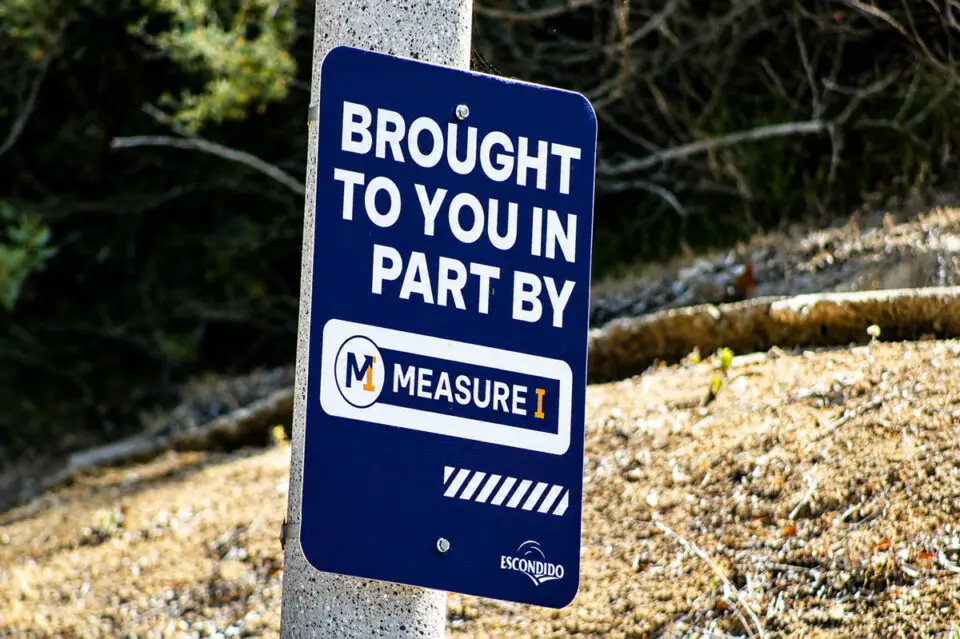
According to Finance Director Christina Holmes, the budget builds on investments made in the previous year and incorporates new revenue from Measure I, the city’s 1-cent sales tax initiative approved by voters in 2024, to fund two high-priority citywide initiatives: wildfire mitigation and traffic safety.
The wildfire mitigation initiative includes a new software tool that uses data to model wildfire behavior around the city, allowing first responders to identify areas most vulnerable to fire. The program carries a one-time cost of $60,000 and will be funded through Measure I revenue.
Of the two priorities, traffic safety received the larger investment. The city is allocating approximately $2.38 million in Measure I revenue toward traffic safety improvements, including $155,600 for a new motor officer, $311,200 for two traffic officers, $89,360 for a police traffic program coordinator, $415,000 for police vehicles and equipment, a $150,000 contribution to the Transportation and Community Safety Commission to advance high-priority projects, and a $1.6 million upgrade to the police safety suite.
The budget also includes approximately $1.475 million in new annual and one-time investments, including $250,000 for the November 2026 election, $50,000 for library consulting services, and a $50,000 increase for maintenance and operations funded through the general fund. It also allocates $1.125 million in Measure I funding to complete updates to the city’s general plan and zoning code.
In addition to the new traffic enforcement positions, the budget funds a reinstated finance manager position and several new staff positions, including two deputy fire marshals, two network systems engineers, one network systems technician, one business analyst, one systems analyst, a lakes and open space supervisor, three park rangers converted from part-time to full-time status, one criminal intelligence analyst, one police officer focused on internet crimes against children, a police program coordinator for community enhancement, and a police program coordinator for sex offender registration compliance.
The city expects to close the current fiscal year with a nearly $8.7 million operating budget surplus, combining general fund and Measure I revenue, with $178.65 million in revenue and $169.9 million in expenditures.
For fiscal year 2026-27, the city projects a $5.5 million operating budget surplus, with $182.78 million in revenue and $177.27 million in expenditures.
The city also expects to collect more than $36 million in Measure I revenue by June 30 and approximately $36.6 million next year, an increase of more than $500,000.
“It all looks really good and very promising,” said Councilmember Judy Fitzgerald.
Councilmember Consuelo Martinez praised the investments in traffic safety.
“Traffic is a big issue to our community,” she said.
Martinez also encouraged residents to continue sharing their priorities through budget workshops, online surveys on the city’s website and other community meetings that seek public input on local projects.
While the operating budget reflects a positive financial turnaround for the city, particularly due to Measure I, staff cautioned that operating revenue still has not kept pace with the rising costs of providing city services.
The city’s long-term general fund plan continues to project annual deficits ranging from more than $6 million to $27 million by fiscal year 2042-43. Staff said Measure I is expected to mitigate the city’s structural budget deficit for at least the next 20 years, giving the city time to identify additional revenue sources.