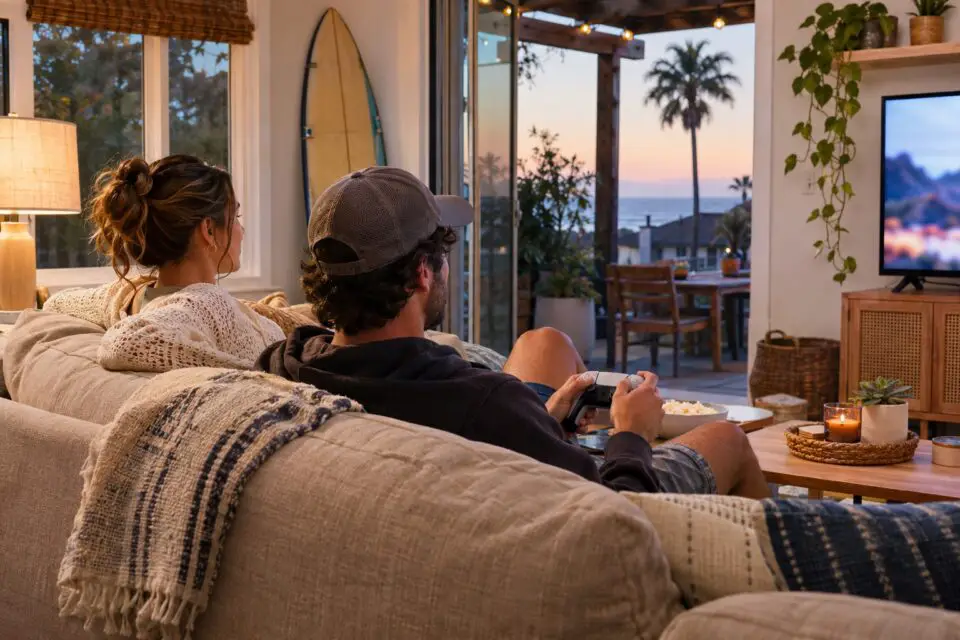
Drive down the 101 on a Saturday afternoon and the boardwalk in Encinitas looks about the same as it did a decade ago. Surfers, dog walkers, the usual line outside the coffee shop on D Street. But ask around about what people are doing that night, and the answer has shifted somewhere less visible. Fewer bonfires. Fewer backyard parties that spill into the street. A lot more people parked on a couch with a second screen open.
That shift didn’t happen overnight. It isn’t unique to San Diego’s coastline either. North County is a good place to watch it happen, though. These towns built their whole identity around being outside on weekends. When that culture starts competing with a phone screen and loses some ground, it’s worth asking what actually won.
The Data Behind the Quiet Weekend
Streaming habits in households nationwide have climbed steadily for years. The trend hasn’t reversed the way some predicted once pandemic restrictions lifted. A 2024 Nielsen report found that streaming accounted for more than 41% of total television usage in the U.S., overtaking cable and broadcast combined for the first time. That number keeps climbing. Weekend viewing skews even higher. It’s the block of time people control the most.
Local habits track the national curve pretty closely. Carlsbad and Oceanside both saw a rise in residential broadband upgrades over the past two years, driven in part by demand for higher bandwidth streaming and gaming. That alone doesn’t explain emptier sidewalks on a Friday night. But it’s part of the picture.
Where Gaming Fits Into the Shift
Video games have absorbed a meaningful share of that reclaimed weekend time, and not just among teenagers. The Entertainment Software Association’s most recent consumer survey found that the average U.S. gamer is now 36 years old, reflecting how gaming has become a regular part of adult leisure rather than a hobby reserved for younger audiences. For many, spending an evening with a favorite game offers an accessible way to unwind without leaving home.
The growing popularity of online entertainment reflects a broader change in how Americans spend their free time. Convenience, accessibility, and the ability to choose when and how to participate have become important factors. From multiplayer video games and mobile apps to streaming services and interactive entertainment, people increasingly prefer activities that fit around their schedules rather than requiring a trip to a physical venue.
This trend is visible across different parts of the country, including Louisiana, where traditional entertainment venues remain popular alongside digital alternatives. Some residents prefer visiting established attractions, while others explore online options from home. Resources covering casino sites for Louisianans are one example of how audiences discover specialized forms of online entertainment. The same preference for convenience can be seen in North County, where streaming, mobile gaming, and other at-home activities have become familiar weekend choices. Rather than replacing traditional outings entirely, digital entertainment gives people more flexibility in deciding how to spend their downtime.
What Replaced the Backyard Party
Ask a handful of Leucadia or Cardiff residents under 40 what a normal weekend looks like now, and a pattern shows up fast. Friday night is often a group chat coordinating a show everyone’s catching up on. Saturday afternoon might still be the beach. Saturday night has moved indoors more often than it used to, though.
Local bar owners along the 101 corridor have noticed foot traffic patterns shift too. Several reported softer late night numbers on weeknights specifically, even as weekend brunch business held steady or grew. Weeknight traffic softened. Weekend brunch held steady. That points to a shift in timing more than a drop in going out at all.
Part of this is generational. Part of it is economic. A night out in a beach town bar easily runs sixty or seventy dollars once parking and drinks are factored in. A streaming subscription costs a fraction of that for an entire month. The math isn’t subtle, and plenty of households have done it.
The Infrastructure Behind All of This
None of this works without the pipes underneath it. Fiber buildout across San Diego County has sped up over the past three years, and North County specifically has seen some of the fastest residential upgrades in the region as providers compete for market share in denser coastal zip codes.
That infrastructure push matters more than it gets credit for. A household streaming in 4K while someone else games online in the next room needs real bandwidth, and five years ago a lot of these towns simply didn’t have it. Now they do. The weekend habits that depend on it have followed accordingly.
There’s a reasonable argument that this is just displacement dressed up as change. North County hasn’t become a region of shut-ins. People haven’t stopped wanting a good night out. They’ve just found a cheaper, closer version of it. Whether that’s a net positive for a beach town built around outdoor culture is a harder question, and not one with an obvious answer yet.
The Weekend Is Still Evolving
North County hasn’t become a region of shut-ins. The beaches are still full, the breweries still do brisk Saturday business, and the farmers markets haven’t lost a step. What’s changed sits in the hours after dark, where a night that used to mean a bonfire or a bar crawl increasingly means something quieter and more screen-based. That shift tracks a national pattern, but it’s playing out in a place that built its whole brand on being outside. Whether that tension resolves itself or just becomes the new normal is probably a question for next summer’s foot traffic numbers.