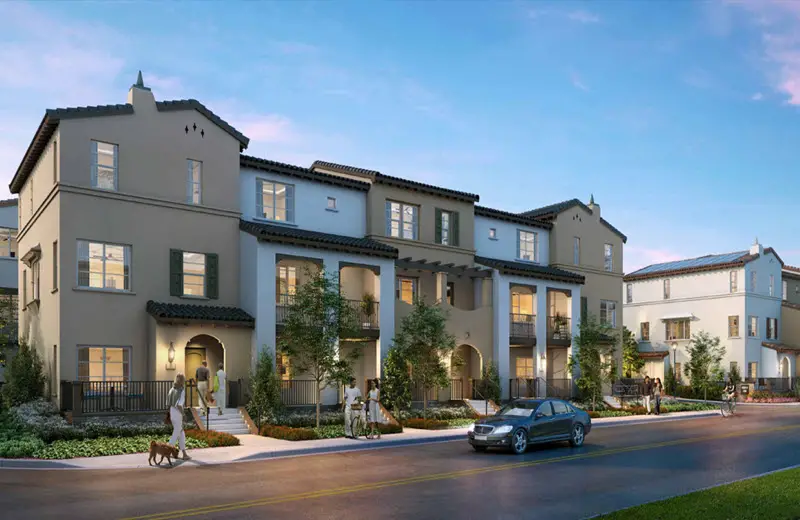
ESCONDIDO — Two housing projects in Escondido that would combine for more than 200 units will be processed by city staff after the City Council voted to move forward with that preliminary step.
By law, the city is allowed no more than four changes to its General Plan per year. These requests for amendments were the first two the city has received this year, according to Ivan Flores, a city planner.
Requests like these are generally approved as part of the council’s consent calendar due to their preliminary nature, but the two projects ultimately approved for staff review were pulled for further discussion at the April 15 meeting.
Neither project was approved for development during the meeting.
“In order for this project to be approvable, there will be a substantial number of studies done to address compliance of a variety of environmental issues — air quality being one, also noise, traffic and other considerations under CEQA [California Environmental Quality Act],” said Kevin Snyder, the city’s development services director. “This is simply a request to start the process. No more.”
Storm Properties
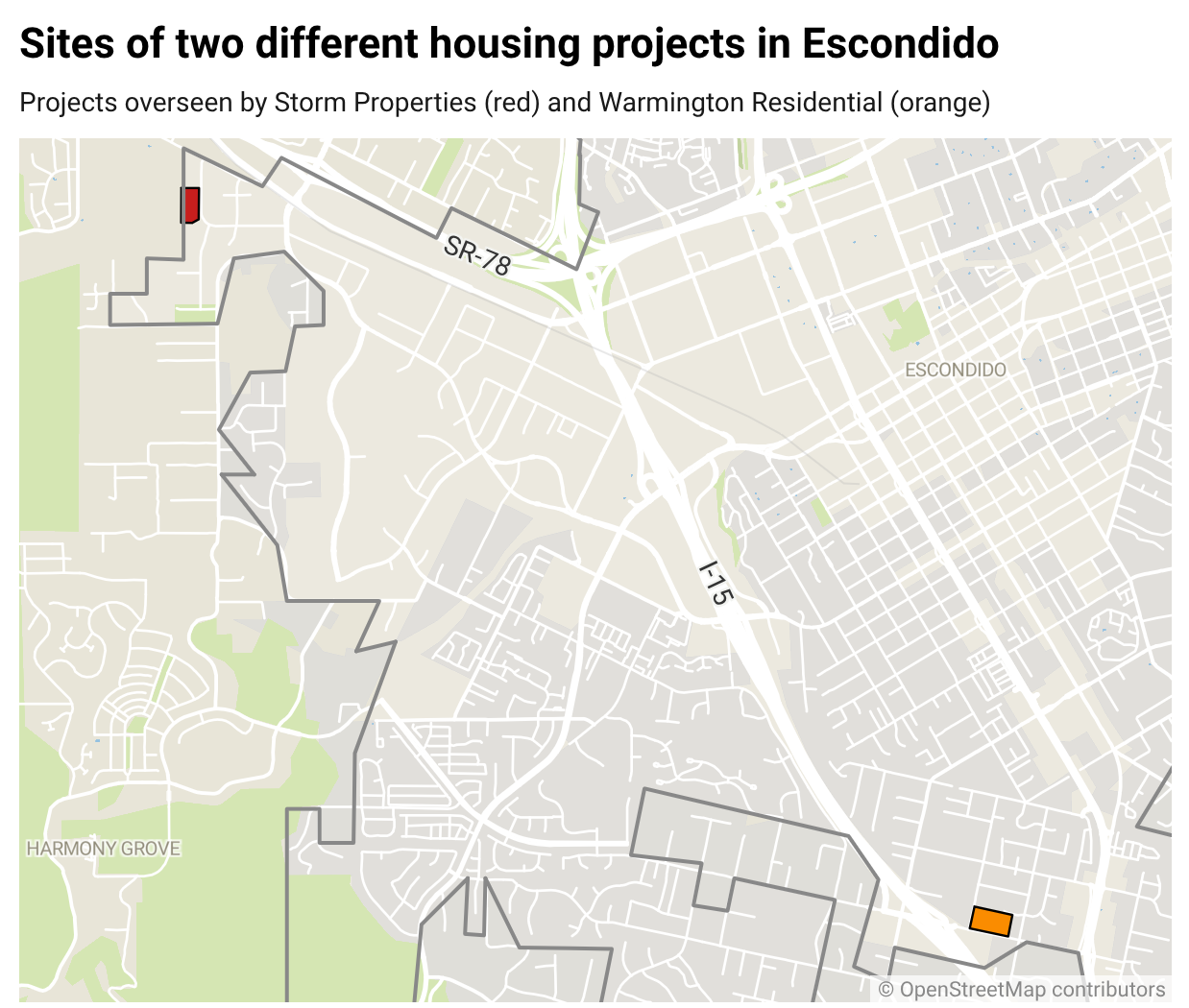
Developer Storm Properties submitted a request for a General Plan amendment to develop a property at the far west boundary of Escondido.
A housing development in San Marcos lies to the west, with Meyers Avenue to the east. The undeveloped property is surrounded by industrial uses on three sides.
The plan calls for 62 attached townhomes and 20 detached units, according to city documents. To do so, the developer has asked the city to rezone the land from light industrial to Urban IV.
Jay Ahluwalia, president of Storm Properties, told the council that the San Marcos development already uses the site for access due to an easement.
He added that the site has been difficult to develop for industrial use due to a 40-foot grade difference between the back and front of the property.
“There’s a lot of hard rock in this neighborhood,” Ahluwalia said. “All that rock needs to be blasted.”
He said an industrial project found the site “just not viable.”
“The only product that’s viable with the existing rock condition is something that can be graded down to the street, and that’s the reason for the residential project we’re proposing,” Ahluwalia said.
He added that this was not final approval but the beginning of the process, noting that the city would need to conduct a suite of tests to “make sure it’s a safe area.”
Laura Hunter, an Escondido resident who worked for the Environmental Health Coalition for 30 years, said the project would violate the city’s environmental justice policy.
She pointed to nearby chrome plating and welding businesses as sources of harmful emissions.
“I’m asking you to please reject this application at this point. This is not a safe place for housing. It’s surrounded on three sides by light industrial,” Hunter said. “Just because it’s undevelopable for light industry, that doesn’t mean we put people in harm’s way.”
Councilmember Judy Fitzgerald said she was “anxious” about air quality and emissions testing but wanted to allow staff to complete the studies.
“I’m glad to hear those studies are going to be done,” Fitzgerald said.
The council voted 3-2 to approve further staff review of the project. Councilmember Consuelo Martinez and Mayor Dane White cast dissenting votes.
After questioning Ahluwalia, Martinez called the decision “a tough one.”
“I hear what you’re saying, and I am very sensitive to the fact of housing being in this area, and I know we’re not approving a project, so I know it’s very early on, but I’m still struggling a bit with this one,” she said.
White said he was also conflicted, citing the surrounding industrial uses.
“I’m definitely not opposed to housing, but I am struggling with this one a little bit,” he said.
Warmington Residential
The council unanimously approved the second project for staff review. It would be located at the intersection of Miller Avenue and West Citracado Parkway, near Interstate 15.
“When the city adopted its general plan in 2012, we had initially identified this area as an opportunity to increase employment densities to attract businesses that would raise the city’s median income,” Flores said.
Developer Warmington Residential submitted a General Plan amendment request to rezone the land from planned office to Urban III to build 126 multifamily attached townhomes, according to city documents.
Mathew Esquivel, representing Warmington, said the idea for the project came from the surrounding area being primarily residential.
Esquivel added that his team previously developed Boulevard Park as an infill project in Escondido.
Hunter raised concerns about affordability and the site’s proximity to Interstate 15.
“People should not be living within 500 feet of a freeway, it’s very unhealthy,” she said.
Hunter said she pulled the item from the consent calendar due to a long-standing concern.
“Do we have a plan? And do we follow it?” she asked. “Or are we building a city on a developer-driven basis?”
Deputy Mayor Joe Garcia said converting employment land to housing should not be taken lightly and called for clear long-term trade-offs.
Fitzgerald, who represents the district, said she appreciated the project’s for-sale housing component based on feedback from constituents.
She added that the rezoning reflects a lack of demand for office space.
“We have to be able to see what the needs are — the housing needs — and then also the spaces that we do have, and being able to change the zoning to be able to provide what our community’s needs are,” Fitzgerald said.
Related Articles:
- Election Q&A with Oceanside City Council candidates October 22, 2024
- The decades-long battle for Ponto reaches a crossroads July 7, 2026
- Hundreds of new homes test rural Bonsall February 17, 2026
- Del Mar rejects Seaside Ridge, concedes North Bluff… May 22, 2026
- Del Mar mayor’s late disclosures raise flags in… June 18, 2025
- Former workers recount city's denial of religious… August 15, 2024