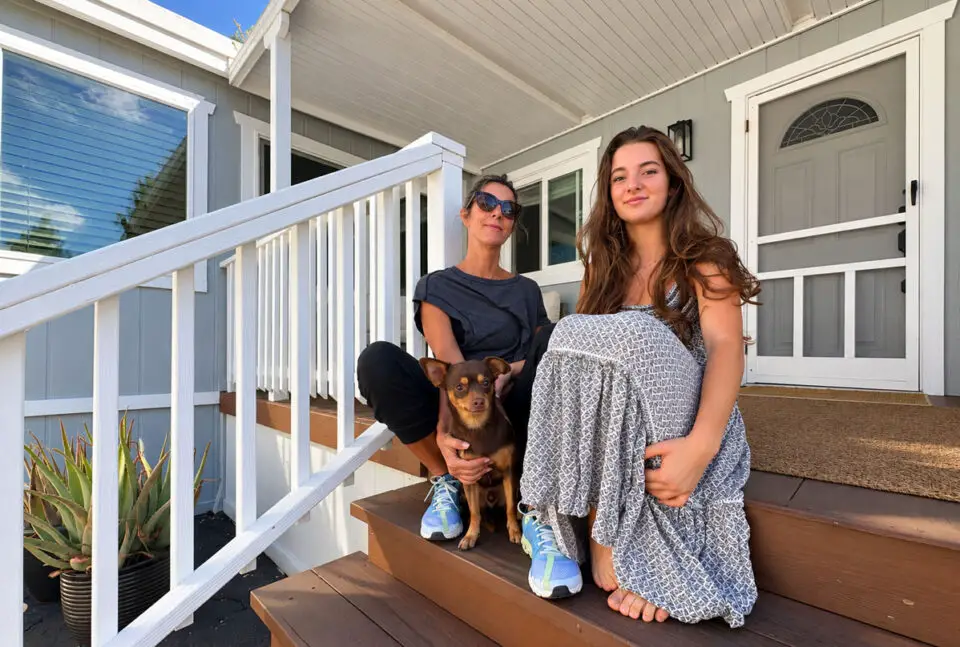
ENCINITAS — Encinitas has temporarily capped rent increases for mobile home spaces as the city considers permanent protections for residents who own their homes but rent the land beneath them.
In a series of unanimous votes on Oct. 28, the City Council adopted an urgency ordinance and introduced a second ordinance limiting space rent increases to the lesser of 4% or 75% of the annual change in the regional Consumer Price Index.
The urgency ordinance took effect immediately. The second ordinance, scheduled for consideration Nov. 18, would take effect 30 days after adoption and replace the urgency measure with the same temporary restrictions.
Under the measures, the restrictions would expire July 30, 2027, or when a permanent rent stabilization program takes effect, whichever comes first, unless the council extends them, according to city documents.
Councilmember Joy Lyndes said both ordinances were the first step toward a long-term solution to an issue that has become contentious between mobile homeowners and park owners.
“I see this urgency ordinance and this temporary ordinance as hitting a pause, because we still need to know a lot,” Lyndes said. “We still need to learn a lot. We need to get input.”
City Attorney Ajit Thind said the urgency ordinance was needed to address rent increases scheduled for Nov. 1.
“A regular ordinance alone would take effect too late to stop the November 1 increases, so that’s why we are proposing an emergency ordinance,” Thind said, “but we’re also proposing a backup ordinance as well.”
The action followed the council’s Oct. 14 direction to draft immediate protections after residents described mounting financial pressures, declining home values and fears of displacement.
As The Coast News previously reported, some Riviera Mobile Home Park residents initially faced increases of more than 17% beginning Nov. 1. Shortly before the Oct. 14 meeting, management notified residents it would reduce the proposed increases to 4%.
At that meeting, Ralph Beatty, managing director and co-founder of Laguna Asset Management, which manages Riviera, apologized for underestimating the impact. He said the original increases were meant to align rents across different lot sizes and that the company offered rental assistance.
Residents said the voluntary reduction did not provide certainty about future increases.
Temporary protections
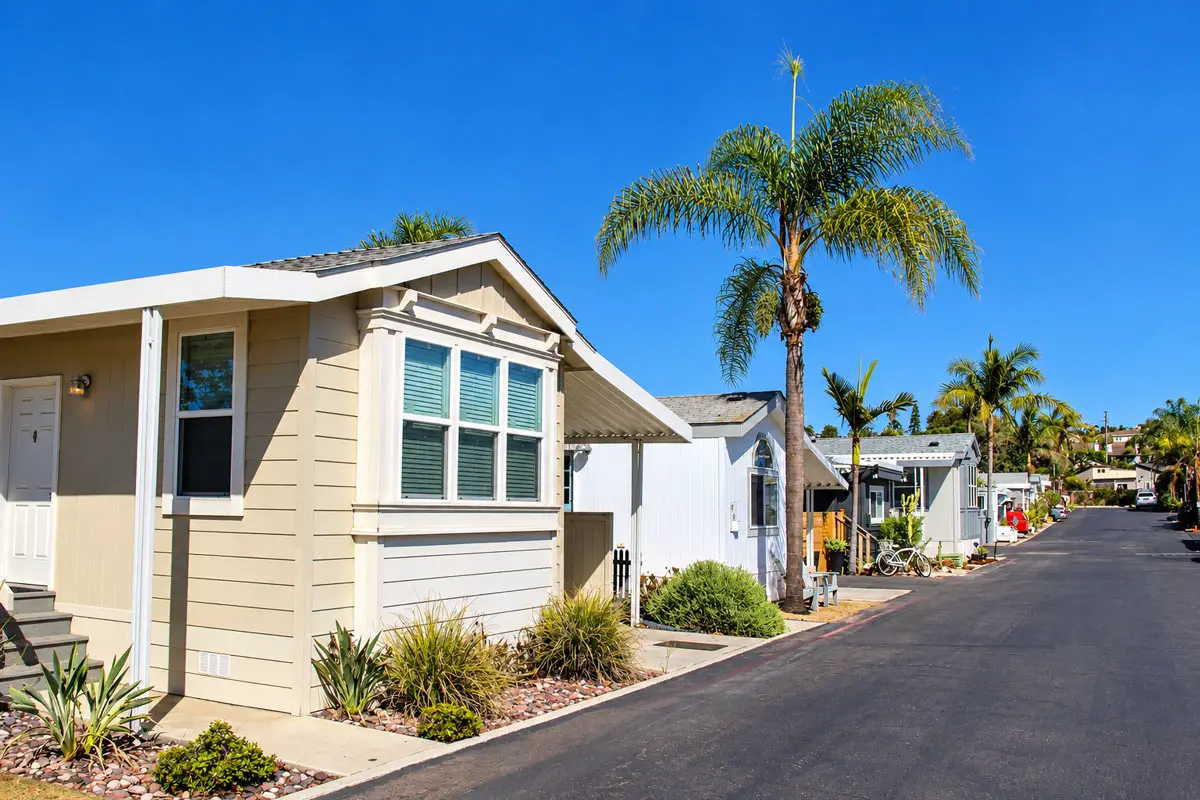
Encinitas has approximately 729 mobile home spaces in 11 parks, according to the staff report.
Residents typically own their homes but rent the spaces beneath them. Relocating the homes can be expensive or impractical, leaving residents with limited options when rents rise. Higher space rents can also reduce resale values by increasing the ongoing costs prospective buyers must absorb, the report states.
The temporary measures use rents in effect Oct. 28 as the baseline, allowing increases within the cap tied to the preceding 12-month change in the Consumer Price Index for the San Diego-Chula Vista-Carlsbad region.
The ordinances also prohibit owners from circumventing the restrictions by imposing new or increased charges in place of rent, reducing services without a corresponding rent reduction, or retaliating against residents who exercise their rights under the rules.

Owners who believe the permitted increase would not provide a fair return may petition the city clerk for a larger adjustment. The request would go before the City Council at a public hearing.
Increases that violate the ordinance would be void and unenforceable, and excess rent collected would be subject to a refund or credit. Residents could pursue civil remedies, and the city could enforce the rules through municipal and other legal procedures.
Heidi Holzworth, a Riviera resident and member of SOS Encinitas, a coalition of manufactured homeowners, said the difficulty of moving homes prevents the market from functioning like a conventional rental market.
“[Park owners] say it’s market rate,” Holzworth said. “They’re making up the market.”
She said concerns extended beyond Riviera, alleging that Trailer Rancho charges homeowners for repairs in addition to rent and that Beacon’s Beach Village and Valley of Dreams raised fees 40% in one year in response to homeowners’ organizing efforts.
“I’ve seen this playbook before,” she said. “And these predatory practices — I can affirm to you — are not just at Riviera.”
Holzworth added that many park owners live outside Encinitas, while residents spend money at local businesses.
“Our favorite places are right down on the 101,” she said. “Every dollar you keep in our pocket is spent in Encinitas and if a homeowner is lucky enough to sell their home here, they’re often moving to a better place in Encinitas because this is the place we want to be. It is worth being here.”
Permanent rules
Julie Paule, a regional representative of the Western Manufactured Housing Communities Association, told the council she worried the temporary restrictions would “become the baseline for discussions on the permanent ordinance.”
She argued that limiting increases to 75% of inflation could create a cumulative gap between rents and rising costs, which she estimated at roughly 10% over time.
“That gap has to be addressed somewhere and the available mechanism is a special rent increase application,” Paule said. “Instead of having a slow steady rent increase, they get hit with a big catch up to that gap.”
She said the potential for large, one-time adjustments would be “really harmful and difficult for the residents.”
Paule also advocated for vacancy decontrol, which would allow space rents to reset when a home changes hands, rather than keeping the space subject to rent restrictions after a sale.
She argued that restricting space rents could drive up home sale prices, allowing departing homeowners to capture the financial benefit of the protections.
“There are two avenues to purchase or to own a home in a mobile home park,” Paule said. “You have to rent the space and purchase the home and if you only cap one of those, the other skyrockets.”
Deputy Mayor Jim O’Hara said he did not support vacancy decontrol.
“I think it’s a risk of business,” O’Hara said.
He described the issue as a social contract and said the city should receive credit for mobile homes as a source of naturally affordable housing.
“We don’t understand why we don’t get credit for these mobile homes as part of our low-income inventory in the city,” O’Hara said.
The staff report notes that the city’s General Plan and North 101 Specific Plan include policies and zoning intended to preserve mobile home parks and maintain a range of housing types.
Councilmember Marco San Antonio said that, as a business owner, he was “trying to see both sides” because “out there it’s tough, business is tough.”
“I don’t know the park owner’s business, but what I do know is business,” San Antonio said. “And there are times it’s up and down. Costs go up, expenses go up.”
Mayor Bruce Ehlers addressed Paule’s concern that the temporary cap could determine the permanent policy.
“I wanted to make the point about the 75% of CPI,” Ehlers said. “I don’t think that is necessarily what the permanent one will be. I don’t know what the permanent one will be, but for the urgency ordinance, I support it.”
He said the final policy should be fair to park owners and homeowners while preserving longstanding communities.
“I’m sure we’ll have good long discussions about how to be fair because on the other hand, I don’t want to penalize the property owner so much that they don’t keep up,” Ehlers said. “And by the same token, if we make it so that the homeowners can’t take any value with them, they won’t invest, and we’ll end up with worsening and worsening building conditions.
“This is something we should have addressed a long time ago and so I’m very happy that we’re doing it and doing it now. This is Encinitas, it’s part of our fabric.”
Councilmember Luke Shaffer said he viewed the actions as a market correction and wanted to avoid creating a “backlash or market correction in the opposite direction.”
“We want some level of consistency and planning and stabilization,” Shaffer said.
He added that he hoped the regulations would avoid driving out longtime, responsible park owners.
“Life’s a bunch of curves and we govern in straight lines,” Shaffer said. “And so there’s a gap there that is missing if we send a straight line and we get rid of all the good owners, the only ones left are the ones that are doing it wrong. And that’s the part that I really appreciate in this process.”
City staff will evaluate permanent regulations, including approaches used in other jurisdictions and potential administrative and enforcement procedures, before returning to the council with recommendations. Adopting the temporary restrictions does not obligate the council to approve a permanent program.