ENCINITAS — From a mixture of federal and local sources totaling more than $800,000, the Encinitas City Council approved grant funding for several projects and set guidelines for how staff will vet other projects to receive the remaining dollars.
Since 1990, the U.S. Department of Housing and Urban Development has awarded the city grant funds to meet a variety of housing, community and other needs for low- and moderate-income residents through HUD’s Community Development Block Grant, or CDBG, program.
The city was awarded $291,470 in CDBG funding for fiscal year 2026-27, according to city documents.
Of that amount, 15% has been allocated to public services such as the Boys & Girls Club, Community Resource Center and Meals on Wheels. In addition to the $43,720 from the CDBG, the city will use $11,280 in a General Fund subsidy for those programs, according to the documents.
Encinitas also plans to allocate 20% of the total funding — $58,294 — to program administration and fair housing services.
The remaining $189,456 is earmarked for a residential rehabilitation program.
Through the program in fiscal year 2024-25, three homeowners received grants for residential rehabilitation projects; 50 residents received fair housing assistance; 687 homeless residents received food assistance; and 98 senior residents received meals, according to the documents.
Cindy Schubert, who oversees the program for the city, said at the April 15 City Council meeting that residents seeking grant funding for rehabilitation projects go through an income audit to ensure they meet eligibility standards. Low-income residents can be either tenants or owners, she added.
Schubert said the city is seeking to expand the program to include nonprofit owners of deed-restricted affordable units, such as the Encinitas Historical Society’s Boathouses.
“We are looking to spend some more of our money to enable the nonprofits in our city who own property that do rent to um low-income tenants to have a means to take care of things that may be ADA improvements, health and safety repairs,” she said.
Schubert added that unused residential rehabilitation funds roll over, and the city currently has an excess balance of about $400,000.
Mayor Bruce Ehlers said he had suspected the city had not been using all of its CDBG funds for that program.
Ehlers added that the city might want to make exceptions to include historic, market-rate properties such as the Encinitas Boathouses or the apartment atop the La Paloma Theatre.
Deputy Mayor Jim O’Hara said he believed the city should implement tighter guardrails on the types of projects that qualify, calling it a potential “slippery slope” to allocate funds to groups that “should be responsibly owning their complex,” such as in the case of the Boathouses.
“I’m shocked by the lack of the council wanting to put some better side rails up along these dollars and narrow the scope,” O’Hara said.
O’Hara added that, based on what he sees in the community, it would be easy to identify residences better served by CDBG funds. He said he feared the process could be taken advantage of by people it was not intended to help.
“I’m going to support this because I think it’s a good program,” O’Hara said. “I’m going to put a lot of pressure on staff who I think has worked really hard on this and has the best intentions and I want to see you follow through on this.”
Scott Drapkin, the city’s director of development services, said much of the administrative oversight budget goes toward ensuring CDBG funds are spent correctly.
Drapkin added that including possible new recipients was strategic.
“That’s the purpose of expanding the program, so we can utilize some of those funds that have rolled over,” he said.
Councilmember Marco San Antonio said he supported O’Hara’s call for tighter regulations but did not want to slow the process. He said the council may want to revisit the requirements at a future meeting to “look at this deeper.”
“The staff, I trust you guys, you haven’t let me down yet,” he said. “I just want to make sure that the $589,000 gets spent in the best way possible to help the most amount of people.”
Councilmember Joy Lyndes said she supported expanding eligibility to bring more rental units into the program, noting that renters can be a “fragile” population. She said more than 40% of residents in her district are renters.
“They’re on the edges of if my landlord raises the rent because they need to continue to add these improvements, then it’s no longer affordable,” Lyndes said.
Councilmember Luke Shaffer echoed that point.
“As Councilmember Lyndes said, it should go to the people who are in need,” he said.
Shaffer said city staff was “intelligent enough, capable enough” to ensure proper use of funds.
“We just don’t want somebody gaming the game and screwing the system,” he said. “We have a smart enough staff that have written a process in place to do exactly what our intention is.”
The staff recommendations for the program passed unanimously.
Community grants
The City Council also approved allocations for the Community Grant Program at the April 15 meeting.
Through the program, officials allocated $150,000 — $145,000 from the General Fund and a $5,000 donation from the Ecke family — for projects in fiscal year 2026-27, according to city documents.
Of the total, 80% was divided evenly among qualified applicants, while the remaining 20% was distributed at the council’s discretion.
The city received 53 qualified applications that met policy criteria. Each received a base allocation of $2,264.
Each council member had about $6,000 to distribute at their discretion.
O’Hara recused himself from the discussion of TrueCare North County Health’s interactive educational event project because his wife is a pediatrician at that location.
Shaffer contributed $500 from his allocation to the project, which requested $3,000. The funding passed unanimously, excluding the deputy mayor, who left the room during the discussion.
The remaining 52 projects ranged in cost from $2,500 to $1,225,095 and were expected to serve between about 12 and 60,000 residents, according to the city.
Three organizations — Exposure Skate, San Dieguito Alliance for Drug Free Youth and the Encinitas Historical Society — received contributions from all five council members.
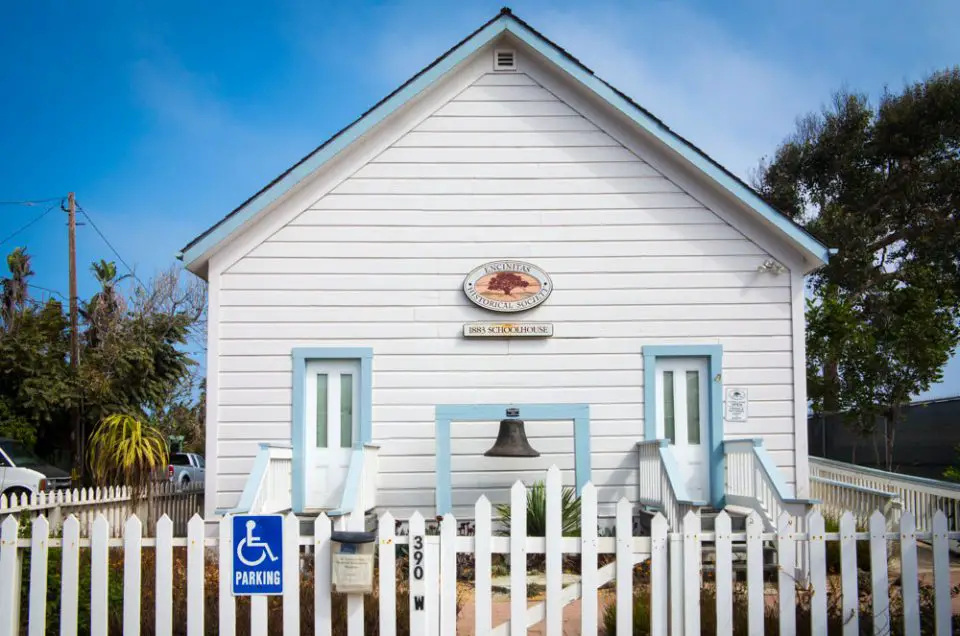
The Encinitas Historical Society sought and received funding to add lighting to the Schoolhouse entrance, an Americans with Disabilities Act-compliant ramp and restrooms.
Exposure Skate received funding for Skate Rising, a series of free skate lessons for girls ages 4-16 led by professional and Olympic skaters.
San Dieguito Alliance for Drug Free Youth received funding for Study Buddy, a program that pairs elementary school students with teenage mentors to build relationships focused on social-emotional growth.