
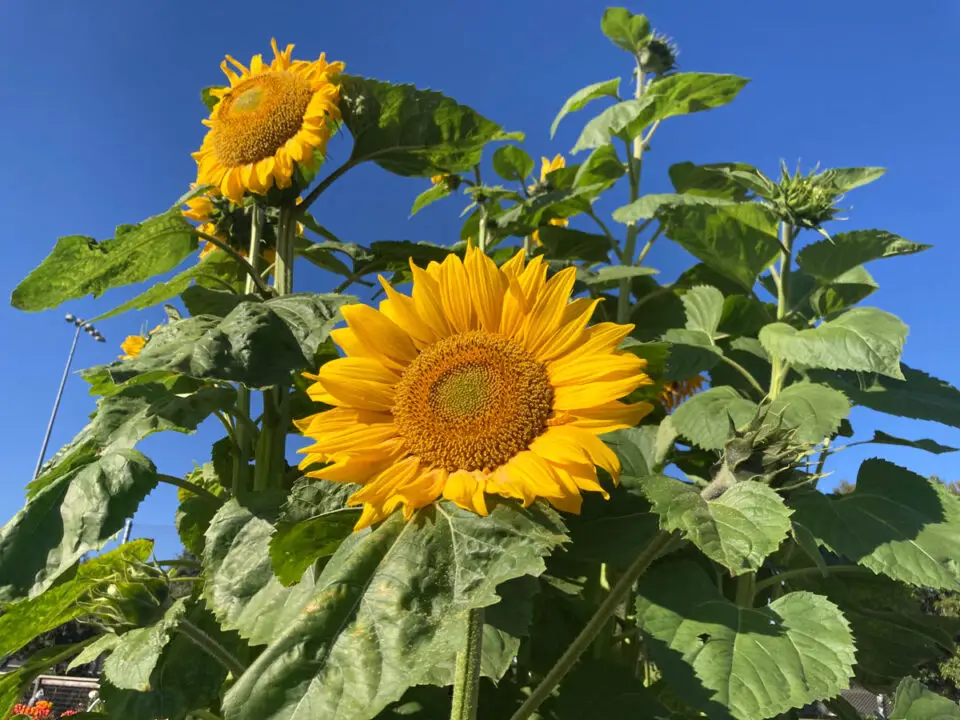
Growing as fast as a teenage boy, with arms dangling in the wind and a head so large it can barely hold its own weight, the giant, 7-foot black oil sunflower towers over the entire raised bed at the Carlsbad Senior Community Garden.
Sunflowers are the cheapest but most awe-inspiring flowers in the garden.
My mentor and professor from SUNY Cobleskill, Chris Cash, demonstrated the easy solution to converting a drab backyard plot or boring front yard into a showpiece.
The trick is to find black oil sunflower seed used as bird food. At $5 for a 5-pound bag, there cannot be a cheaper way to grow a field of sunflowers. If not available at the local hardware store, there are numerous sources online; just buy the biggest bag you can afford.
TIME TO PLANT
If you plan to use a large space, such as a front lawn or backyard, the area must be fully weeded and cultivated. Be certain you have removed all grass and weeds. Use an organic weed and grass killer or spray the entire area with white vinegar and cover it with a large plastic drop cloth for at least a week. The ideal size for your plot would be at least 10 by 10 feet.
When the week is over, simply clear the area and use a rototiller or rake to clear all dead weeds.
Once the area is cleared, you are ready to plant.
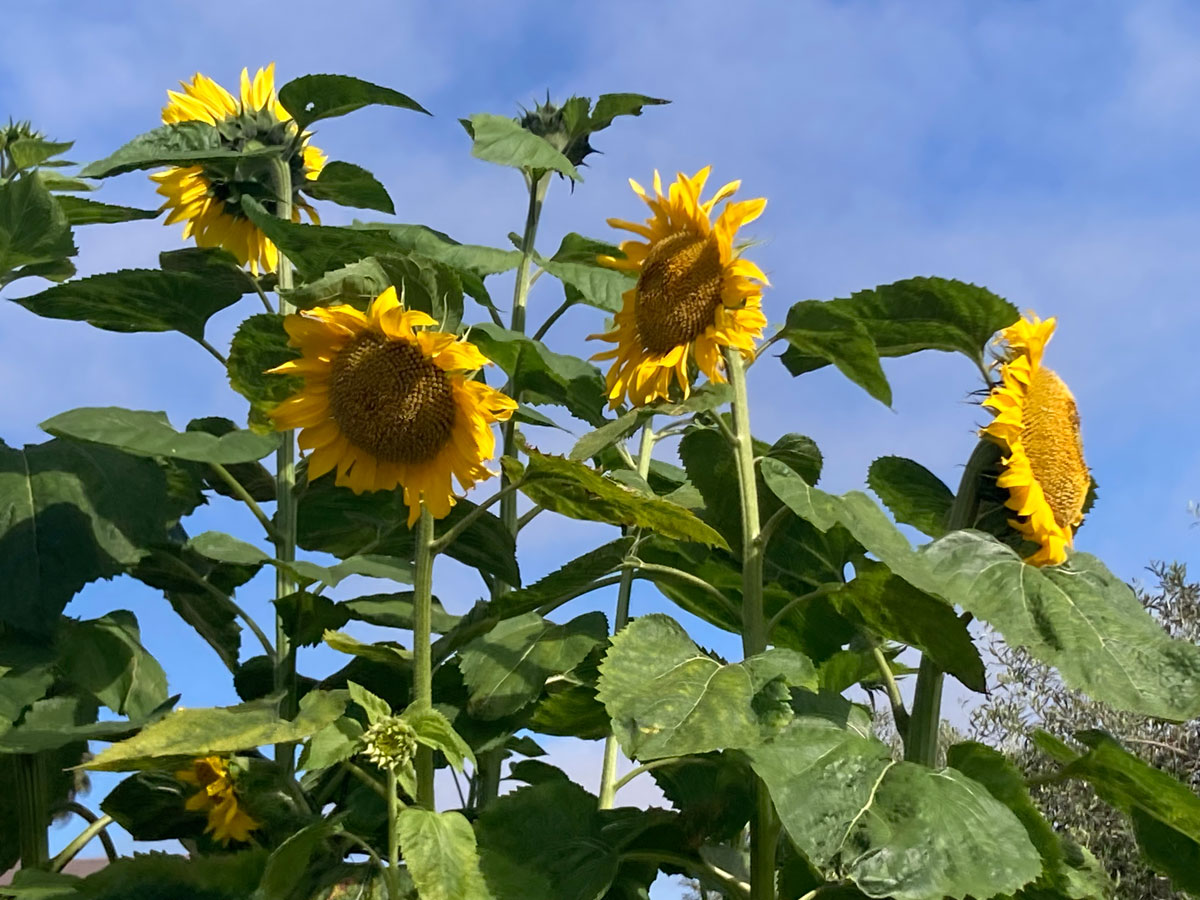
PLANTING THE SUNFLOWER BED
1. Using the black oil sunflower seed as a backdrop, make three long rows with your hoe and scatter 3-4 seeds every few inches. You can use your hand or an empty spice container to scatter seeds.
2. Repeat this process until you have prepared at least six more rows, using small and medium varieties in descending order.
3. Recommended varieties include medium – lemon queen, piccolo; short: teddy bear, Sungold, yellow pigmy. (All available from edenbrothers.com)
4. Cover the entire area with a Remay plant cover and water deeply. Place rocks or bricks on the edges of the plant cover.
5. After about one week, germination will begin, and it’s time to remove the plant cover.
6. Water the bed every few days. Don’t worry too much about weeds since the sunflowers will push them out.
7. When the sprouts are 5-6 inches tall, remove every third sprout and feed to the birds. Leave a space of approximately 4-5 inches between sprouts.
8. At this point, just watch them grow and wait until they are ready to harvest, which takes about one month.
9. Don’t forget to take pictures and notate in your garden journal the success or failure of each variety.
FINAL HARVEST
Many of my students and neighbors ask when is the best time to harvest the seeds. Because the flower can continue growing for over a month, you must wait until the fuzzy yellow halo at the center of the flower disappears.
Patience will prevail if you wait until the black or striped seeds are clearly visible, and this can take up to one month. The seed head itself will also begin to droop as if its work is done!
If you can reach the top of the towering stem (you might need a ladder!), cut off the entire flower, leaving at least 1 foot of the stem. At this point, you can tie a few together with string and hang outdoors or in a warm garage until the seeds are extremely dry.
The seeds are ready when they appear dark and pull away easily from the flower head. If the seeds are still green, they will not be suitable for seed saving, so be certain they are completely mature.
Dry on paper towels for a few days, and store in brown paper bags in a dark, dry place (not in the refrigerator). Be sure to label each variety, so you can give it to friends or save it for next year.
FINAL PHASE
Be certain to leave the stalks standing so you can use them as props for your next planting of cucumbers or pole beans. Because many of the varieties host such hefty stems, some 3 inches in diameter, they act as a pole for your next crop.
This might also be an opportune time to plant morning glories at the base of each stalk and the bright blue or purple blooms will continue through the fall.
AS VAN GOGH SAID …
Reegan Lessie, my friend and fellow gardener from the Baba Café in Carlsbad, loaned me a book from the Van Gogh exhibit at the Getty Museum.
Van Gogh thought, “I console myself by reconsidering the sunflowers.” I guess he said it all, so start planting!
Jano Nightingale is a Master Gardener and horticulturist who teaches at the Carlsbad Senior Center Community Garden. She can be reached at [email protected] for course information and consultations.


