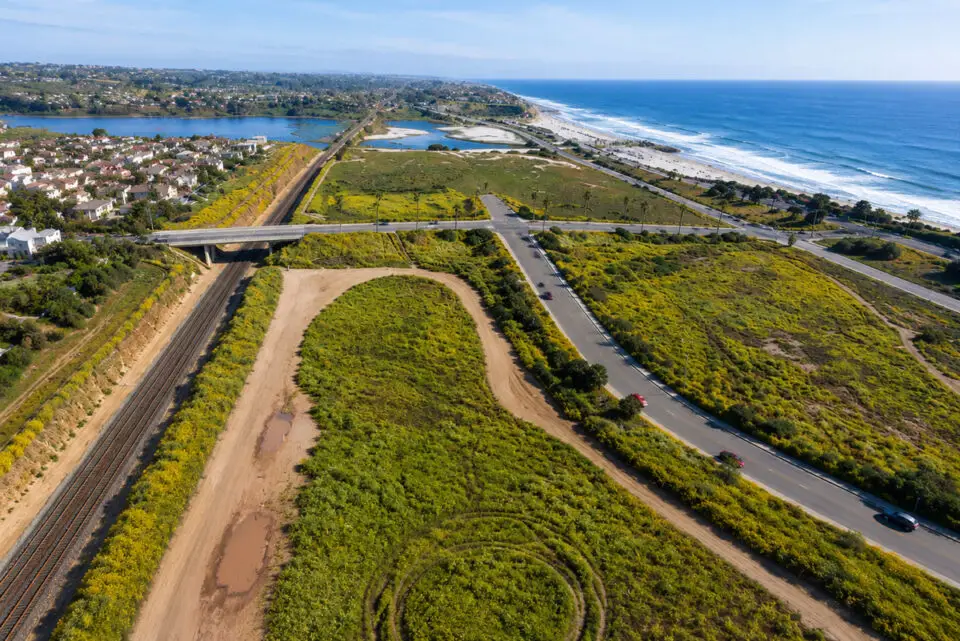
CARLSBAD — A decades-long fight to preserve one of South Carlsbad’s last undeveloped coastal properties suffered a major setback Thursday when the California Coastal Commission voted 7-4 to approve land-use changes allowing 120 rental townhomes near South Ponto Beach, rejecting residents’ appeals to reserve the property for a public park.
The Oct. 8 decision followed approximately five hours of discussion at the Oceanside Civic Center, where 93 people addressed commissioners, including 41 in person and 52 remotely. Most speakers opposed residential development on the 11.1-acre property known as Planning Area F.
“This is an extremely important topic on an extremely important part of land,” People for Ponto member Jodi Jones told the commission. “A coastal park is what is needed. There is nothing right about taking the last remaining open space and putting concrete buildings on it.”
The vote clears a significant regulatory hurdle for San Diego-based developer H.G. Fenton Co., whose proposed PI Townhomes project includes residential units, commercial space and public trails. However, the decision does not authorize construction. The project still requires approval from the Carlsbad City Council.
The dispute over the property stretches back decades.
As The Coast News previously reported, the battle over a public park dates to planning decisions in the 1980s and 1990s. The Coastal Commission rejected an earlier Ponto development plan in 2010, citing inadequate consideration of public recreation and lower-cost visitor accommodations.
The property remained designated as a nonresidential reserve under the 1993 Poinsettia Shores Master Plan, although residential and commercial land-use designations were approved in 2016.
The Coast News also previously reported that H.G. Fenton Co. purchased the property in September 2022 for less than $8 million.
For People for Ponto, a grassroots organization that has spent years campaigning for a coastal park and collected more than 20,000 petition signatures and messages of support from residents and visitors, the decision represents a potentially irreversible loss of public recreation opportunities.
In written correspondence submitted to the commission before the hearing, Carlsbad residents Christy and Kyle Johnson urged regulators to consider the consequences of developing the property.
“We cannot create more coastal land, and we cannot replace our open spaces once they are built over. We will not get this opportunity again,” they wrote.
Another resident, Victoria Earle, said she visits Ponto Beach weekly with her toddler and expressed concern about increasing development along the coastline.
“This land will have so much more impact to our local community as a beautiful communal park space, rather than building even more high density housing,” Earle wrote.
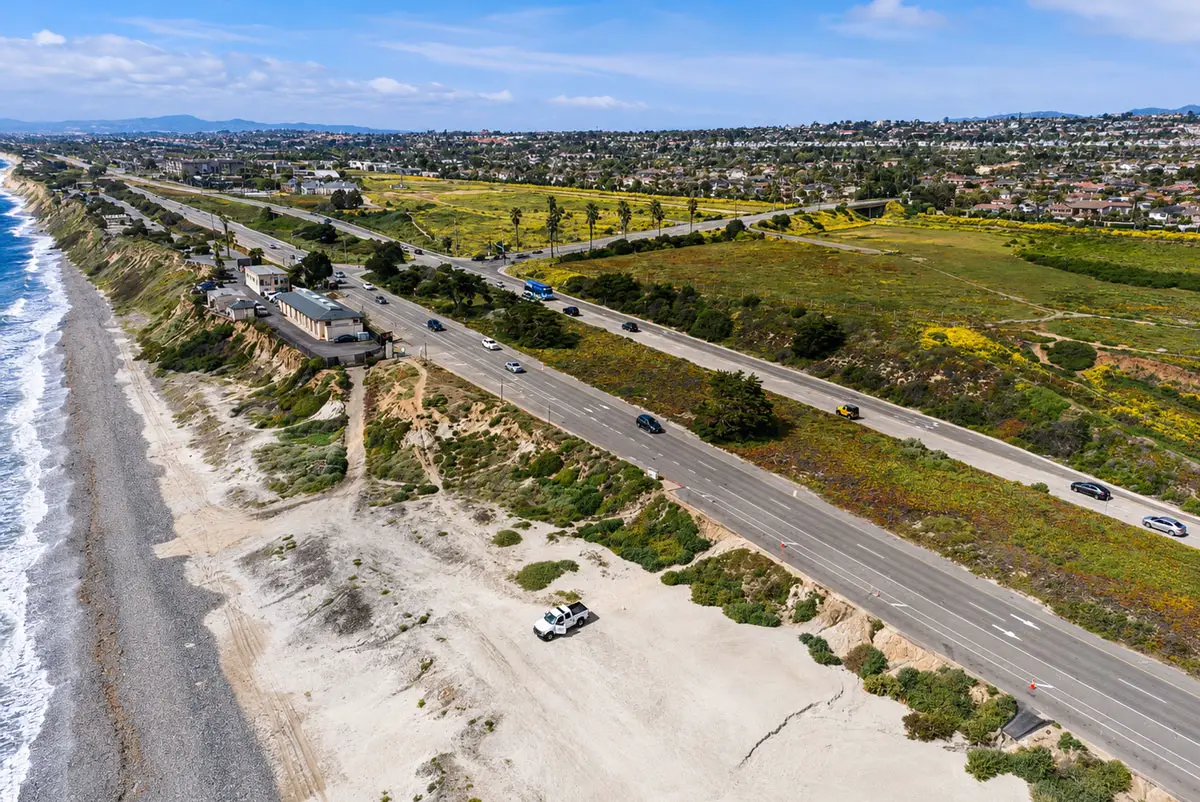
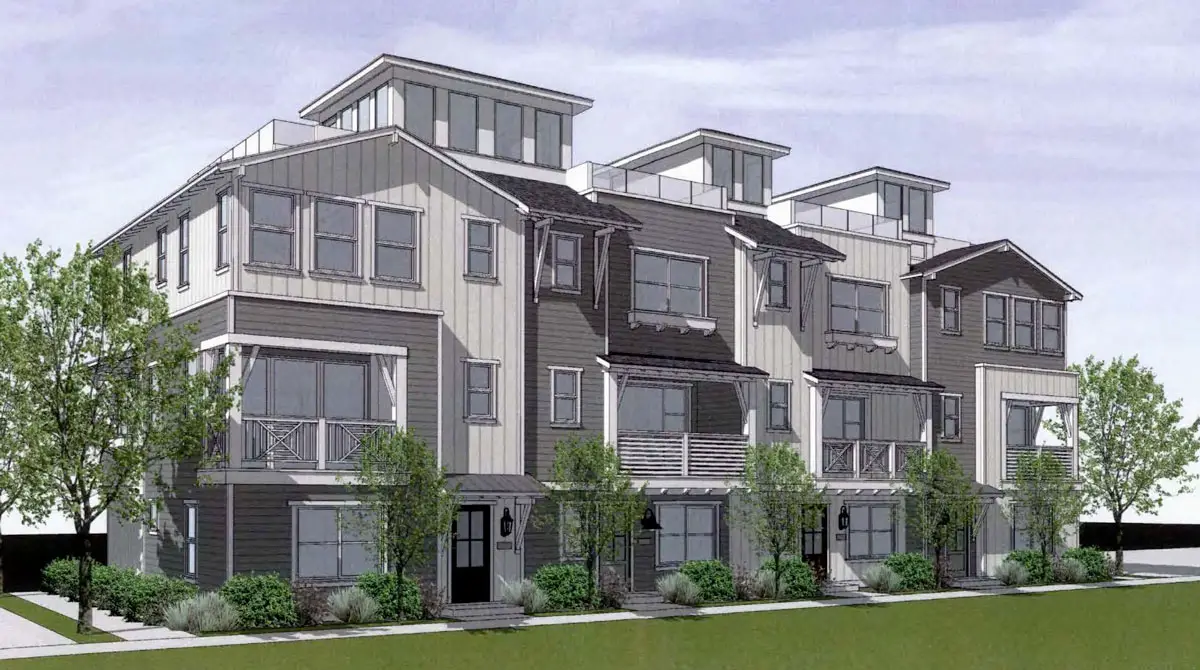
The commission’s decision followed a staff recommendation supporting residential development while preserving portions of the property for visitor-serving activities, habitat protection and the potential inland relocation of Carlsbad Boulevard or South Carlsbad State Beach campground due to sea-level rise.
Under the recommended modifications, the eastern portion could accommodate housing, while development on the western portion would be restricted to smaller visitor-serving uses, public trails and habitat restoration.
Coastal Commission staff concluded that the residential development would help Carlsbad meet its housing obligations and that the city had demonstrated adequate parkland availability.
According to the city, planners measure park obligations by quadrant rather than by neighborhood. The Growth Management Monitoring (GMM) report found all four quadrants currently exceed the city’s standard of three acres of community park or special-use parkland per 1,000 residents.
But residents disputed that conclusion, arguing that existing parks are too distant from South Carlsbad neighborhoods to provide meaningful recreational access.
People for Ponto argues that North Carlsbad has 10 coastal parks west of Interstate 5 totaling roughly 37 acres, while South Carlsbad — home to a majority of the city’s residents — has no coastal park, despite decades of residential growth.
The group envisioned a six-acre community park in South Carlsbad’s Ponto neighborhood based on maintaining a ratio of three acres of parkland per 1,000 residents in the city’s southwest quadrant.
On Thursday, the commission majority disagreed, advancing the housing proposal despite residents’ arguments that preserving the remaining coastal open space should take precedence.
Commission Vice Chair Caryl Hart, Chair Meagan Harmon and commissioners Mike Wilson and Suzanne Smith opposed Thursday’s approval, citing concerns about coastal recreation and the permanent loss of undeveloped land.
“Once this is developed, you will never get it back,” Hart said. “I think you have to really look at what is going to be the impact of this housing development in this area and the loss of this area permanently.”
Commissioner Roberto Kalmick, however, questioned whether the Coastal Commission was the appropriate venue to resolve the dispute, arguing that the responsibility for pursuing a public park rested primarily with the Carlsbad City Council.
“I don’t believe this is a venue to achieve that goal for the residents,” Kalmick said. “I think again this may be the wrong venue for that.”
Commissioner Ray Jackson also acknowledged the residents’ sustained advocacy but emphasized the limits of the commission’s authority.
“Now, we may prefer a particular outcome, but at the end of the day, it’s not our preference that prevails,” Jackson said.
In his correspondence, Carlsbad resident Dennis Cowan urged officials to preserve enough land for meaningful recreation rather than relying on smaller landscaped areas.
“Parks are for everyone,” Cowan wrote.
Despite clearing a major regulatory hurdle, the proposed development still requires Carlsbad City Council approval, leaving the long-running dispute over Ponto’s future unresolved.