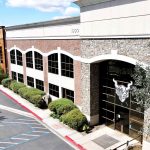
SAN DIEGO — As multi-agency investigations into the deadly violence passed the 24-hour mark, Islamic community leaders and law enforcement officials Tuesday hailed as heroes the three men who lost their lives in this week’s shooting rampage at a Clairemont Mesa mosque.
The victims of the apparent hate-crime killings “sacrificed their lives to protect the entire community inside the Islamic Center of San Diego,” Imam Taha Hassane, director of the Eckstrom Avenue mosque, told reporters during a midday briefing Tuesday.
One of the men slain during the late-morning attack — carried out, according to investigators, by two teenagers who later shot themselves to death — was a security guard who helped thwart further bloodshed by exchanging gunfire with the assailants, suffering fatal wounds in the process.
“His actions without a doubt delayed, distracted and ultimately deterred these two individuals from gaining access to the greater areas of the mosque, where as many as 140 kids were within 15 feet of these suspects,” San Diego Police Chief Scott Wahl said of security worker Amin Abdullah. “Tragically, he died in that gunbattle.”
The others who perished in the gun rampage at the mosque, congregation members Nader Awad and Mansour Kaziha, also helped minimize the shooters’ opportunities for inflicting further harm, according to police.
“The other two victims, as best we can tell with the video surveillance at the mosque, drew the attention of both of these suspects back out into the parking-lot area, where they were unfortunately unable to flee, and both suspects were able to successfully corner them and kill both of them while both suspects were outside,” Wahl said during the news conference at downtown SDPD headquarters. “The massive police response that was seconds away undoubtedly pushed both of the suspects to run back to their vehicle and flee the parking lot. And I want to be very clear — all three of our victims did not die in vain. Without distracting the attention, without delaying the actions of these two individuals, without question there otherwise would have been many more fatalities yesterday.”
The deadly gunfire erupted at about 11:40 a.m. Monday, according to police. Officers arrived within four minutes to find Abdullah, Awad and Kaziha dead outside the mosque.

A man who lives near the mosque told CBS8 that he heard two bursts of gunfire, possibly as many as 30 shots in all, sounding like high-caliber ammunition discharging.
The shooting led to a massive police deployment in the busy mid-city neighborhood, along with evacuations of the mosque and its educational facility for young children, road closures in the area and lockdowns at nearby public schools.
As those operations were getting underway, police received reports of another shooting in the area, this one on Salerno Street, just south of the Islamic center.
“There was a landscaper that was doing his work and was shot at, and fortunately was not hit,” Wahl said Monday.
Not long after the second shooting was reported, officers were called to another nearby location. There, in the 3800 block of Hatton Street, a vehicle was stopped in the roadway, and inside it were the bodies of the suspected perpetrators of the shooting spree. They are believed to have died of self-inflicted gunshot wounds, Wahl said.
Authorities have yet to release the suspects’ names, but media outlets identified them as 17-year-old Cain Clark and 18-year-old Caleb Velasquez, both of San Diego.
Clark, a former wrestler at Madison High School, had been reported as a runaway about two hours before the mosque shooting occurred.
“SDPD pieced together bits of information from the juvenile’s mother,” a department statement asserted. “She believed her son was suicidal and shared information that several of her weapons were missing, along with her vehicle. She also stated that he was with a companion, who was dressed in camouflage.”
Using automated license plate reading camera technology, authorities learned the woman’s vehicle had been in Mission Valley near Fashion Valley Mall in the morning, but officers dispatched to the area did not locate the car or the suspects.
Mark Remily, special agent in charge of the FBI in San Diego, said Tuesday the two suspects “appear to have been radicalized online,” though he did not provide specifics about the pair’s ideology, which was outlined in a “manifesto” recovered by investigators. He declined to discuss what was in the document, but said the pair “did not discriminate on who they hate.”
Remily said multiple search warrants were served at locations connected to the suspects, and as of Tuesday morning, investigators had seized more than 30 weapons, a crossbow, ammunition, tactical gear and electronic equipment.
During Tuesday’s briefing, the imam of the mosque said of the victims, “We call them our brothers in the community; we call them our martyrs and our heroes.”
“Our security guard … such a lovely person,” Hassane said, adding that Abdullah would “never, never stop smiling to anyone — our community members as well as our visitors.”
“If it was not for him, as the chief mentioned, the carnage would be much worse,” Hassane added. “He’s the one who stopped them, who slowed them down. If he didn’t do what he did — and he sacrificed his life — the two suspects would have easily access to every single classroom. We are so proud of him.”
Hassane described Kaziha, an elder at the mosque, as “the pillar of the Islamic Center of San Diego.”
“He has been that since 1986, when the community started breaking the ground to build the Islamic Center,” Hassane said. “He has been at the Islamic Center for the last 40 years, working nonstop. In the last 22 years, being the imam and director of the Islamic Center of San Diego, I have never done anything without him. He is on the top of my list for people to call every single thing going wrong, even if the light is not working. Anything that goes wrong, he was the handyman, he was the cook, he was the caretaker, he was the store keeper — he was everything. I don’t know what I’m going to do at the Islamic Center without his assistance, his daily assistance.”
Awad, who lived across the street from the house of worship and was married to a teacher at its Islamic school, also died trying to protect fellow congregants, Hassane said.
“When he heard the shooting, he rushed to do something to protect, and he joined Mansour Kaziha,” the imam told reporters. “They died together. Mansour Kaziha was the first one who called 911 right before he was killed, and both of them, they tried to do something. They tried to do something to protect. They sacrificed their lives to protect the entire community inside the Islamic Center of San Diego.”
The mosque has established an online fundraiser to support victims and families impacted by the shooting. As of Tuesday morning, it had raised more than $440,000.