
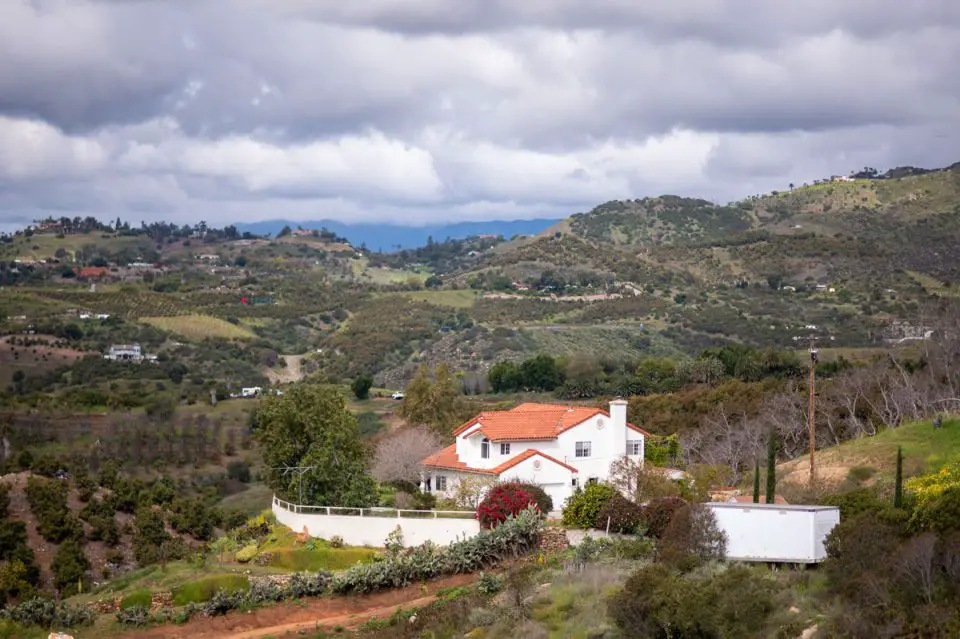
FALLBROOK — The San Diego County Board of Supervisors voted 3-2 this week to advance a “socially equitable” cannabis program in the county’s unincorporated areas, opting for staff policy recommendations over those from the Planning Commission on matters such as a ban on outdoor cultivation and a longer buffer from youth centers and other sensitive areas.
After an Aug. 19 staff presentation and lengthy public hearing, Supervisor Paloma Aguirre, Board Chair Terra Lawson-Remer, and Supervisor Monica Montgomery Steppe voted in favor of the policy, while Supervisor Joel Anderson and Supervisor Jim Desmond opposed it.
The board will hold a second hearing on Sept. 2 before final approval, and if adopted, the Socially Equitable Cannabis Program would take effect 30 days later.
Supervisors approved the following staff recommendations Wednesday:
— certifying the environmental impact report and California Environmental Quality Act findings;
— adopting amended zoning ordinances that will allow for new cannabis facilities;
— approving introduced amendments to the regulatory code for commercial cannabis licensing and the SECP, along with amendments to the fee schedule; and
— approving minimum funding requirements for unlicensed cannabis enforcement.
However, the board rejected previous policy changes recommended by the county Planning Commission, including a ban on outdoor cultivation and a 1,000-foot buffer from day care or youth centers, places of worship, public parks and trails and schools, rather than a 600-foot distance.
In early January, supervisors had voted 3-2 to advance a series of updates to the proposed cannabis program in unincorporated areas, including rules related to land use, consumption lounges and community benefits.
During Wednesday’s hour-plus-long public hearing, more than 50 residents spoke on the policy, with more than a few of them opposed.
Like others, Beth Nelson of the San Dieguito Planning Group cited environmental, health and safety concerns, especially among rural residents.
“We don’t want it and we didn’t ask for it,” Nelson said, adding that she has no issue with cannabis for legitimate medical use, such as for those with cancer.
She referred to a recent UC San Diego study on how marijuana can negatively affect young people.
“Given these risks to our kids, why would responsible leaders promote more access rather than restrict it?” Nelson asked. “Revenue should not come before public health,” she added.
A senior at Bonsall High School made an impassioned plea to supervisors to vote down any expansion, saying he and friends play in fields and hills, which he worried could become marijuana farms and/or cannabis-related social events.
“How can you tell our students not to smoke, use drugs or use cannabis if every single day, we walk or drive to school, we are passing stores or growers?” he asked. “How does that work? Listen to the people who live here. Protect our community.”
Advocates, however, touted the benefits of a legal cannabis program.
A San Diego resident noted how the Prohibition era in the 1920s “produced probably more mob bosses than the United States has ever seen,” before the federal government changed course and legalized alcohol consumption.
“Why not take this lesson from the past and apply it to the present and allow this industry to benefit not only the people, but the economy?” he asked.
Potential marijuana business owners told the board they were ready to operate in a legal and responsible manner. One man named Albert said he has his certification to participate in the SECP.
“Let’s get this right and give people a genuine opportunity to participate in the future of this industry,” he said.
Before voting, Aguirre said that “legalization without equity can deepen the very disparities it should help repair. A fair cannabis program must create genuine ownership and economic opportunity, not just symbolic participation.”
Aguirre added that safety, odor, neighborhood impacts, water use and environmental concerns are real, and “regulation is how we address them,” noting that owners will face zoning rules, inspections and enforcement.
Aguirre said alcohol is 15% to 20% more addictive than cannabis, according to the U.S. Centers for Disease Control and “we have basically a liquor store on every other block” that children see on a regular basis.
Montgomery Steppe said studies show that across racial lines, while the use of cannabis is similar, criminalization rates are not.
Black Americans count for roughly 37% of drug arrests, while they’re only 13% of the population, Montgomery Steppe said, insisting that the War on Drugs “was never about public safety — it was engineered to discriminate.”
Many people were denied employment or housing due to a criminal record for something that’s now legal, she said.
“The (SECP) gives (us) a chance to right those wrongs,” Montgomery Steppe added.
Desmond, a long-time foe of marijuana business expansion, said the policy was a land use, rather than a social issue. Desmond added he didn’t know whether rural communities should have to pay the price for past discriminatory policies.
“This has to be the most twisted term of equity that I’ve ever seen,” he said, adding that the policy allows for someone who’s broken the law to jump ahead of the line for a permit.
“Not the message we want to send to our children,” he said.
The debate has drawn sustained opposition from rural communities, including Fallbrook and Rainbow, where planning groups and residents have argued that commercial cannabis operations could bring odor, traffic, water-use and enforcement challenges to areas with limited infrastructure.
Earlier this year, rural planning groups pushed for tighter restrictions, including indoor-only cultivation and greater setbacks from homes and other sensitive uses, as reported by The Coast News.
“This isn’t about whether cannabis is legal — it’s about responsible land use,” Jeniene Domercq, chair of the Fallbrook Planning Group’s cannabis ad hoc committee, previously told The Coast News.
Eileen Delaney, chair of the Fallbrook Planning Group, said the group had recommended indoor-only cultivation “to prevent many of the concerns around odor, crime and environmental impacts.” Those concerns remain relevant under the policy advanced Wednesday, which allows outdoor cultivation and retains the shorter 600-foot buffer rather than the Planning Commission’s proposed 1,000-foot setback.
In January 2021, former Supervisors Nathan Fletcher and Nora Vargas proposed the cannabis policy as a way to eliminate the black market and address how anti-drug policies impact low-income and minority communities.
Since that time, supervisors have approved several related policies, including tax rates in unincorporated areas and a grant to help five existing facilities.
In April 2023, supervisors voted 3-1 for an ordinance setting tax rates for the legal cannabis industry.
In May 2024, they voted 3-2 in favor of a program that advocates say will allow people impacted by previous criminalization efforts to participate in the regulated market.
Related Articles:
- Rural communities push back on county cannabis… April 8, 2026
- Fallbrook leaders urge county to pause cannabis program April 7, 2025
- Supervisors approve socially equitable cannabis… September 3, 2026
- Rural residents take county cannabis fight to court October 1, 2026
- Election Q&A with Oceanside City Council candidates October 22, 2024
- Election 2026: City Council candidates questionnaire October 14, 2026



1 comment
Brilliant move to approve by three (3) SD County Supervisors dictating policy without a single vote of the + 1,000,000 residents in the unincorporated area of San Diego! That three (3) people alone can make this dangerous and senseless change to land use policy and zoning, is sheer lunacy. These three ladies colluded at the expense of the residents and voters. A recall seems appropriate here, or lawsuit to hold up the decision. Meanwhile, vote out these radicals, vote in real representatives who truly represent San Diegans.