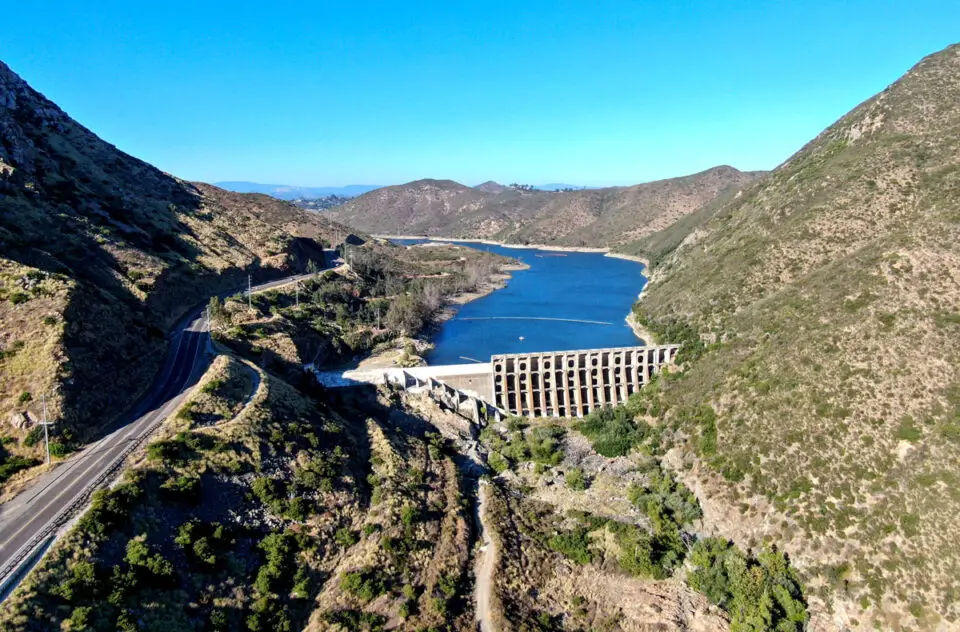
REGION — Residents upstream and downstream of Lake Hodges Dam fear increased wildfire and flooding threats if the city of San Diego moves forward with plans to lower the spillway to 280 feet.
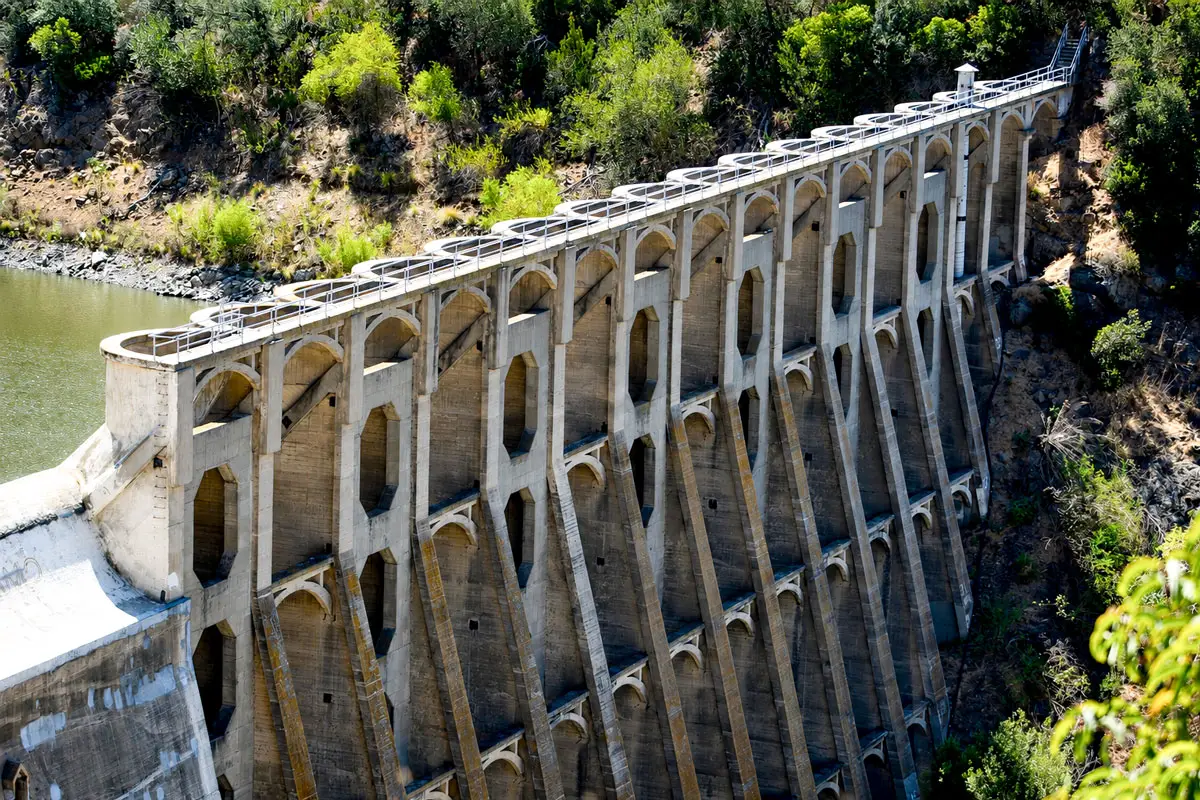
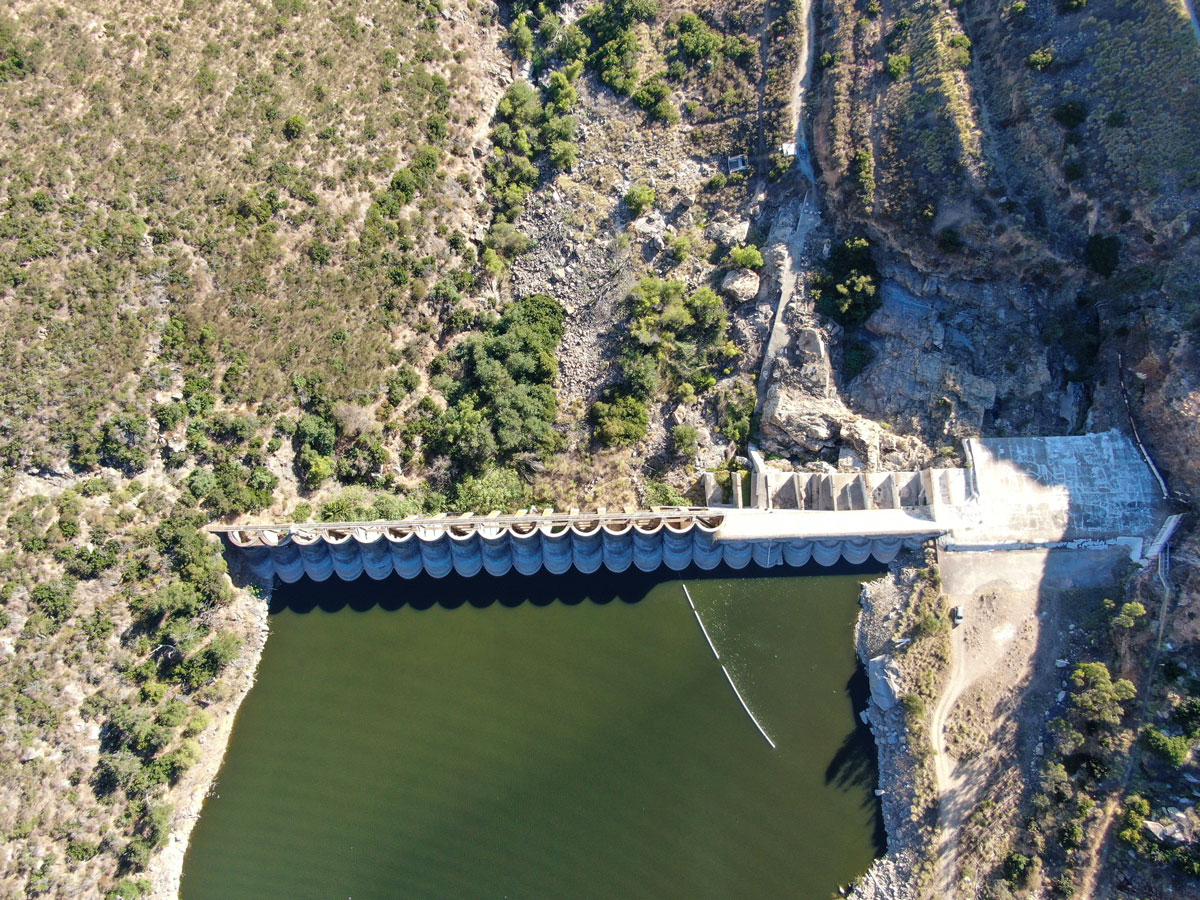
The city, which owns the dam between Escondido and Rancho Santa Fe, recently unveiled its state-approved plans to lower the spillway from 315 to 280 feet by removing a significant portion of the existing concrete structure.
The project would take about seven years to complete and cost between $30 million and $50 million.
According to the city, the project is an “interim risk-reduction” measure while it continues to explore future options for Lake Hodges Dam. The California Division of Safety of Dams recently designated the 108-year-old structure as one of the state’s most critical and problematic dams.
The dam is currently the only one in the state with an “unsatisfactory” condition rating and has an “extremely high” downstream hazard classification.
In 2022, an inspection found numerous signs of concrete deterioration that further reduced the dam’s stability.
Because of those structural concerns, the city has restricted Lake Hodges to an elevation of 280 feet.
Historically, Lake Hodges has supplied water to San Diego, Solana Beach, portions of Encinitas, Rancho Santa Fe and Fairbanks Ranch. But at current reservoir levels, only customers in the Santa Fe Irrigation District and San Dieguito Water District are receiving its water.
Many residents upstream and downstream of the lake fear the lower water levels increase fire hazards, harm wildlife and limit recreational activities, among other concerns.
Now, with plans to lower the spillway to 280 feet, those residents and others fear what could happen if heavy rains arrive during the anticipated “Super El Niño” winter season.
“It’s absolutely the most ridiculous thing anyone could ever think of,” said Paul Bernstein, an Escondido resident whose home overlooks the lake.
Bernstein has been pushing the city to raise the lake’s water level from 280 to 295 feet, which would put acres of dry vegetation back underwater.
Bernstein is not alone. In an April letter to Mayor Todd Gloria, the San Dieguito River Park Joint Powers Authority asked the city to evaluate the feasibility of raising the water level to 295 feet.
“The JPA acknowledges the city’s efforts to ensure dam integrity and protect public safety. However, the prolonged low lake level justifies a more integrated and balanced approach to reduce impacts particularly from the resulting increased fuel load from hundreds of acres of exposed vegetation that exacerbates wildfire risk,” the letter states.
The letter also noted that the lower water levels harm the lake’s role as a wildlife corridor and bird sanctuary.
Raising the water level to 295 feet would also allow the Lake Hodges-Olivenhain Reservoir Pumped Storage Facility to resume operations.
The pumped storage facility, which would pump water from Lake Hodges to Olivenhain Reservoir during periods of heavy rain, began operating in 2012. Its pump turbines could generate up to 40 megawatts of hydroelectric power, enough to supply nearly 26,000 homes annually.
The roughly $200 million facility was taken offline in 2022 when Lake Hodges’ water level dropped below 290 feet, leaving it too low to operate.
With the city proposing to lower the dam’s spillway to 280 feet, it is uncertain whether the pumped storage facility will operate again.
“The long-term future of the pumped storage facility has not been determined,” said Jordan Beane, a spokesperson for the San Diego County Water Authority, which operates the facility.
Bernstein wrote in an opinion piece that lowering the spillway would turn the lake into “a basin of roughly a quarter of its former size,” making existing upstream fire hazards permanent while also creating potential downstream flooding risks.
If the lake reaches capacity, he explained, excess water would flow over the dam and down the San Dieguito River. He said that could flood the Crosby golf course, some Fairbanks Ranch homes built in the floodplain, the soccer fields along Via de la Valle and areas as far downstream as the Del Mar Racetrack.
Communities downstream of the dam have also questioned how the city plans to address potential spillover from the lake.
In early October, Del Mar Assistant City Manager Clem Brown told the Del Mar City Council that the city had requested a description of San Diego’s preparations for winter storms and Lake Hodges. The San Dieguito River, which feeds the lake, empties into the ocean in Del Mar, where a significant release could flood low-lying areas.
Del Mar received a letter from San Diego on Sept. 22 stating that natural drainage downstream is sufficient to handle any anticipated releases.
Bernstein said the city’s plan to lower the spillway also delays its obligation to build a new dam.
After the city found concrete deterioration in 2022, staff explored building a new dam about 100 feet downstream of the existing structure. As of 2024, the estimated cost ranged from $474 million to $697 million, significantly higher than an earlier estimate of $275 million.
The original funding plan called for the city to contribute 25%, the Santa Fe Irrigation District and San Dieguito Water District to jointly contribute 25%, and the San Diego County Water Authority to cover the remaining 50%.
Last year, the authority changed its position, informing the city that it was not obligated to help pay for the dam. The city then paused its replacement efforts and began exploring alternatives to fully replacing the dam.
In response to upstream wildfire concerns, the city has said the lake remains accessible for firefighting operations.
The city is moving forward with an environmental analysis of the spillway reduction project and expects to present its findings early next year.