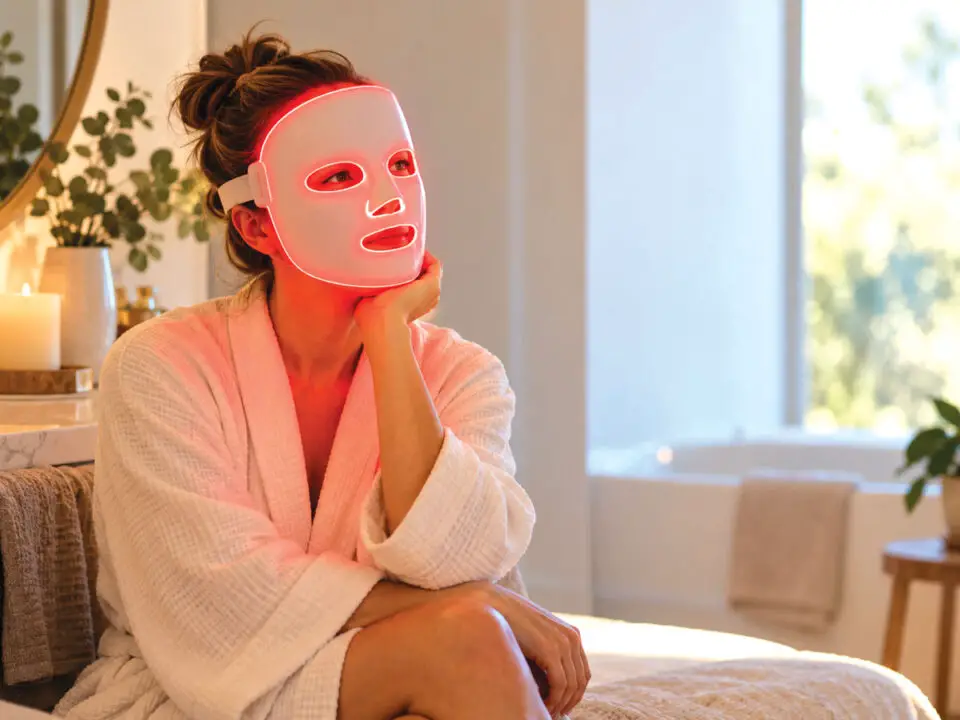
From celebrity skincare routines to social media influencers wearing futuristic-looking LED masks, red light therapy seems to be everywhere. These devices promise smoother skin, fewer wrinkles, improved acne, and even thicker hair. But are they actually worth the investment?
As a dermatologist, my take is that the marketing is moving much faster than the science.
Red light therapy uses specific wavelengths of light to stimulate cellular processes, a concept known as photobiomodulation. Unlike ultraviolet light, which can damage the skin, red and near-infrared light are being studied for their potential to reduce inflammation, promote tissue repair, and support collagen production. The science is promising, but not all claims are supported equally.
Where does red light actually work?
Interestingly, some of the strongest evidence is for hair loss. Multiple clinical trials have shown that low-level light therapy can improve hair density in people with hereditary pattern hair loss. It’s a reasonable option alongside established treatments like minoxidil, although results require consistent use over several months.
For acne, research suggests that certain LED devices, particularly those combining red and blue light, may reduce breakouts. However, studies remain relatively small, and these devices should supplement proven acne treatments rather than replace them.
When it comes to wrinkles and skin rejuvenation, the evidence is less convincing. Some studies show modest improvements in skin texture, elasticity, and fine lines, but many involve small patient populations, short treatment periods, or devices that differ considerably from those sold online.
What about the risks?
One area I approach with particular caution is red light therapy in patients with melasma or rosacea. Melasma is a pigmentation disorder that can worsen with visible light exposure and heat, while rosacea is frequently triggered by increases in skin temperature.
My concern with at-home masks is not necessarily the red light itself, but the potential heat generated during treatment. We simply don’t have enough research evaluating whether repeated heat exposure from these devices could aggravate melasma or rosacea. Until we do, I recommend extra caution in patients prone to either condition.
So, should you buy one?
If you enjoy using a red light device and feel it’s helping your skin, there’s no reason to dismiss it altogether. But I wouldn’t recommend that everyone invest hundreds of dollars in a mask or add another daily step to their skincare routine.
Devices vary considerably in wavelength, power, and treatment protocols, making it difficult to know whether a product purchased online will deliver the same results as one used in clinical studies.
My advice? Start with the basics: daily sunscreen, a good moisturizer, and targeted skincare ingredients supported by years of research. Red light therapy may eventually earn a more established place in our skincare routines. For now, I’d consider it an optional extra, not an essential.
Dr. Maya Firsowicz is a board-certified dermatologist in North County.