

ENCINITAS — A design for a pedestrian railroad undercrossing along San Elijo Avenue between Verdi and Liszt avenues is moving forward with the approval of the Encinitas Planning Commission, as the city continues seeking funding for the project.
The Planning Commission unanimously approved a design review, Coastal Development Permit, and mitigated negative declaration for the new crossing, known as the Verdi crossing, at its Aug. 21 meeting. The project has been in development for several years, and construction is expected to cost approximately $17 million.
“The next step is for the city engineer to apply for grant opportunities, receive funding and start construction. At this time, there is no anticipated timeframe for those next steps,” Associate Planner Fran Carr told the commission.
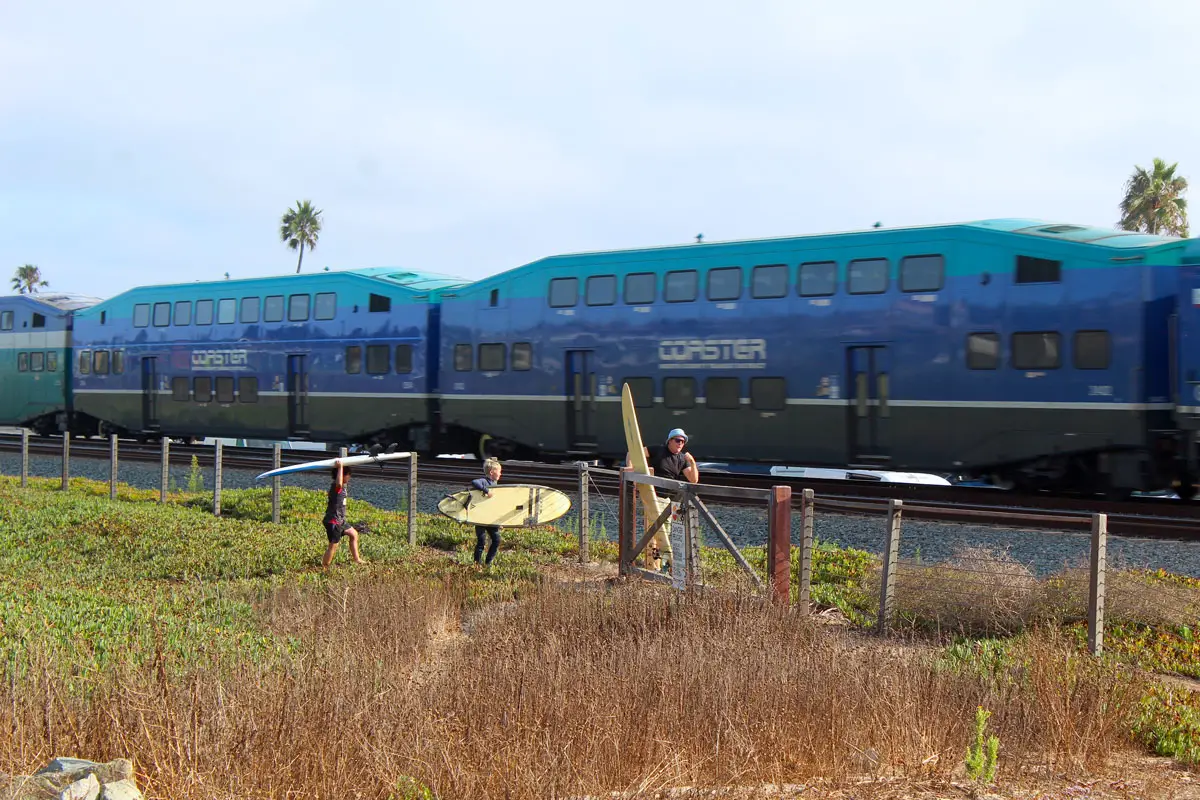
The Verdi crossing will connect to the Coastal Rail Trail, which runs along San Elijo Avenue, providing a safe way for residents to cross the railway without trespassing on the tracks. The next-closest crossing points are the undercrossing at Santa Fe Drive to the north and the at-grade crossing at Chesterfield Drive to the south, which are around 1.3 miles apart.
In 2008, the city approved applications for three railroad crossings across the tracks, owned by the North County Transit District. These included crossings at Santa Fe Drive, which was completed in 2013, and El Portal Street, completed in 2022.
A third crossing was approved for Montgomery Avenue, but the city decided to relocate it approximately 800 feet away to Verdi Avenue in 2017 to accommodate the construction of the Coastal Rail Trail in Cardiff.
The Verdi crossing project will include two 15-foot-wide yellow crosswalks across San Elijo Avenue at Verdi Avenue and Liszt Avenue. The crosswalks will connect to a pathway leading pedestrians and cyclists to the undercrossing beneath the railroad heading west.
After emerging from the undercrossing, residents will be able to cross South Coast Highway 101 via 20-foot-wide white crosswalks along the north and southbound lanes. Pedestrian crossing signals with lights will also be included, similar to the crossing at Santa Fe Drive to Swami’s Beach.
Cardiff resident David Solomon, who lives near the proposed crossing site, said he is entirely in support of the undercrossing, as well as the new crosswalks and signals, to increase pedestrian safety.
“We walk the rail trail everyday, and being able to cross over San Elijo is a great thing to be able to do. Being able to be visible and have those lights will be a huge improvement,” Solomon said.
The project will require extensive grading to create enough clearance for the crossing beneath the rail line. The city will also install hardscaping, landscaping, drainage, lighting, both outside and inside the crossing, and 10-foot retaining walls.

Design features will harmonize with the nearby Santa Fe undercrossing and the Coastal Rail Trail as a whole, including cable rail fencing, cairn sculptures, wooden benches, and colored hardscape.
“From a design standpoint, I find there’s a life-size model of this project at Santa Fe,” said Planning Commission Chair Stephen Dalton. “I think this is gonna be very similar. It’s got a nice connection to both streets, and I think that’s a very nice feature.”
Commissioner Susan Sherod was uncertain whether enough people would want to use the new crossing at Verdi, noting that many people already cross at Chesterfield.
“I’m not sure that people will come all the way down to use this, and it’s a lot of money to build it,” Sherod said. “Right now, people just cross at Chesterfield. It’s right there, and they go right across.”
Sherod also questioned how much funding had been identified for construction, with staff confirming that all of the money obtained so far has gone toward the design. Prior attempts to obtain grants from the Federal Railroad Administration have been unsuccessful so far.
Other commissioners noted that the Chesterfield crossing isn’t convenient for everyone, and said the commission’s role is to provide feedback on the actual design, more than the funding.

“What we’re talking about tonight is whether we want to approve this, so it can then, at some point, go to City Council so they can eventually prioritize this in budget,” said Commissioner Chris Ryan. “I think we get a little ahead of ourselves talking about funding.”
Staff stated that the Coastal Rail Trail will remain open during construction, and detour points will be provided if work needs to be done on the actual trail.
The mitigated negative declaration found that the project could have potentially significant impacts on cultural and tribal resources and geology/soils, and outlined measures to mitigate these impacts.
These measures include:
- A Cultural Resource Mitigation Monitoring Program, with the full-time presence of a qualified archaeologist and a traditionally and culturally affiliated Native American monitor from the San Pasqual Band of Mission Indians, in case of any discovery of cultural or tribal artifacts,
- A paleontological monitoring and recovery program with a qualified paleontologist required to be on-site during the initial cutting of previously undisturbed portions of the underlying Linda Vista, Torrey Sandstone or Del Mar formations in case of any discovery of fossils.
Encinitas leaders have also been developing plans for a pedestrian rail crossing further north, between Leucadia Boulevard and La Costa Avenue. These plans include options near Hillcrest Avenue and Coral Cove Way, as well as at Phoebe Street, connecting to Vulcan Avenue between Jason and Glaucus streets.
In the past, Leucadia residents have advocated for the city to prioritize the Hillcrest option over Verdi Avenue, but have been unsuccessful in accelerating the project timeline.


