CARLSBAD — Communication can be difficult for people with neurodevelopmental disorders, including autistic people who are nonspeaking.
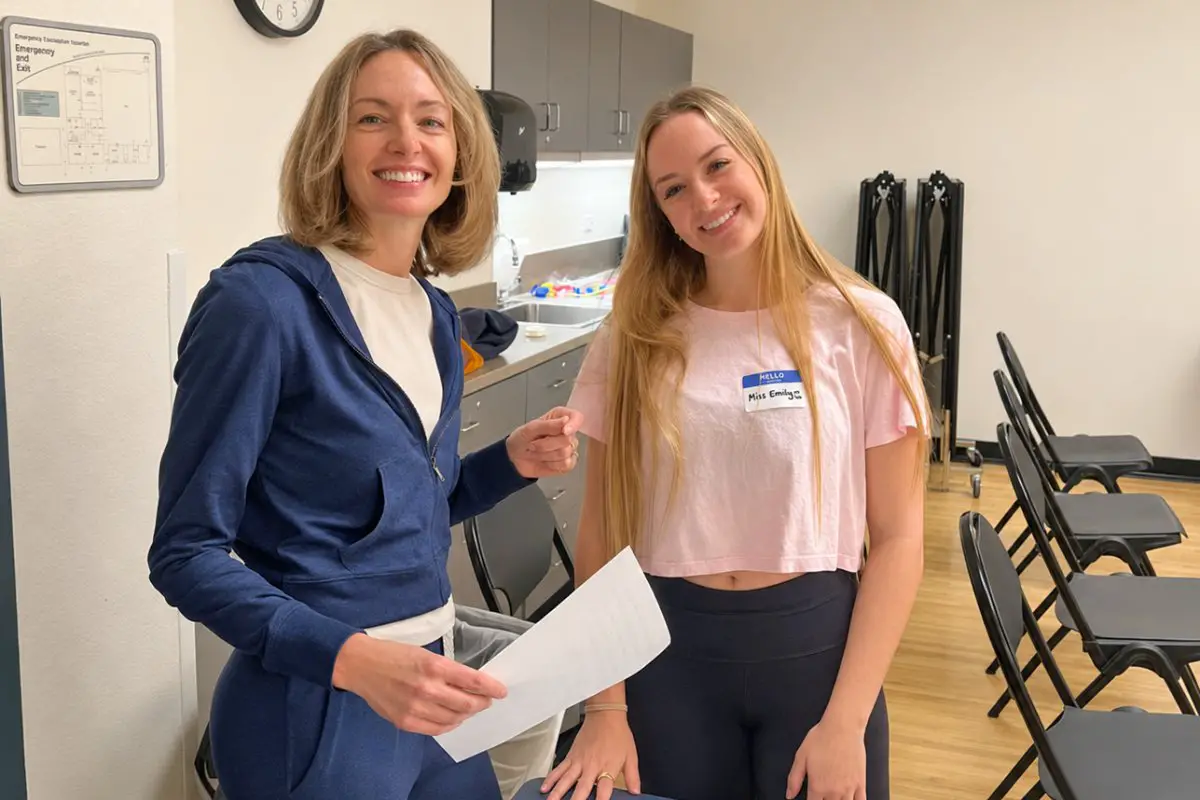
Those challenges inspired Emily Ginsberg, 18, to develop an adaptive dance program and study how it could help participants connect with others.
“Dance has taught me that connection doesn’t always require words,” she said. “I think that, especially seeing everybody dance together, it really instills the idea that we are far more alike than different.”
Ginsberg, a senior at La Costa Canyon High School, developed the program through her school. She describes adaptive dance as movement tailored to each participant in a safe, nonjudgmental setting.
The Curieux Academic Journal published her research that examined how adaptive dance might help participants manage their emotions and navigate social situations. The study included 10 participants ages 9 to 18. Ginsberg said the results were preliminary but promising.
“We found that we found through parent, teacher, student and class observers that adoptive dance suggests positive changes in confidence and social connectedness for people with autism,” she said. “The sample size is too small to really test for significance at this point, but it does provide preliminary evidence that adoptive dance can be a promising new method that can be implemented into therapies. I see it being taken to community centers, to schools and, importantly, it can adapt to all abilities.”
Classes typically draw 10 to 12 students, from children as young as 5 to adults. Ginsberg said she has taught classes with as few as one student and as many as 40.
Classes can begin with gentle, rhythmic stomping and clapping to warm up, followed by choreography.
“When I teach this choreography, I don’t teach it like a normal dance class,” Ginsberg said. “I teach it through imagination. So instead of saying that we’re going to stretch to the left, I would say, ‘we’re going to become a wave. And your hand’s going to be a rainbow. And you’re going to look up to this, you’re going to look up to the ceiling. And where you’re going to tell me what you see. Do you see a cloud? Do you see a bird? Do you see a butterfly?’
“And when we do it like this, it allows for the students to be engaged and it helps them. It helps them not only get out of their own mind, but notice other people as well.”
Ginsberg said her favorite part of class is circle time. She asks students about things like their favorite ice cream flavor or what they did over the weekend. They can answer with words, gestures, eye contact or a smile.
“It’s really special when we’re creating these purposeful opportunities that facilitate connection for kids who might not normally get that opportunity,” Ginsberg said.
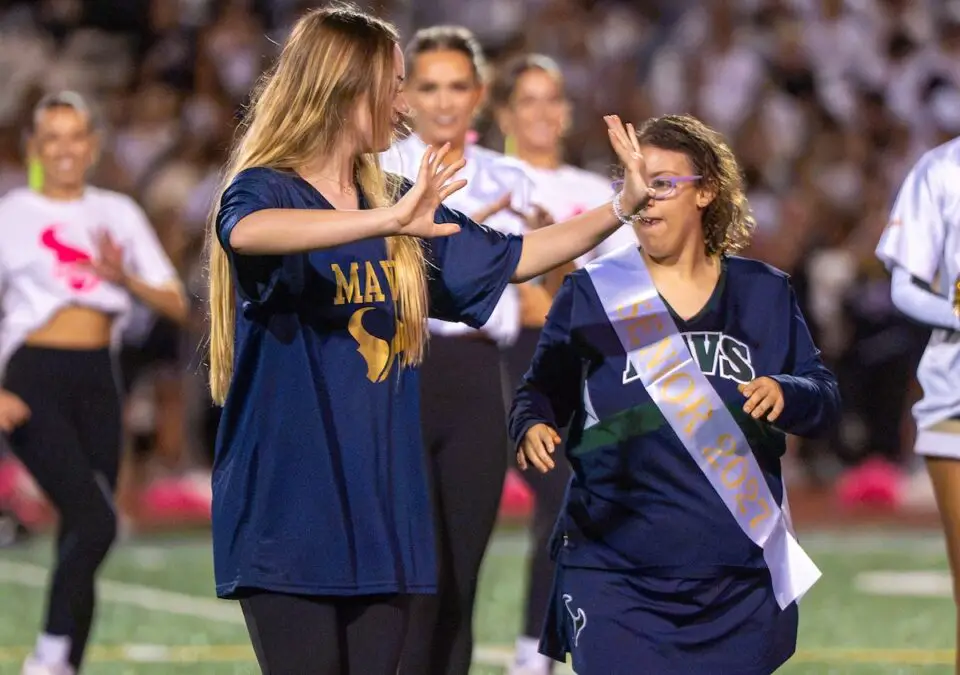
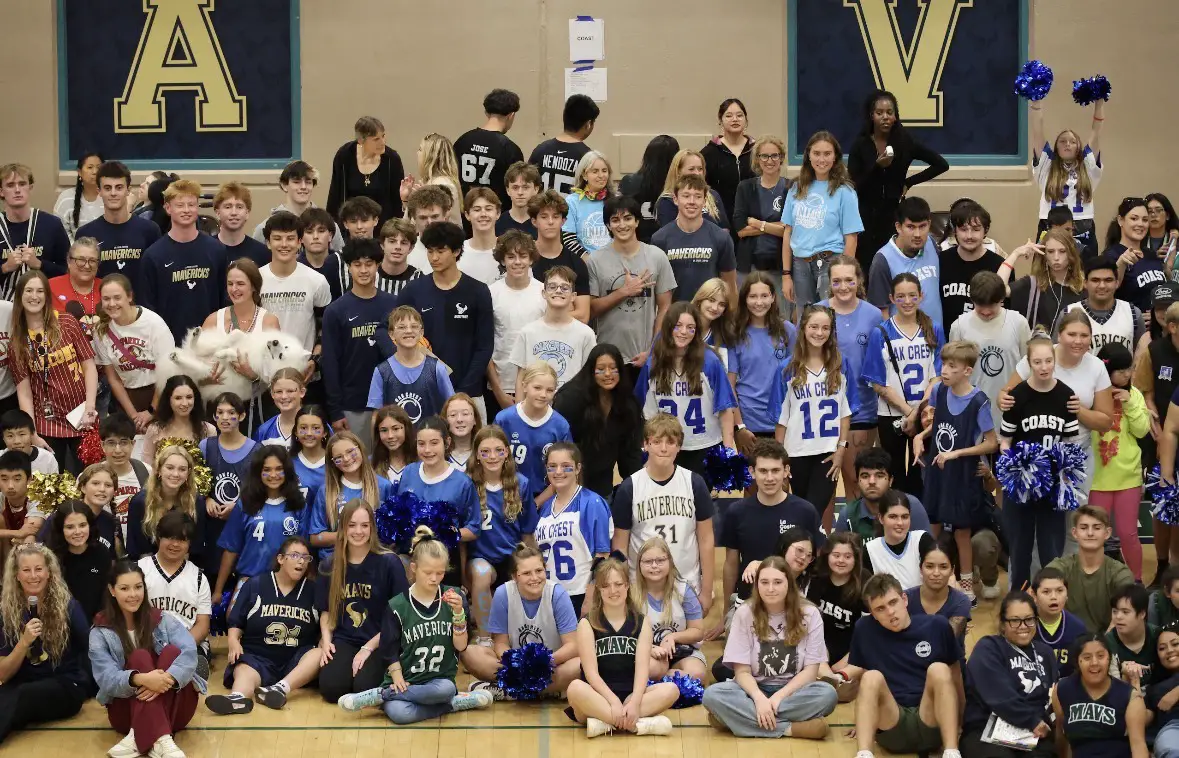
At the 20th anniversary of the Inclusive Basketball Tournament, held Nov. 3 at La Costa Canyon High School, Ginsberg led about 350 students in a choreographed dance to “This Is Me” from the film “The Greatest Showman.”
She has also led dance performances at halftime of the school’s football games.
Ginsberg said she would like to study neuroscience in college and continue work rooted in competitive figure skating, which she took up 12 years ago.
“Movement has always been an important part of my life,” she said.
That interest led her to work with Autism Tree and develop the adaptive dance program through her school. She said she would like to bring the program to other schools in the county.
“My goal is to continue expanding adaptive dance programs so that they become a regular part of schools and my goal is to make sure this program continues to be a student-led model that other districts can adopt,” Ginsberg said. “I really believe that these opportunities shouldn’t be limited to just a few students or a few special events. I envision this becoming a part of our everyday culture of belonging.”