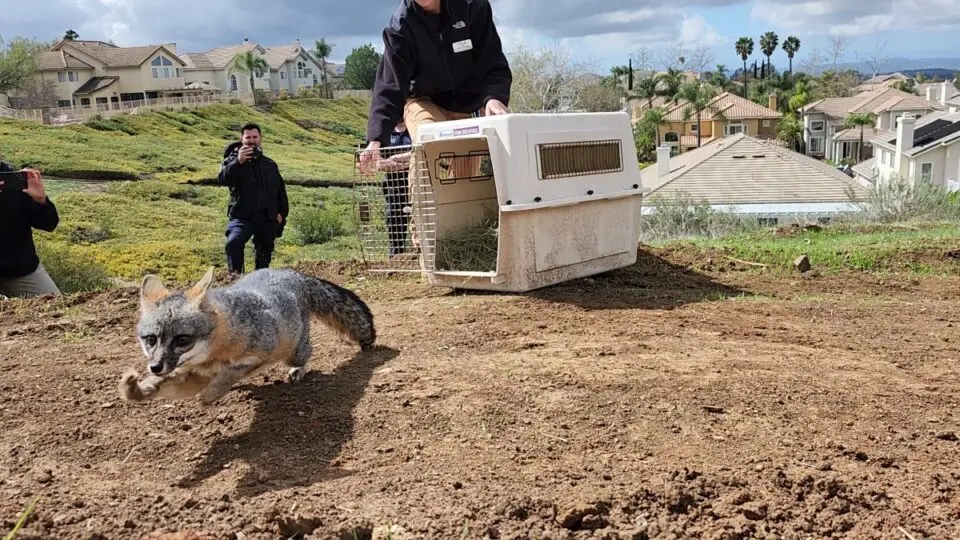
RAMONA — A gray fox burned in a fire late last year has been returned to the wild after five months of recovery at the San Diego Humane Society’s Ramona Wildlife Center, it was announced today.
The male fox was recovered by the California Department of Fish and Wildlife in Orange County on Sept. 30, 2024, with traumatic third-degree burn wounds on all four of his paws.
The fox had been found near the Airport Fire, a 23,526-acre fire that burned in the Santa Ana Mountains in September and October last year.
“This animal was left defenseless with life-threatening wounds from the Airport Fire,” said Dr. Alexis Wohl, wildlife veterinary manager of the Project Wildlife program. “His prognosis was guarded for a long time, but in the end, he ultimately overcame his injuries so he could return home.”
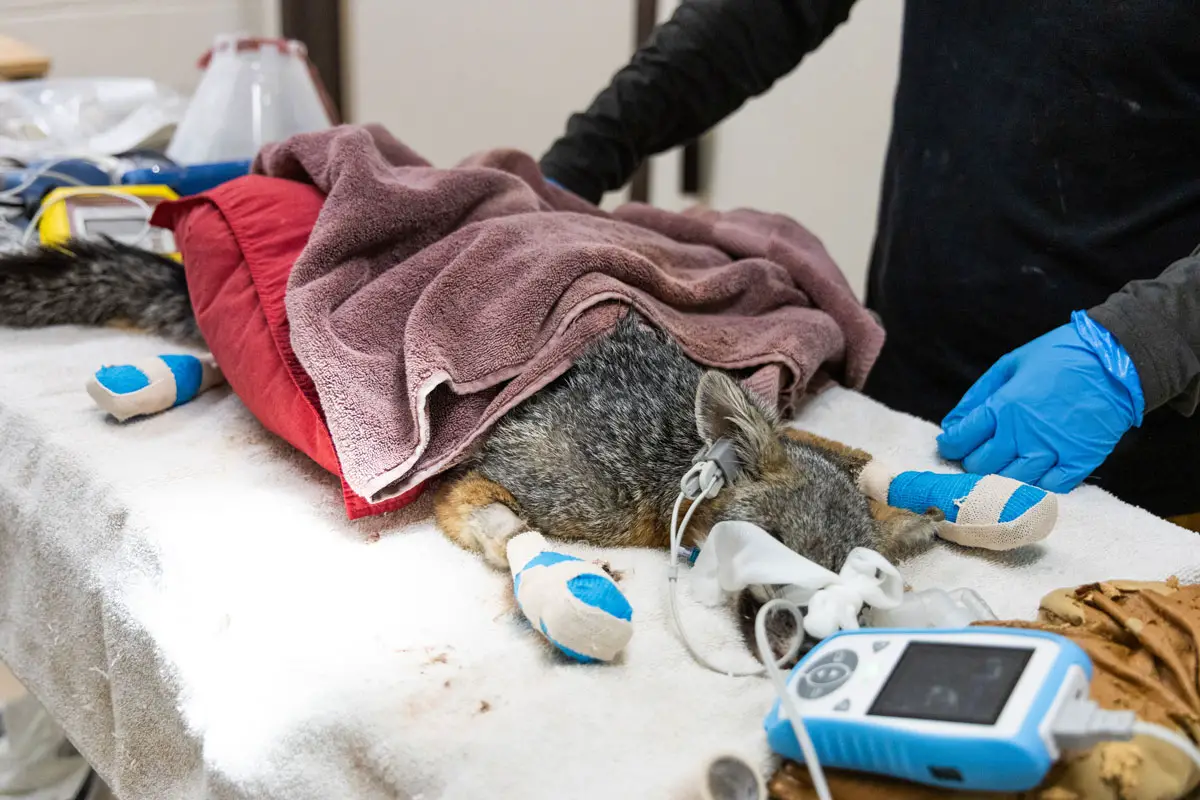
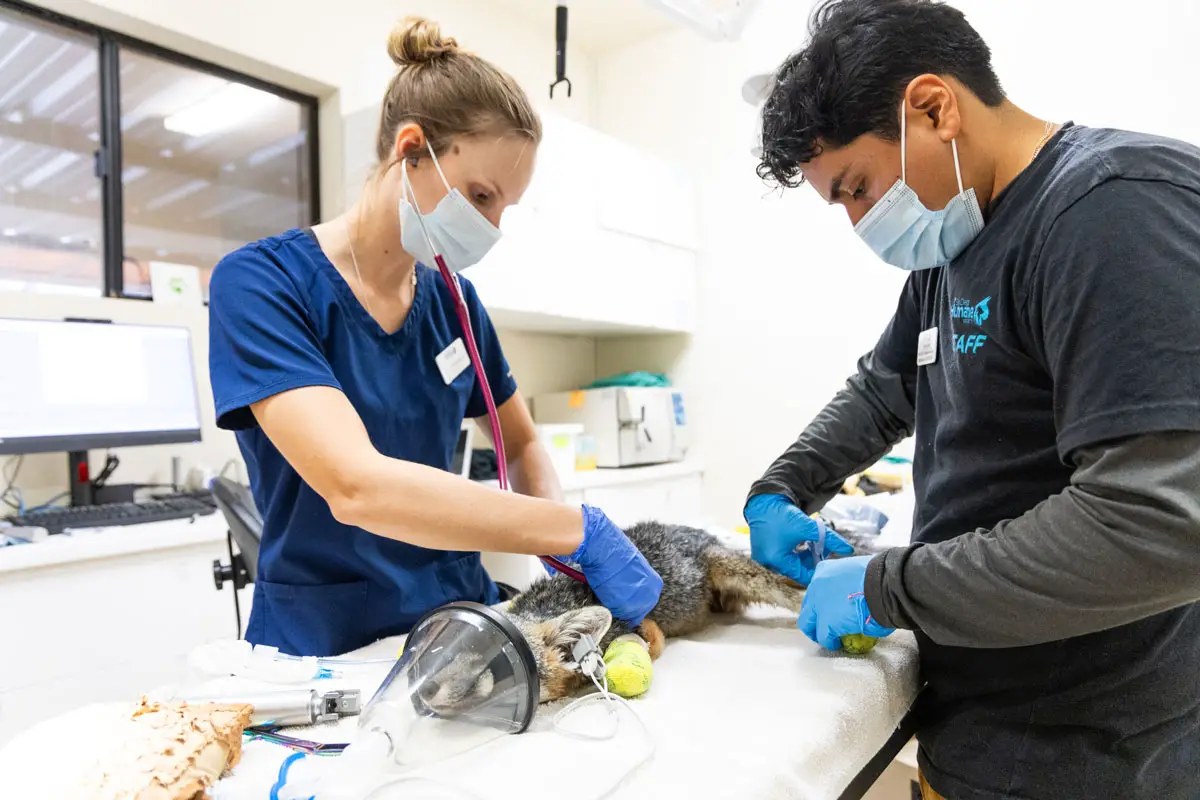
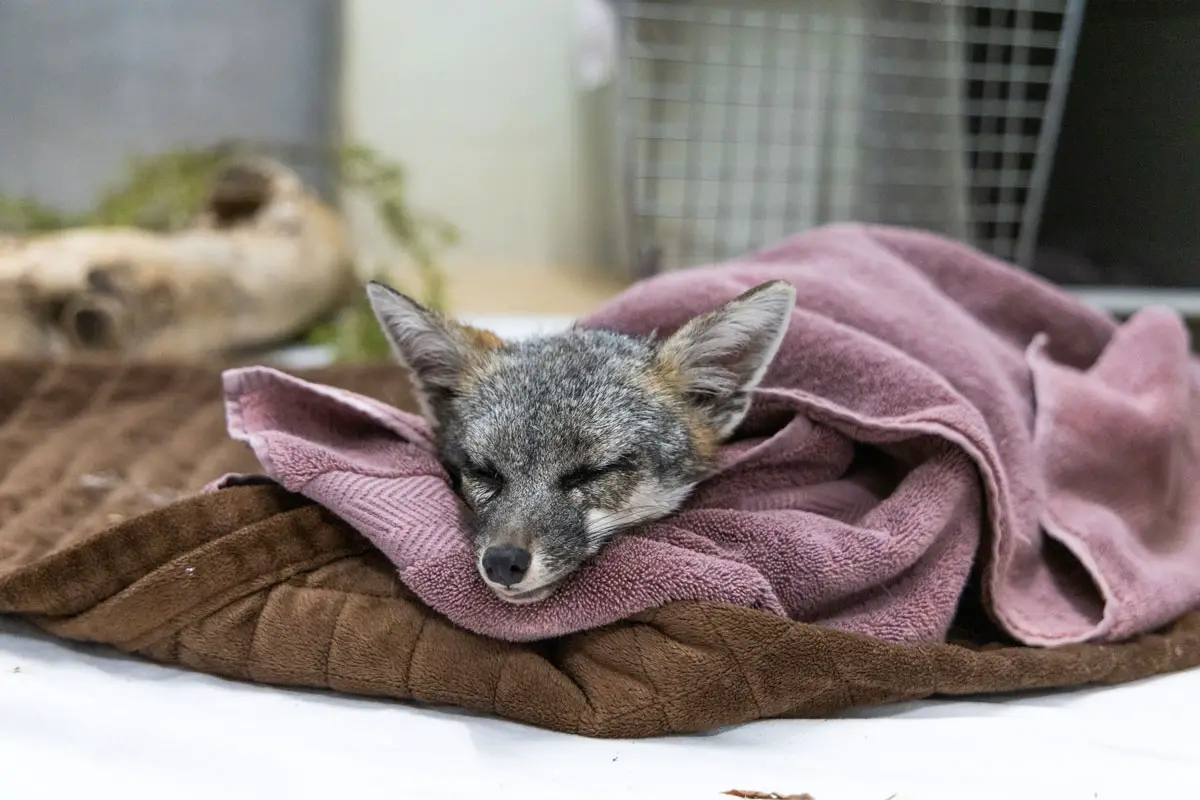
The burns caused traumatic tissue damage that required daily care from SDHS veterinarians. The fox had lost several toes, nails, and paw pads.
The Project Wildlife team used some novel therapies to assist with healing, including fluorescent light therapy donated by local veterinarian Dr. Todd Cecil.
As he recovered, the fox was given “specialized husbandry and enrichment to encourage him to keep his bandages on,” according to SDHS.
Near the end of his treatment, the fox moved from the indoor hospital to an outdoor enclosure.
“Regaining his ability to climb and jump was essential for us to determine his readiness to thrive in the wild,” said Autumn Nelson, wildlife operations manager at the Ramona Wildlife Center. “Using trail cameras for remote monitoring, we watched as he grew more agile each day, skillfully navigating the logs and platforms in his habitat.”
The fox was released Sunday back into the Santa Ana Mountains.
Project Wildlife is San Diego County’s primary resource for wild animal rehabilitation and conservation education. The organization treats over 10,000 injured, orphaned and sick wild animals yearly.
The Humane Society’s Ramona Campus specializes in caring for native apex predators and birds of prey, including hawks, owls, eagles, coyotes, bears and bobcats. The center also provides care for mountain lions case-by-case with special authorization.