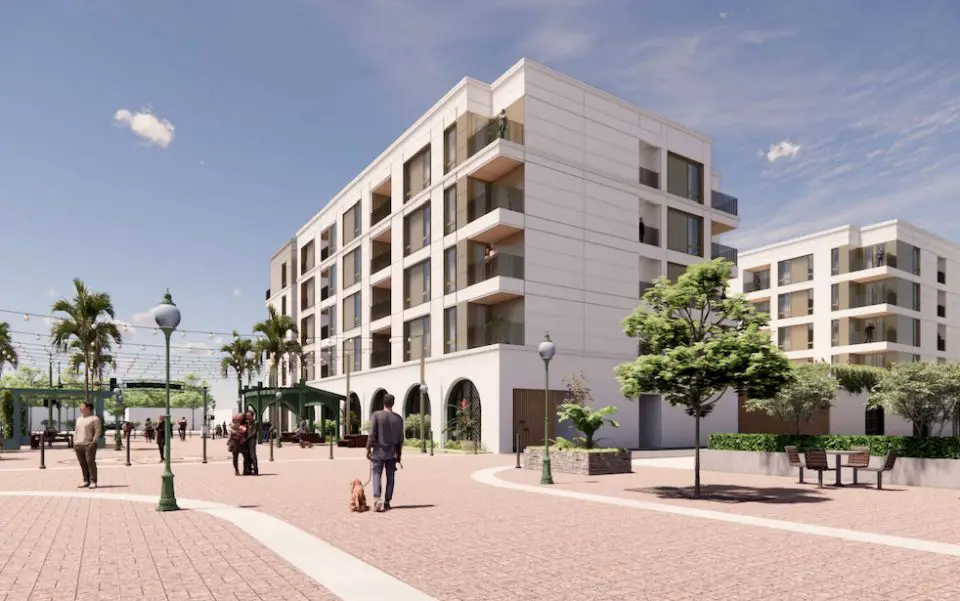
ESCONDIDO — The Escondido City Council approved plans for The Maple, a proposed five-story development that would rise across West Valley Parkway from City Hall.
The Maple would include 128 multifamily units on a 1.04-acre site, according to city documents. The project received a transfer of 50 units from the Downtown Density Credit Pool, bringing the total to 50.
The Planning Commission unanimously recommended approval in November, with two members absent and one abstention.
Two plan amendments approved for the project allow a 65-foot maximum height with five stories — instead of 60 feet and four stories — and ground-floor residential units, rather than retail or commercial space. The plans call for a maximum building height of 61 feet, 6 inches.
The units will include a mix of studios ranging from 487 to 540 square feet; one-bedroom units ranging from 664 to 712 square feet; and two-bedroom units ranging from 915 to 1,039 square feet, according to city documents. The project includes 113 off-street parking spaces and 16 bicycle parking spaces.
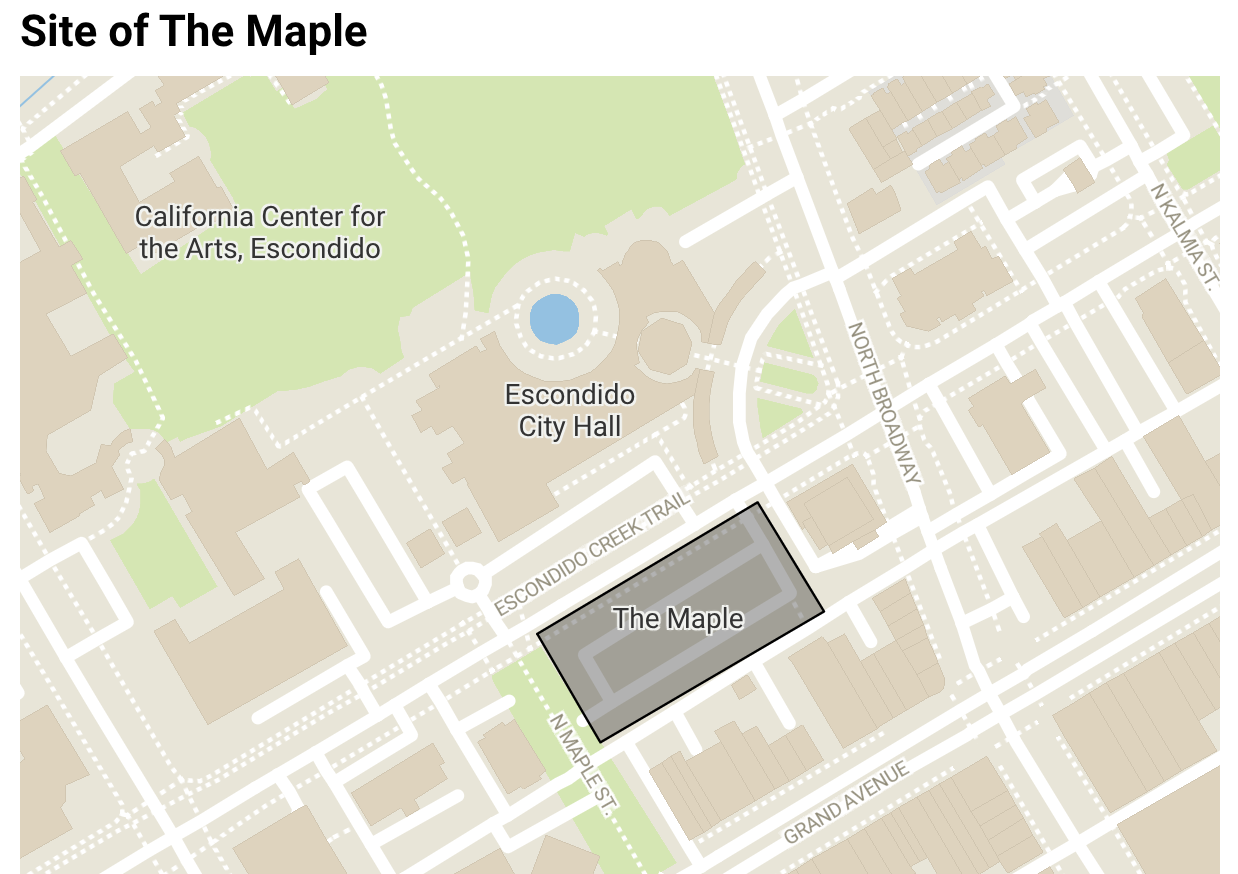
“We’ve tried to put as many parking spaces as possible because we’ve only got the bottom floor to do it,” said Dave Ferguson, an attorney representing applicant Kingsbarn Realty.
Kingsbarn Realty will be required to pay nearly $110,000 in fees in lieu of an open-space reduction and almost $34,500 for tree plantings in line with the city’s climate goals, according to the documents. The payments are due before a building permit is issued.
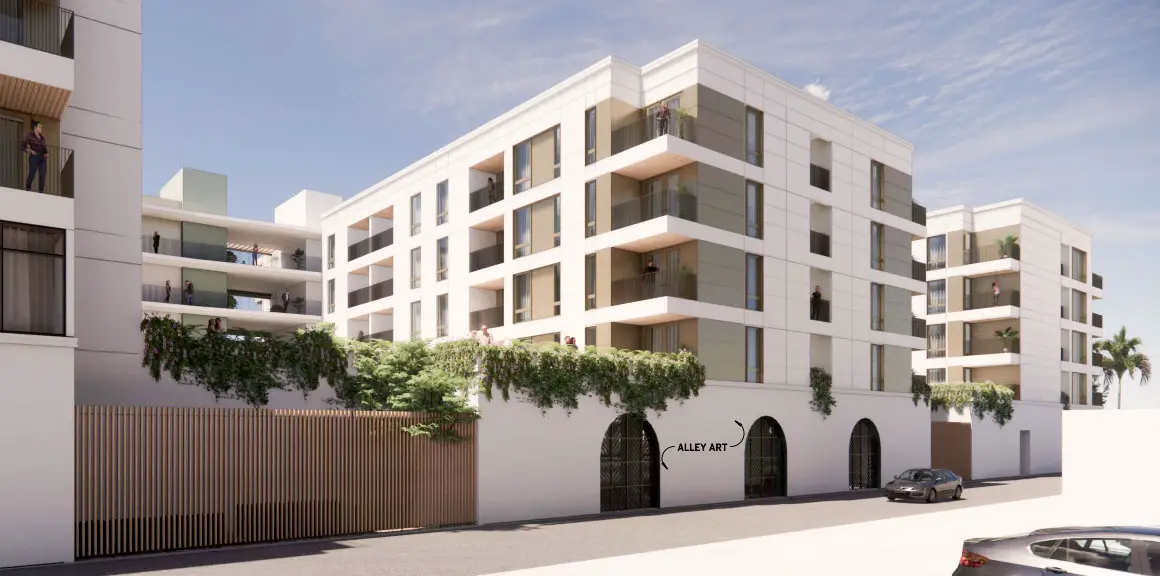
Ferguson said the design elements will reflect the surrounding environment, including archways on the first level that echo City Hall’s design and a mural on the building’s southwest side created by an artist selected collaboratively by the developer and the city’s Public Art Commission.
Ferguson added that the layout includes openings intended to make the project appear as three separate buildings with subtle differences, rather than one large structure.
The City Council voted 4-1 to approve the plans at Tuesday’s meeting, with Councilmember Consuelo Martinez casting the lone dissenting vote.
Martinez, who called it a “beautiful project,” said that in light of the loss of public parking, she believed that “any public asset has to have a public benefit,” and while acknowledging the need for more housing, she expressed concern about the lack of affordable units.
Martinez said that while she was empathetic to the business demands of land development and complimentary of the efforts made on the project, her belief in inclusionary housing led her to prefer that every development include some affordable units so future needs would not have to be met solely through 100% affordable housing projects.
She also expressed concern about the potential gentrification effect of building high-end rental units.
“I want housing for people who live in Escondido who are waiting to be housed,” Martinez said. “I feel if we are going to sell a public asset, it needs to have a strong community benefit.”
Ferguson said that in his experience working on downtown Escondido development, a “chicken and egg situation” often arises regarding whether to prioritize new businesses and restaurants or housing. He said that the dilemma remains unresolved.
“What comes first, the attraction or the people?” Ferguson said. “You can’t have the attractions without the people to support them, and you can’t get the people unless you have the attractions.”
According to Ferguson, the property represents a unique opportunity in the downtown development puzzle because the site is the last piece of public property in California — due to a lawsuit filed when the state’s Surplus Land Act went into effect — that can be developed at market rate without first being offered to low-income housing developers.
Public commenters raised concerns about the loss of public parking and said a market-rate project would not address homelessness or housing scarcity for low-income residents.
Mayor Dane White pointed to state estimates of Escondido’s housing needs under the Regional Housing Needs Assessment, or RHNA. Of the 9,607 housing units needed, 1,864 are for very low-income residents, 1,249 for low-income residents, 1,527 for moderate-income residents, and 4,967 for above-moderate-income residents, according to the state.
“I’m not saying we don’t need affordable housing, we do,” White said. “The fact is, above moderate and moderate makes up over 60% of Escondido’s need.”
Councilmember Judy Fitzgerald said the project appeared to be a “perfect fit” for downtown Escondido, supporting lifestyles that emphasize walkability or work-from-home arrangements that do not require daily commuting.
“We’re not ignoring that we need affordable housing, but we also need this,” Fitzgerald said.