ENCINITAS — The Encinitas Board of Appeals upheld a requirement that the developer of the 199-unit Clark Avenue Apartments update its plans to meet the 2025 California Building Code before the city issues building permits. The board also asked the city and the developer to work toward a compromise that would avoid a complete redesign.
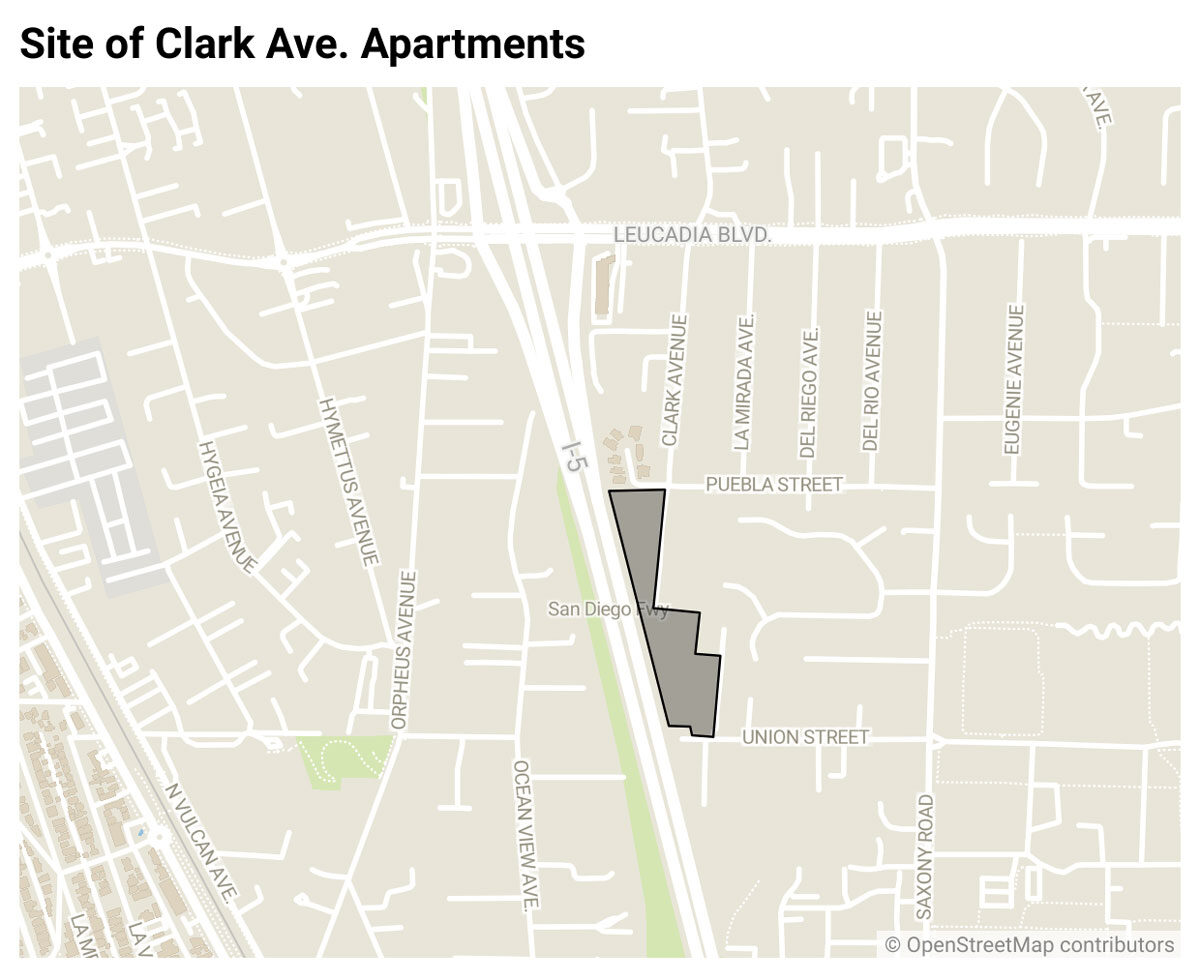
Western National Group proposes 199 apartments in 15 three-story buildings on 6.22 acres just east of Interstate 5, about half a mile south of Leucadia Boulevard. The site spans four properties on Clark Avenue and Union Street. City planning records identify 40 apartments as affordable to lower-income households.
The City Council approved the project in September 2022. The developer submitted its main building permit application on Dec. 14, 2022, while the 2019 building code was still in effect. It filed two related applications in 2023, one for landscaping and accessory structures and another for the pool and spa.
All three applications were before the appeals board on Nov. 4.
Permit extension
The city granted a one-year extension for the three building permit applications in December 2024. Western National Group requested more time on Nov. 11, 2025, seeking an extension through March 2026.
City building official Joseph Romero denied the request on Dec. 9, 2025, a day before the existing extension expired, according to the staff report.
The 2025 building standards took effect Jan. 1. On March 26, after further correspondence and review, Romero granted a 90-day extension on the condition that the developer submit revised plans that comply with the new standards and obtain approval of those plans before the city issues building permits.
The developer appealed the conditions on March 30.
City staff said the main application went through 10 rounds of review over three years without a building permit. Staff cited incomplete electrical and plumbing plans, missing structural details and a 485-day gap between review cycles.
The city’s consultant recommended technical approval for the building plans in February 2024 and approved later revisions in October 2025, but requirements from other departments remained outstanding, according to the report.
Staff said the newer standards address earthquake design, fire protection, accessibility, energy efficiency, heating and ventilation, and electric vehicle charging. The conditional extension allowed the developer to keep its existing applications and retain completed reviews where applicable, staff said.
At the hearing, Romero defended his decision, saying he “asked for additional information because I believe that we could have continued to work forward with the existing reviews, the existing processes and all they needed to do was to bring the plans up to current code.”
Romero said the state building code allows extensions of up to 90 days at a time when “justifiable cause is demonstrated.”
“The code authorizes extensions, it does not mandate them,” he said. “Extensions are not an automatic entitlement simply because it is requested before the expiration date.”
Development Services Director Scott Drapkin said he supported Romero’s decisions, particularly on public safety matters.
“The city’s building official uses years of experience, his technological code knowledge, and his past experience with inspections to come to the correct decision,” Drapkin said.
Drapkin said Romero “was not convinced that the application was being pursued in good faith” when he denied the extension in December 2025.
Developer’s appeal
Western National Group argued that the “appealed conditions are unlawful” under the California Health and Safety Code and state housing laws, including Senate Bill 330, the Housing Accountability Act and the Permit Streamlining Act.
The Irvine-based firm asked the board to remove the conditions, allow each application to proceed under the standards in effect when it was filed and accept the documents the company submitted before the deadline.
Additionally, the developer asked the city to issue an invoice for the outstanding fee and release the permits once the remaining administrative steps were complete.
City staff argued that the laws the developer cited did not guarantee an extension or preserve the original building standards after an application expired. Staff said the board could review Romero’s interpretation of the building code but could neither waive its requirements nor order the city to issue permits.
Marco Gonzalez, a Coast Law Group attorney representing Western National Group, told the board that the city had consistently referred to the 2019 standards during its review. In its written response, the developer said it continued working during the gap between review cycles on grading and improvement plans, easements and an affordable housing agreement.
The company also said it repeatedly requested an itemized building permit invoice so it could arrange payment.
“Under the code, we all know that you can get an extension,” Gonzalez said. “In order to get an extension, you have to prove that you have justifiable cause and that you have diligently pursued your project. Some of the things that qualify as justifiable cause are pending reports, project complexity and demonstrated action and effort. And what I’m going to show you is all the way up through the very end, the demonstrated action and effort was well known by city staff.”
Gonzalez said the developer received grading plan approval on Sept. 18, 2025, and improvement permit approval six days later.
“By mid October, we’re grading,” he said. “We’re grading the heck out of the project – we’re cruising.”
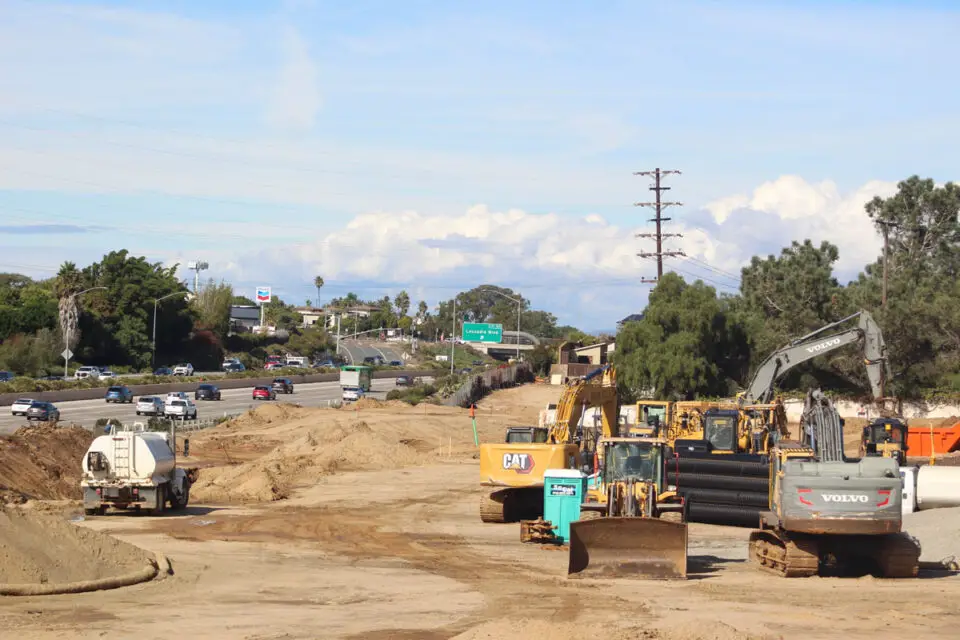
Gonzalez showed the board images of construction equipment grading the site and performing other work under the approved permits.
“This is a site today,” he said. “This is us having spent tens of thousands of dollars, if not millions of dollars already, to grade a site based on permits that were issued that we reasonably relied on during the very period that he’s saying we weren’t diligently pursuing our project. What? Why are we out there spending this kind of money and doing this kind of work if we’re not diligently pursuing our project?”
Fire access dispute
In a separate dispute, the city sued Western National Group on Nov. 5, 2025, over fire safety concerns. Exhibits in the agenda packet show that the dispute centered on whether Clark Avenue and Union Street provided adequate access for fire engines.
Deputy Mayor Jim O’Hara, a longtime critic of the project, brought the fire access issue to the council in August 2025.

“The Clark Avenue Apartments are a turd sandwich and anything we do is putting mustard or mayo or pickles on it,” O’Hara said at an October 2025 meeting.
Gonzalez told the appeals board the permitting process had been unusual in his experience, partly because of what he saw as political pressure from an elected official.
“This whole process has been kind of absurd, honestly,” Gonzalez said. “Jim O’Hara brought forward a matter and said, ‘Hey, we’re going to revisit all of your entitlements.’
“We’re like, ‘You ever heard of a statute of limitations?’”
Gonzalez said gaps in the city’s communications made it difficult to tell where the project stood or what issues remained. He argued that the city should have given the developer the explanation it provided at the hearing nearly a year earlier, when Romero denied the request for more time.
“Mr. Romero has an obligation as a city official to make findings at the time that he denied that extension on December 9th to say what he said tonight,” Gonzalez said. “But he didn’t because they didn’t have the facts to stand on to say that we dragged our feet. Just like when they extended our entitlement, just like when they issued our grading permits, just like when we were in process.
“The only thing that changed was the city council member decided that he didn’t like this project and they were going to sue us. And so we didn’t get any of the normal communication, any of the normal emails, any of the normal writing and we got a fabricated process to delay to delay us now a year and then make up this process.”