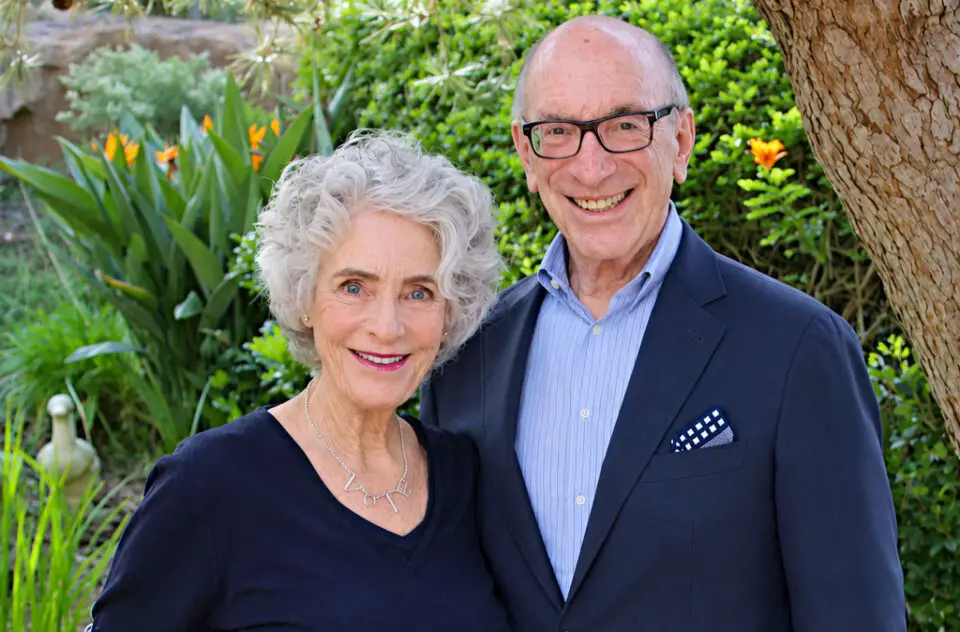
DEL MAR — While many successful locals generously share their wealth to help others, few are as hands-on or as invested in the process as Mel and Linda Katz.
The Katzes will be recognized Nov. 13 as the 2026 Outstanding Philanthropists by the San Diego chapter of the Association of Fundraising Professionals. Yet in chatting with them at their Del Mar home, it quickly becomes clear that both Linda and Mel are well-versed in the latest developments in fundraising — perhaps more so than some AFP members.
That knowledge came the old-fashioned way: through decades of volunteer involvement in various community and charitable organizations, followed by financial donations that have increased along with the success of their business.
In announcing their recognition, the AFP San Diego chapter cited Mel’s role as a board and campaign chair for the San Diego Foundation and a founder of the San Diego Unity Fund. Linda is the founding president of the San Diego Women’s Foundation and a longtime volunteer with Planned Parenthood. She also pointed out that the same weekend they’re being honored by AFP, she’ll be walking in her 27th Susan G. Komen 3-Day fundraiser.
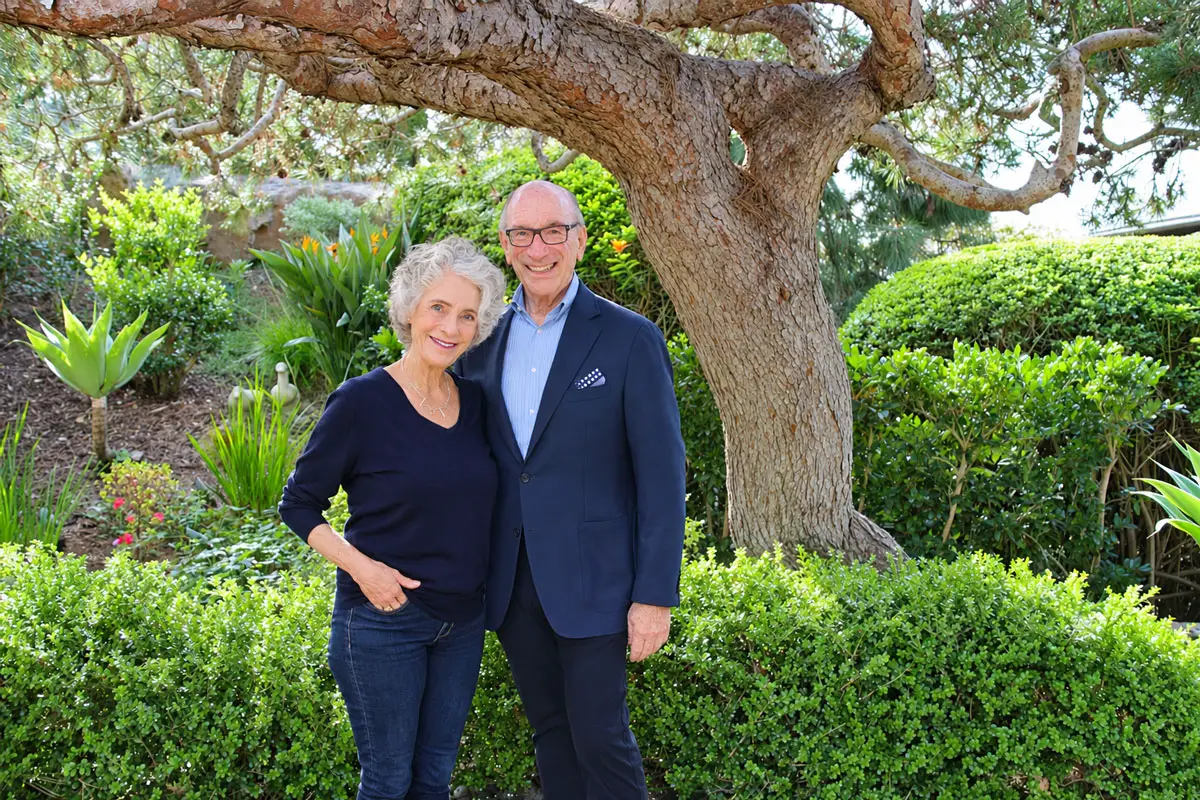
While they have written many checks to various charitable causes over the years, Linda said the volunteer side is equally important.
“It’s not just about the money,” she said. “Forty-five years ago, we couldn’t give at the levels we give now.” Linda explained that when she and Mel were raising their three children, “We gave lots of time” but not much money.
“Volunteers have as much of an impact as the donors. Neither can happen without the other.” Linda said clients of nonprofit agencies generally have no idea who the donors are who pay the bills, but base their opinions of the organization on their interactions with volunteers.
In addition to his fundraising efforts with those groups, Mel is a longtime member of Rotary Club 33, the largest Rotary club in San Diego. As with many service organizations, Rotary Club 33 is struggling to attract younger members.
“How do you get young people to see it’s worthwhile when they see a bunch of gray hair” at meetings, Mel asked.
Linda said a graying volunteer base is a problem local Planned Parenthood offices are also facing.
She said one way to bring more young people into community service is to better integrate volunteer recruitment with philanthropic outreach — something she said is already happening.
“The industry is changing, and changing for the good in our view.”
This new approach, which emphasizes donations of time and talent as well as money, is called “community-based philanthropy,” Linda said.
By focusing on small, recurring gifts and volunteerism, organizations can lower the financial barriers to participation, which “opens doors to a broader range of participants.”
She said this approach allows organizations to build boards of directors that more broadly reflect the communities they serve.
Part of what makes their recognition so meaningful is that “AFP now celebrates the entire process, not just the top donors,” Linda said.
Of course, the philanthropic side of their engagement is only possible because of Manpower San Diego’s ongoing success — a business Mel purchased in 1977 with his partner, Phil Blair, and still runs.
When asked if he originally thought Manpower San Diego would be as successful as it has become over nearly half a century, Mel gave an emphatic “Yes!” He then laughed and added, “There was no rational reason for it except that Phil and I are both naturally optimistic.”
Manpower, a temporary staffing agency, was founded in Milwaukee in 1948. Mel said his parents started the franchise in Las Vegas in 1965 after his father saw a newspaper ad about franchise opportunities.
“When Phil and I bought the San Diego franchise in 1977, it was through a connection through my dad.” Mel said the San Diego franchise had been in business for 22 years and was making about $350,000 a year.
“After our first year, it made $1 million.”
He pointed out that the previous owners didn’t belong to the chamber of commerce or the San Diego Convention & Visitors Bureau, now the San Diego Tourism Authority. Mel said his father suggested he and Blair join those groups and get involved in the community, which would eventually help the business.
“‘Don’t push the business,’ he told us. ‘Let people see the kind of workers you are’ and word will get around.”
Linda said when the Katz and Blair families bought the business together, friends and family warned them that they would either stay friends or stay business partners, but couldn’t do both. But she said Phil and Catherine Blair remain close friends, and the business continues to thrive.
And that success is what drives their desire to serve others.
“Those who have been given much have much to give,” Linda said.
When talking about the philanthropic projects that have proved most meaningful, both Katzes cited instances in which they took on leadership roles — beyond writing a check.
Mel spoke of helping raise more than $90 million in private donations for the construction of San Diego’s Central Library and working with the architect to gather public input on its design.
“We worked with Rob Quigley, the architect, doing focus groups.” They found that San Diegans wanted the best views in the new library reserved for the public, rather than top officials, as often happens in tower buildings. That is why the top floor features terraces, a gallery and other public amenities — all with breathtaking views of the bayfront and downtown that anyone can access.
Linda cited her ongoing work in recruitment. “My goal is to populate the organizations I belong to with young people” to carry the mission forward in the coming years.
But perhaps the closing comments both made at the end of the interview were the most insightful.
“We’ve become friends with so many of the people we’ve volunteered with, because we share the same core values,” Linda said.
And Mel added, “We have received far more than we have given.”