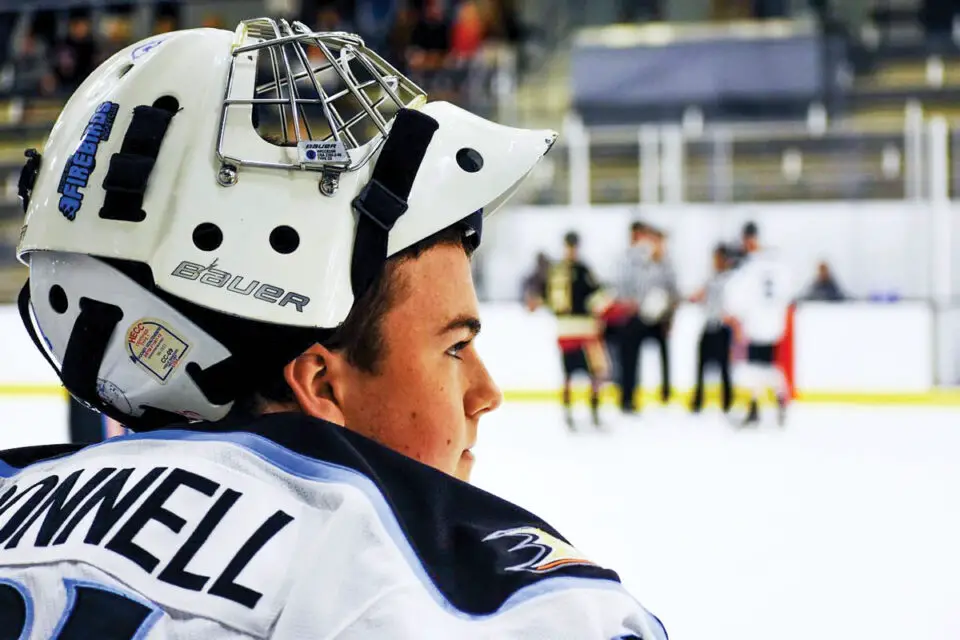
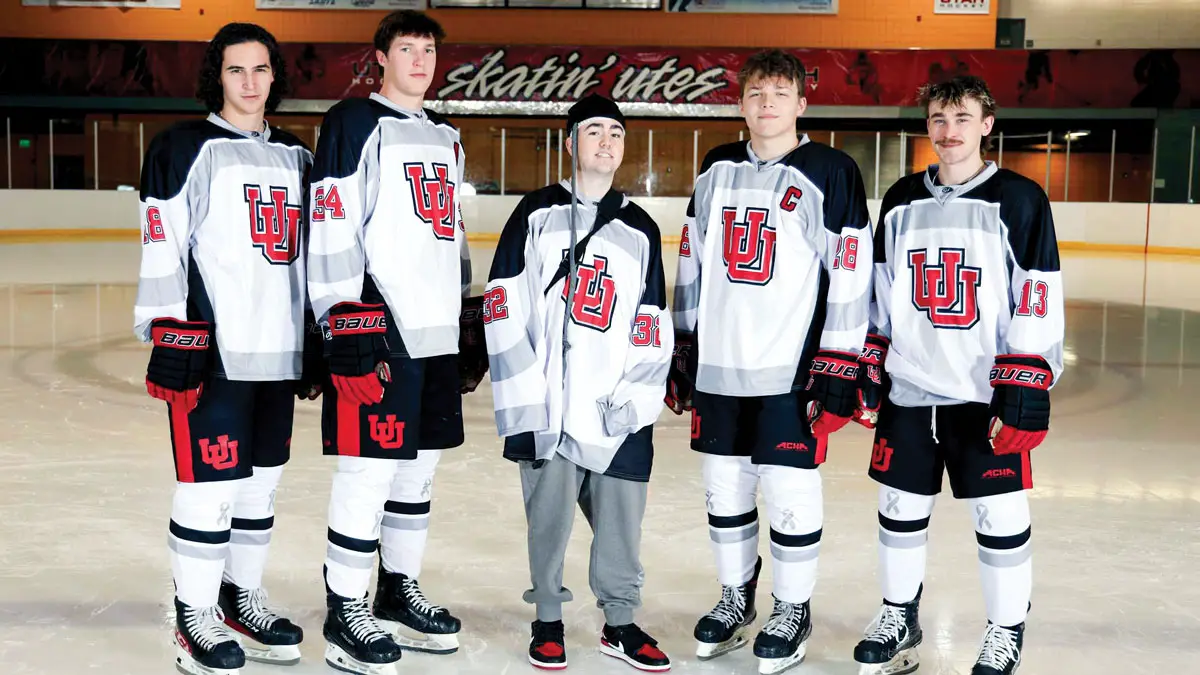
CARLSBAD — When he received his terminal brain cancer diagnosis two years ago, Carlsbad resident Patrick “Paddy” O’Donnell faced a future that was suddenly uncertain. The young man, who had been attending the University of Utah and playing as a goalie for the school’s ice hockey team, was now solely focused on survival.
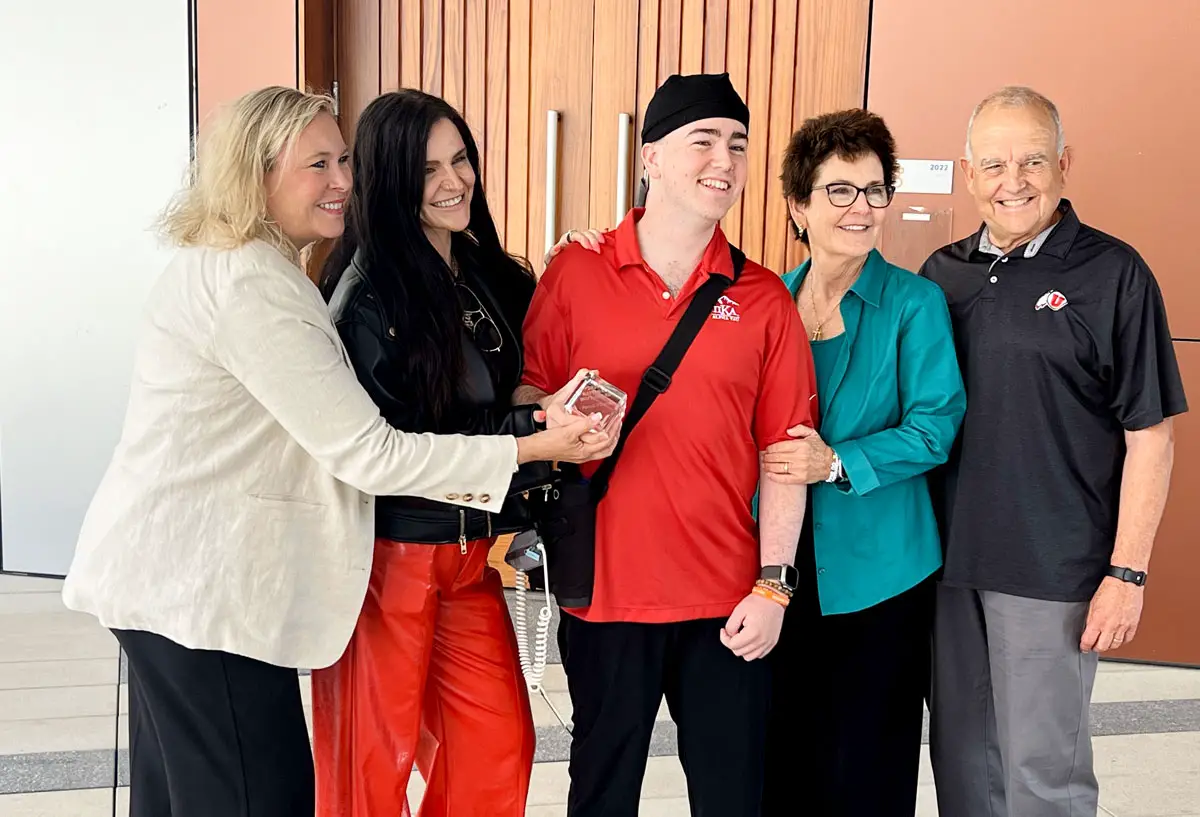
Fast-forward to earlier this month, when the 22-year-old was honored with the End Brain Cancer Initiative’s National HOPE Award at UC San Diego Health’s Sanford Stem Cell Institute for demonstrating hope and determination in the face of his diagnosis.
While he’s not entirely out of the woods yet, O’Donnell has come a long way after countless hours of radiation, chemotherapy and four surgeries through Moores Cancer Center at UCSD. He was able to return to Salt Lake City in the spring to resume college classes and is preparing to go back again next month.
“Every May for over a decade, the End Brain Cancer Initiative has presented the National HOPE Award — a patient disease education, awareness and outreach campaign sponsored by Novocure — to a brain cancer patient who inspires us with their courage and HOPE in the face of this devastating disease,” said Dellann Elliott Mydland, founder of the End Brain Cancer Initiative (EBCI). “Paddy is an amazing young man who deserves this honor for his strength, courage and inspiration.”
O’Donnell has glioblastoma, an aggressive brain cancer that often forms tumors in the tissue of the frontal and temporal lobes of the brain. It is generally found in older adults, who have an average life expectancy of 12 to 18 months.
For someone as young as O’Donnell to be diagnosed is incredibly rare, and the reality of the situation initially sent him to a dark place mentally. Along the way, O’Donnell said he realized that the doctors were doing their jobs on the medical side, and his job was to focus on staying positive and hopeful.
To be chosen for this award, he said, was an honor.
“I’ve just been trying to get the message of positivity out more, and really convey the message to other cancer patients, especially brain cancer patients,” O’Donnell said. “I really feel like the mental space is the patient’s battlefield.”
O’Donnell’s life took a new turn in the summer of 2022, before the start of his junior year at the University of Utah. He was practicing hockey in San Diego when he felt a numbing sensation in his arm, and later that night, his condition worsened, and he began to have a seizure. The Pacific Ridge School alum was placed in a medically induced coma for nearly two days, and when he woke up, his whole world had changed.
Over the next year, he underwent both radiation and chemotherapy as well as speech and occupational therapy, missing his entire junior year of college as a result.

He would eventually undergo four surgeries to remove the tumors from his brain, with one of his neurosurgeons being Dr. Alex Khalessi at UCSD Health. At one point, when it appeared that O’Donnell might not survive an especially aggressive tumor, Khalessi successfully performed a risky surgery that ended up saving his life.
“He’s an amazing person,” O’Donnell said.
This fall, Khalessi and Dr. Frank Furnari — who was also involved in O’Donnell’s treatment — will launch and co-direct a new Brain Tumor Program at the Sanford Stem Cell Institute to explore the heterogeneity of brain tumors and target newly identified therapeutic vulnerabilities.
These innovations and improvements in the field also make O’Donnell more optimistic about the possibilities for future patients.
Dr. Jessica Schulte, O’Donnell’s neuro-oncologist at UCSD Health, said it takes “a special person” to not only bravely face a diagnosis like glioblastoma but also be a role model to other patients.
“Paddy has been very involved and proactive in his care since his diagnosis,” Schulte said. “He has really used positivity and willpower to keep himself going. He understands how serious this is, but he also wants to live his life — and I think that’s so important for cancer patients.”
O’Donnell said the support of his tight-knit family and the San Diego hockey community, which he has been part of since around age six, has made all the difference. In the past two years, the San Diego Gulls and the Anaheim Ducks have honored him during their respective Hockey Fights Cancer Nights.
The End Brain Cancer Initiative, which presented the HOPE Award on July 16, has also been indispensable for the family. Mydland founded the organization with her late husband, Chris Elliott, who also had glioblastoma, as a way to increase patient access to medical treatments and promote education, awareness and outreach about brain cancer.
“The End Brain Cancer Initiative was vital in our search, at the most critical time, availing us of options and direct contact with experts in the field,” said Anne O’Donnell, Patrick’s mother.
Today, O’Donnell is a patient advocate at Foundation Medicine Inc., a molecular information company specializing in precision medicine in La Jolla. He looks forward to returning to the University of Utah, where he studies video game design.
O’Donnell continues to get regular MRIs to monitor a tumor that has ceased growing and also wears an Optune cap, which is a wearable device that uses electrical fields to treat glioblastoma.
O’Donnell said while it’s challenging to be 100% grateful for what he has gone through with glioblastoma, he can confidently say that it has brought wonderful people into his life and also made him into a stronger person.
“If I get to the other side of this, I think I’ll definitely be a better person than I was before,” O’Donnell said.