On Sept. 11, 1985, Tom Friend, then a young San Diego Padres beat reporter for the Los Angeles Times, watched from the press box at Cincinnati’s Riverfront Stadium as Pete Rose stepped to the plate in the first inning before a standing-room-only crowd.
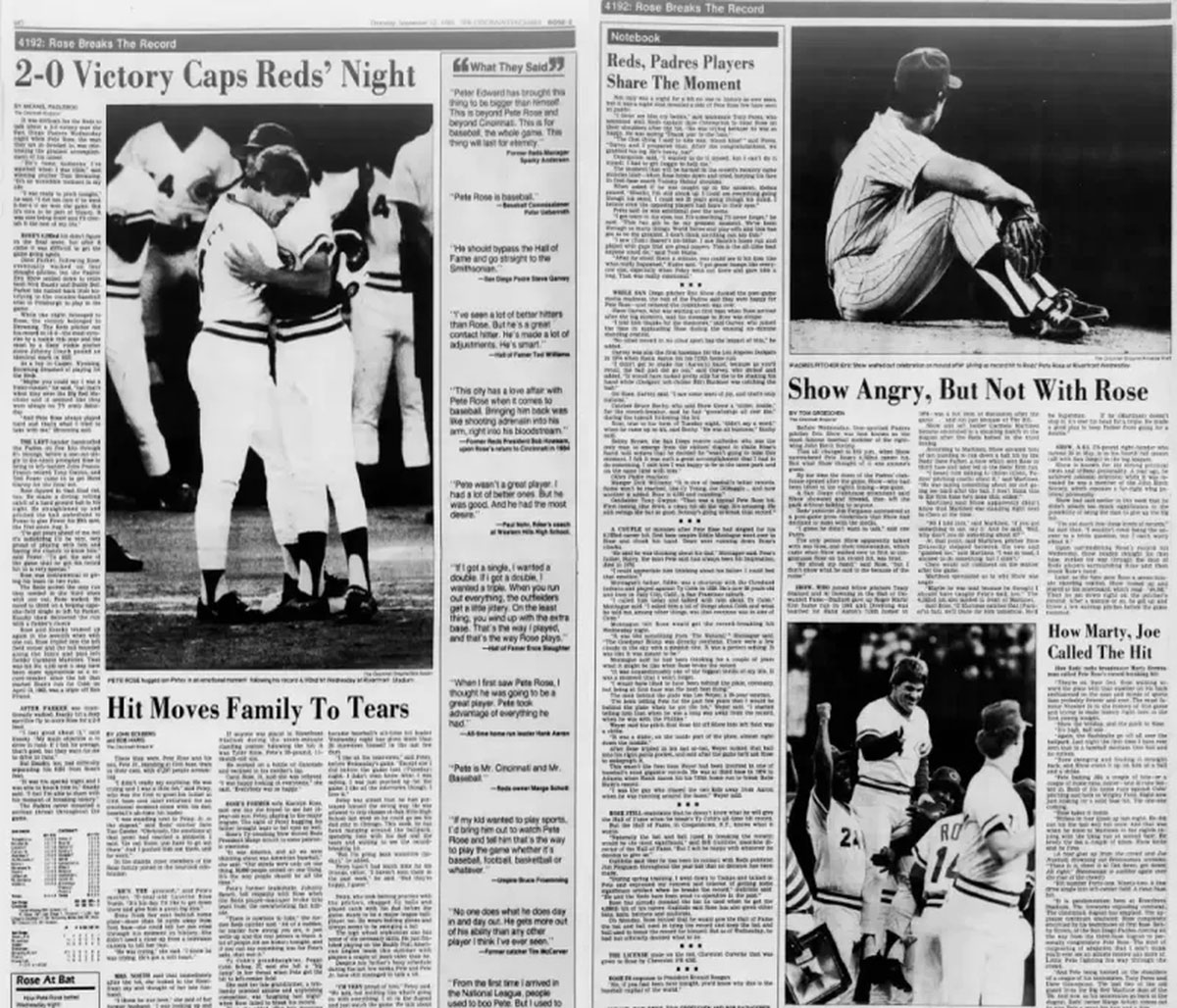
With a 2-1 count, Rose lined a single to left-center field for his 4,192nd career hit, surpassing Ty Cobb as baseball’s all-time hits leader.
Padres pitcher Eric Show was on the mound.
“Behind every record is the other side of it,” Friend, now a Carlsbad resident, told The Coast News. “And behind Pete Rose’s glorified record was a guy that didn’t really want to be there.”
John Condit had seen that reluctance firsthand. The night before, Condit, a 20-year-old college student from Dayton, Ohio, interning as a sportscaster at a local television station, helped Show sneak out of Riverfront Stadium to avoid the press after the Padres’ 3-2 win over the Reds.
Rose went hitless, setting up a showdown with Show, the scheduled starter the following day, with Cobb’s record within reach.
“He absolutely did not want to go down in the history books as Pete Rose breaking Ty Cobb’s record against him,” Condit said.
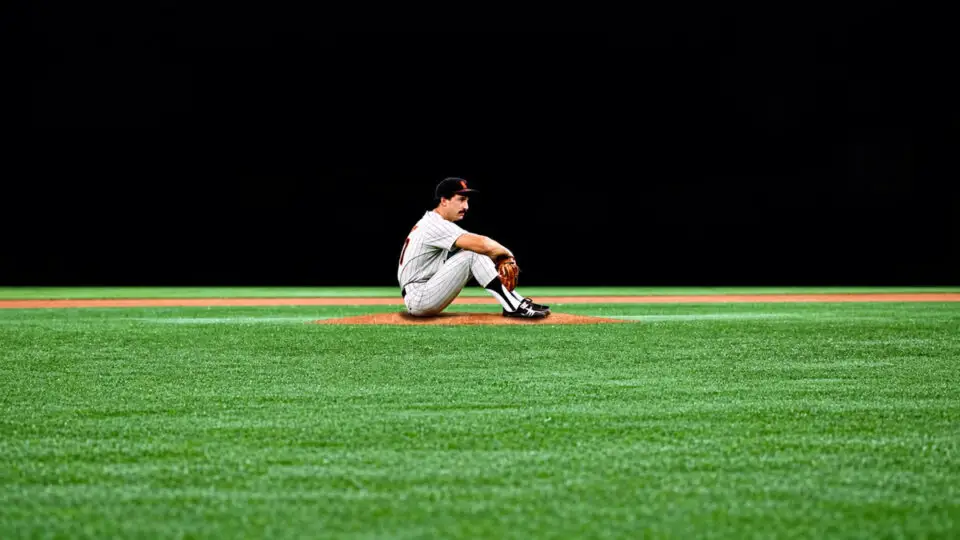
As Rose’s teammates and fans celebrated, halting the game for seven minutes, Show sat down on the mound, a gesture many observers viewed as disrespectful. Show would win a franchise-record 100 games for the Padres, but he would be remembered most for a moment he wanted no part of.
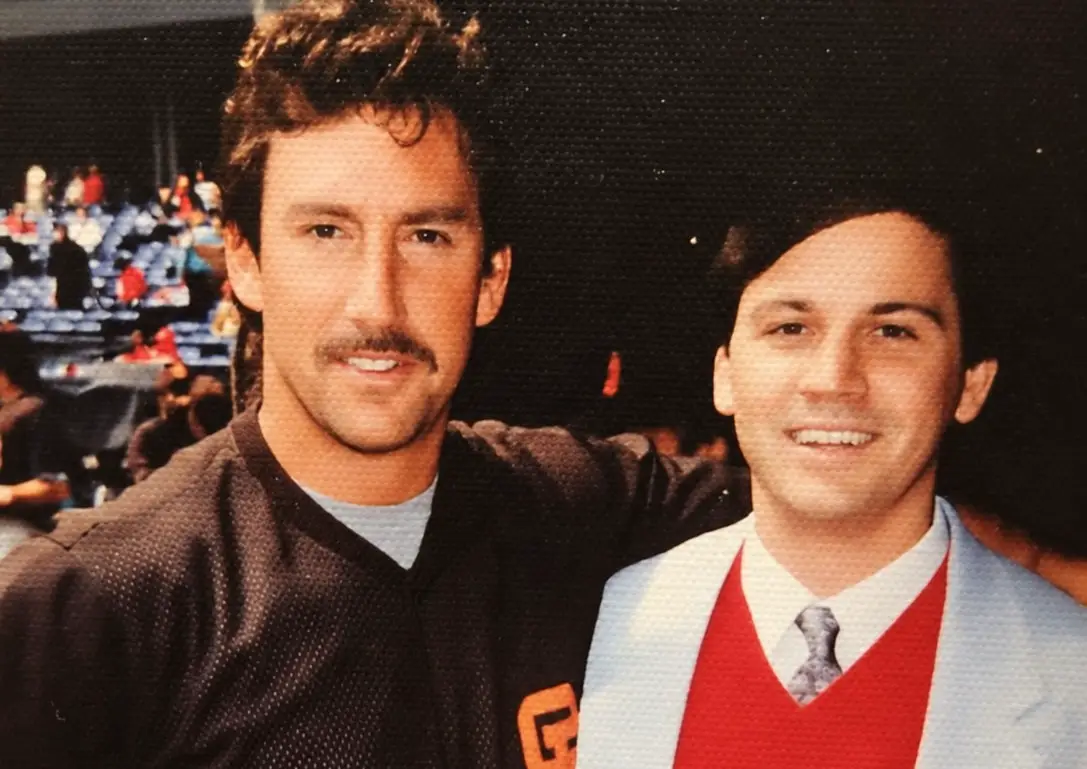
At the time, the moment’s significance — and what it meant to Show — was not yet clear. Four decades later, Friend and Condit, both now in their 60s, came together as co-directors to pursue a story left unfinished, bringing their different perspectives on Show to the project.
“Alone on the Mound: The Tortured Life of Eric Show” will make its U.S. premiere at the 25th annual San Diego International Film Festival, which runs Oct. 13-18.
The Rose hit, and a 1987 incident in which Show hit Chicago Cubs star Andre Dawson with a pitch helped define his public reputation. But the controversies told only part of the story of a pitcher who endured an abusive childhood, struggled with drug addiction and died at 37.
In 2010, Friend reported “The Tortured Life of Eric Show” for ESPN, interviewing Show’s sisters, friends, teammates and former colleagues. Their accounts revealed the abuse Show and his sisters suffered at the hands of their father. According to the family’s account, their father once slammed the young Show’s head into a car’s dashboard after a Little League game.
Friend had not understood the severity of the abuse while covering the Padres. Looking back, he wondered whether Show’s relationship with his father influenced how he responded to setbacks.
Show carried physics books to spring training, played guitar and pursued interests in religion and politics. Friend remembered a kind, intelligent man who often seemed unhappy in professional baseball despite his success.
“He had this life because he was good at it,” Friend said. “I don’t think he did it because he wanted to.”
Show’s drug use escalated in the late 1980s, and he made repeated attempts at rehabilitation. The Oakland A’s released him during spring training in 1992, ending his major league career.
On March 16, 1994, he was found dead at Rancho L’Abri, a drug treatment center in Dulzura. The San Diego County Medical Examiner’s Office attributed his death to an accidental overdose of heroin and cocaine.
Friend believes the backlash surrounding the Rose and Dawson incidents contributed to Show’s decline. The Dawson incident brought intense criticism and death threats, Friend said, and he came to believe the hostility wore Show down.
Condit, who remained friends with Show after the Rose hit, sees no evidence that the record contributed to his later struggles.
“I have no reason to believe that being a part of that historic moment had anything to do with his demise or his spiral down,” Condit said. “We hardly ever even talked about it in the years that followed.”
Condit knew Show away from the ballpark. They shared meals and conversations about religion and politics, and Show sometimes played guitar with a live jazz band at a Cincinnati hotel. After reading Friend’s ESPN story, Condit contacted him, and the article became a roadmap for the documentary.
Friend brought documentary experience to the project. His credits include Quiet Storm, about Ron Artest, and Stand, about Mahmoud Abdul-Rauf, both of which received Sports Emmy nominations.
Condit tracked down Show’s sisters, Cindy and Leslie, and connected with Show’s widow, Cara Mia. The sisters had been estranged for more than a decade. Condit said the film helped bring them back together and gave them an opportunity to share more of their brother’s life, including his generosity toward homeless people and his efforts to help others.
Those accounts deepened Friend’s understanding of a man he had covered during his playing career.
“I thought I knew Eric,” Friend said. “But I learned more about the heart that he had.”
The film leaves unresolved how much the Rose hit contributed to Show’s later struggles. Friend sees the public backlash as part of the story; Condit questions whether the moment played a meaningful role. Their differing perspectives frame a portrait that reaches beyond the image of a pitcher sitting on the mound while baseball history unfolded around him.