
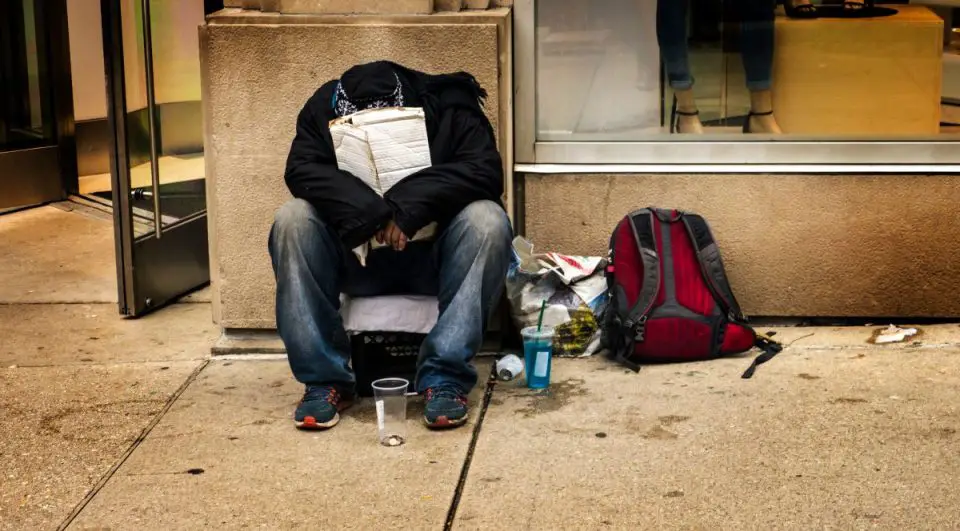
REGION — Last week, state lawmakers and homelessness experts discussed the current state of homelessness and ongoing measures to address it in San Diego County, as well as the implications of Gov. Gavin Newsom’s executive order to remove encampments.
State Sen. Catherine Blakespear (D-Encinitas) hosted the second annual Ending Homelessness Summit on July 25 at the University of California San Diego. The summit featured panels with San Diego area elected officials and representatives from state and county housing and behavioral health agencies.
Blakespear noted that despite the significant funding and programming going toward the homelessness crisis in California, the problem is only getting worse, with the number of people becoming unhoused continuing to outpace those entering housing.
In June, 1,172 people in San Diego County entered homelessness while 989 persons were housed, according to a report by the Regional Task Force on Homelessness.
“Our efforts to combat homelessness are currently not sufficient,” said Blakespear. “We need to be able to adjust our focus.”
That same morning as the summit, the governor announced an executive order directing state agencies to move urgently to remove encampments while also assisting those living in them, stating that encampments pose a danger to inhabitants and the public.
Newsom has also urged cities and counties to take the same action regarding encampments. While he lacks the authority to mandate action, he can influence local decisions by allocating billions in state funds for homelessness initiatives.

The decision followed a June 28 ruling from the U.S. Supreme Court, which allows jurisdictions to enforce bans on sleeping outside in public spaces and states that the 8th Amendment does not apply to outdoor sleeping bans.
While many have criticized the decision as essentially criminalizing homelessness, Blakespear, who represents the 38th district of coastal North County and parts of Orange County, said she applauded the bold action taken by the governor.
“There’s a human right to housing and a core obligation to use it,” Blakespear said. “We feel like the tail can actually wag the dog. If we’re saying you cannot camp everywhere, it will actually drive cities, counties, and the state to actually have more housing.”
Homelessness and behavioral health
Panelists also discussed other statewide policy changes on the horizon to address homelessness, with a larger focus on measures to address behavioral health issues, such as Senate Bill 43 and Proposition 1.
SB 43 expands the definition of who may be civilly detained for involuntary behavioral health treatment to include those with severe substance use disorder and those unable to provide for their basic needs for necessary medical care access or personal safety.
San Diego County will be the only county in the state to implement expanded conservatorship under SB 43 starting in early 2025, with most other jurisdictions planning to begin in 2026, according to Luke Bergmann, San Diego County Behavioral Health Services Director.
“We have really taken a multidisciplinary, all-hands-on-deck, very thoughtful, very data-driven and very community-interactive approach, and tried to get as much information and feedback from as many players as possible about what this will look like on the street,” Bergmann said.
California voters narrowly approved Proposition 1 earlier this year. The twofold measure authorizes the issuance of $6.38 billion in bonds for behavioral health treatment facilities and housing and requires counties to allocate more funds toward beds, housing and services for those with behavioral health and substance use needs.
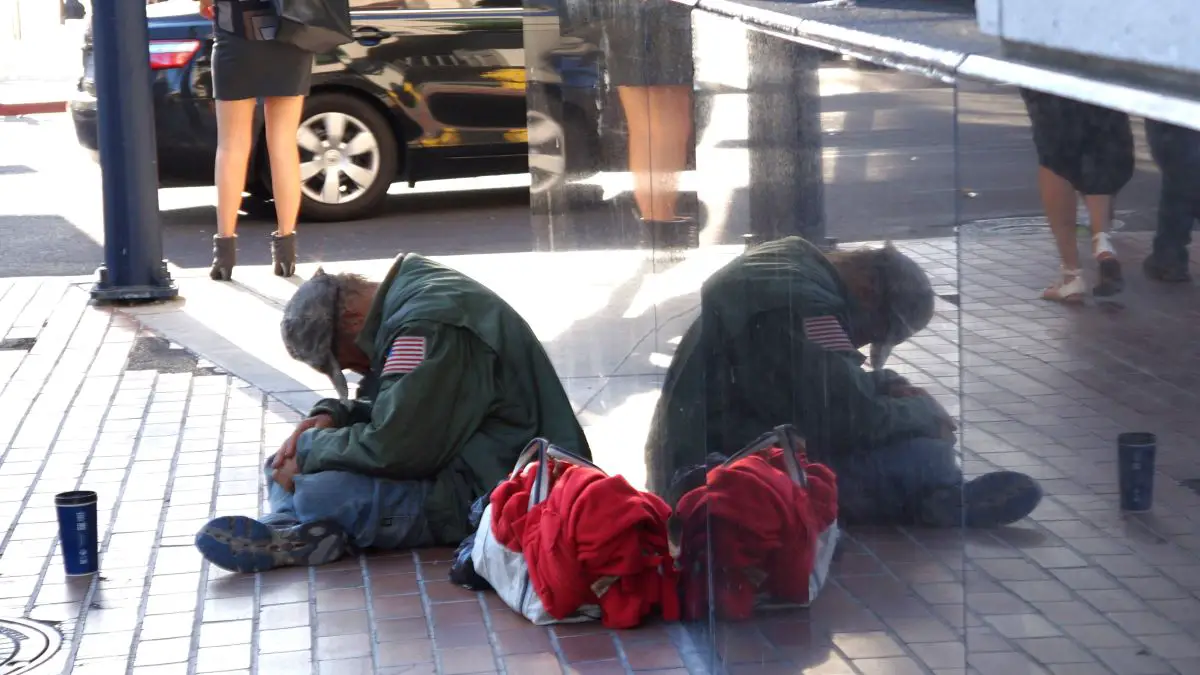
On Tuesday, the county was awarded $12.4 million in state Behavioral Health Bridge Housing funding to create 49 new recuperative care beds for individuals living with behavioral health issues and experiencing homelessness.
Other changes are in the works to improve Medi-Cal enrollees’ access to non-medical services. Glenn Tsang, a policy advisor for homelessness and housing with the California Department of Health Care Services, said the agency is currently implementing CalAIM, a form of state-level health care reform that seeks to integrate Medi-Cal more seamlessly with other social services to serve those with the greatest needs.
Under CalAIM, Medi-Cal enrollees with disabilities, substance use disorders, and more complex medical, behavioral health and mental health needs would be able to access a wider range of non-medical services such as housing supports, recuperative care and medically-tailored meals as part of their plans.
Medi-Cal would also be required to ensure its managed health plans coordinate access to local services for patients, removing barriers and preventing long wait times.
Currently, Medi-Cal plans and services vary between counties, leading to a patchwork of inconsistencies in what people are able to access. Bergmann said San Diego has geographically managed care with several different Medi-Cal plans featuring different terms, which leads to challenges for providers and plan holders.
“Geographic-managed care creates some challenges,” said Bergman. “I would note that there are structural challenges with the relationship of behavioral health care payment that are consistent in Orange County and San Diego County and in every other county across the state of California.”
When it comes to recuperative care, which provides a place for individuals to recover after being discharged from the hospital other than the street, Tsang said one thing the state is considering is presumptive eligibility to get people in the door faster rather than having to wait for approval under their Medi-Cal plan.
“If we make this all mandatory right now, we have to think about, am I setting up our plan partners for success?” Tsang said, noting that the program is in its third year of a five-year implementation.
Camping ban
While these programs are in the works, some cities are taking advantage of their new ability to clear encampments on their streets. San Marcos was the first city in San Diego County to implement a local encampment ban following the Supreme Court decision, finalizing their ordinance just two days before the governor’s executive order.
The new ordinance, adopted by the City Council in a 4-1 vote for a first reading in early July and finalized on July 23, prohibits encampments on city-owned streets, alleyways, parking lots, sidewalks, parks, open spaces, and areas near waterways.

Mayor Rebecca Jones noted that the city has done its part to provide low-income housing in the city, with 10% of its total units deed-restricted, a rate higher than any other city in the county. However, the city does not have its own temporary shelter, with the closest shelters being in Escondido and Vista.
“There’s a lack of resources here in San Marcos,” said resident Emily Mohammad. “We don’t have emergency housing, we don’t have a shelter, we don’t have resources for that.”
Blakespear also acknowledged that North County as a whole faces a major shortage of shelter beds and interim housing beds to temporarily get unhoused individuals off the streets. She hopes the encampment bans will compel cities to build shelters and housing and provide other services.
“From my perspective, on a state level, we should be much more prescriptive with cities, and say ‘you have an obligation to provide homeless-serving housing,’” she said.
The Vista City Council also plans to discuss regulations for homeless encampments at their upcoming Aug. 13 meeting. In April, city leaders said they would support a prohibition on camping within two blocks of a homeless shelter or school and 250 yards of a play structure or recreation field if a shelter bed is offered and refused.


1 comment
I know of no one asking for -much less wanting- a Homeless Shelter in Encinitas. More terrible ideas from the LEFT. The “unhoused” need rehab and detox before housing, and in affordable places where there are services and work opportunities to generate income to pay rent. More unfunded mandates from Governor Newsom, passing the buck to cities now, on top of his unfunded state housing mandates from a state with a huge budget deficit. Laughable and shocking both. Matt Walsh had it right in his recent YouTube video: https://youtu.be/BLwhGuIJWzY?si=MsT_Pa4clnzuGwbS a must watch.
Comments are closed.