Is tennis really a sport of a lifetime?
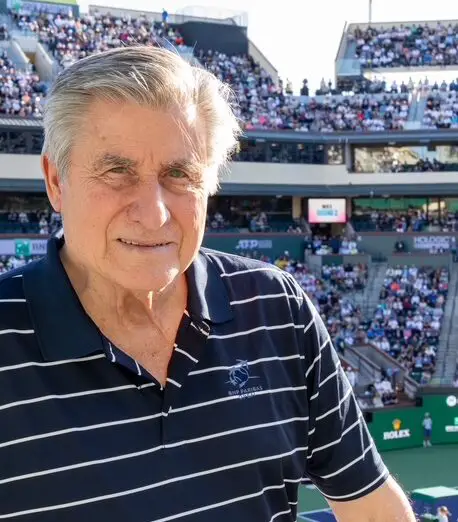
For the life of him, Rancho Santa Fe’s Charlie Pasarell can’t disagree.
“I had a vision to be the best tennis player in the world,’’ Pasarell said. “One of the things I discovered along the way is that dreams can evolve.
“Tennis took me places I would have never imaged, brought people into my life, and opportunities, that I never envisioned when I first picked up the racket.’’
When fetching Pasarell’s fresh book, “Serving First,” it’s difficult to set aside. It’s an ace, with noted tennis historian Joel Drucker contributing.
“Have dreams, that’s what I hope people take away from the book,’’ Pasarell, 82, said. “Work hard and don’t let obstacles stop you. Stay open to where a journey might take you and the people you meet along the way.”
Pasarell’s path is one with twists and turns, toasts and triumphs and, sure, occasions when that fuzzy yellow ball didn’t quite bounce his way.
But like any champion — Pasarell was the top American player in 1967 — he never let kicks in the shin dissuade him from moving on.
Pasarell was born in Puerto Rico to parents who were top-notch players. He took to the courts as a 6-year-old, and really never left.
Pasarell’s game, which was equal parts grandeur, grace and gunslinger, led to him being inducted into the International Tennis Hall of Fame, being an NCAA champion at UCLA, where he roomed with Arthur Ashe, part of five Davis Cup-winning teams, 53 combined singles and doubles titles and the respect of everyone.
“Watch Charlie play and copy his strokes,’’ Ashe often told younger players. “He’s got the best strokes in the world.”
Pasarell had a best friend in the trailblazing Ashe, and a front-row seat to the inequalities he faced as a Black player. But Ashe always knew Pasarell had his back, and the feeling was mutual.
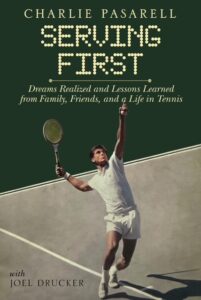
“Charlie and Arthur had a pure friendship, based on trust and love,’’ Jeanne Ashe, Arthur’s widow, says in the book. “(And) Charlie’s heart is the spark that brings this great tale to life.”
But Pasarell’s lot in life became much more than shaking hands at the end of matches. He was at the forefront, in the late 1960s when change was in the air regarding our politics, society, and, yes, tennis.
The old guard ruled the sport, while giving its most important asset, the players, no voice in where they could play, and how, if anything, they would be paid.
That changed when Pasarell, Aussie John Newcombe and several others revolted.
The professionals had been barred from tennis’ biggest events — Wimbledon and the U.S., French and Australian opens — robbing the fans of seeing the sport’s best on its biggest stages.
Eventually the sport began to swing open in 1969, the year Carlsbad’s Rod Laver won his second Grand Slam. But it wasn’t until the early 1970s — after the players turned their back on Wimbledon — that the Association of Tennis Players had the teeth, and panache, to throw its weight around.
“Everything before that was a concept,’’ Pasarell said. “But the Wimbledon boycott in 1973 was when the players stood together and said, ‘No, we have a voice, and we did.’’’
Tennis legend Jack Kramer agreed to run the ATP, with the stipulation he received no compensation. It was for the love of the game, something that was hard to find between the players and promoters.
Pasarell was among the main drivers of this metamorphosis, and when included with his playing credentials, that’s plenty for a book right there.
But Pasarell never stopped, never quit imagining what was around the next corner as he saw a horizon few, even when squinting, could see.
The BNP Paribas Open tournament at the Indian Wells Tennis Garden would be the next recipient of Pasarell’s drive and determination.
It’s known as the fifth major, a two-week tennis extravaganza in an unbelievable setting with the game’s top players.
But before Pasarell was among the key figures to wrestle control, it was a major headache.
Its venue was cramped and its field was nothing like it is today. Pasarell swooped in just before the event was sold and moved to Florida, and like always, he went to work with his charm and chutzpah.
Pasarell’s playing career was winding down while another chapter was taking off.
“I was still on the board of the ATP and I had no clue I would be involved in a tennis tournament,’’ he said.
But he knew what would make it stand out: both men and women competing, an increase in prize money and an opulent setting.
Pasarell, along with partner Ray Moore, saw just that happen. Then, when Oracle’s Larry Ellison came aboard in 2009, there was no shortage of funds to make the 54-acre site the envy of the majority of other venues.
“Larry took our master plan of the Indian Wells Tennis Garden and he developed it a big way,’’ Pasarell said. “And it’s all first-class.”
Ditto for Pasarell, and it shines through in “Serving First.”
Contact Jay Paris at [email protected]