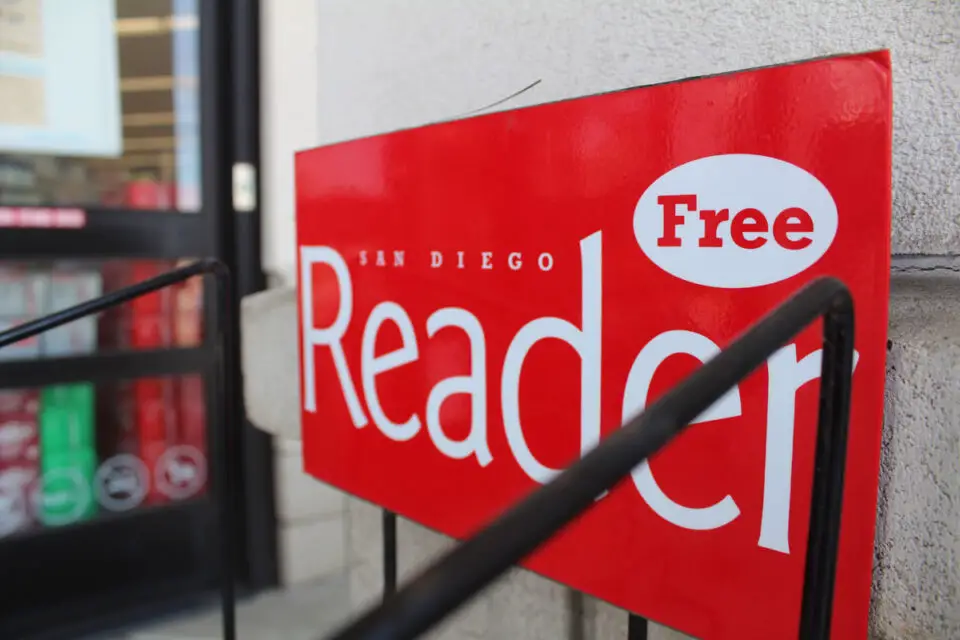
SAN DIEGO — The San Diego Reader has placed its final print edition on local newsstands, as the alt-weekly publication of 52 years transitions to a digital-only model.
Based in downtown San Diego, the Reader has provided articles, reviews and columns focused on news and politics, music, theatre, movies, food and more throughout San Diego County since 1972, when its first print edition debuted.
Editor and founder Jim Holman said this pivot has been a long time coming, following the 2008 recession and the continued loss of print advertisers experienced by many print publications. Holman told The Coast News that while he loves the print format, it’s not what most people want anymore.
“I have a sense of great relief. It wasn’t always this way, and I had different moments of grief, but it was clear we couldn’t keep doing it. I think it’s a great move for everybody involved,” Holman said.
The cessation of the print Reader comes just weeks after Holman sold the publication to long-time writer and editor Matthew Lickona. At the age of 78, Holman said he was ready to pass the torch, and first offered it to his sales manager, who politely declined.
“I was explaining it to Matthew Lickona, and there was silence for a minute. Then I asked, do you want to buy it? And he said he wanted to keep this thing going,” Holman said.
Lickona, who joined the Reader in 1995, made the decision to end the print publication soon after taking charge. The final Feb. 13 print edition features a cover story about the Hotel Del Coronado and the persisting legacy of the 1959 film “Some Like It Hot” and its star, Marilyn Monroe.
In a post on X earlier this month, Lickona said he looked forward to discovering what the future holds.
“After 30 years of working at the San Diego Reader, I went and bought the thing. Looking forward to seeing what’s possible,” Lickona said.
Over the last 52 years, the Reader’s editions have spanned in size from the initial 12-page tabloid in October 1972 to a tome of more than 200 pages at its peak around the early aughts. In those larger editions, Holman noted that around half the pages were classified ads.
The alt-weekly’s last edition totals 40 pages.
Holman said the Reader is well prepared for the digital landscape, with the website slowly growing at the same time that receptivity to print has decreased. In the past decade, Holman began digitizing all of the Reader’s past cover stories so that they are available online.
The Reader has featured nearly 800 contributing bylines over the years, according to its website, with 48 current writers. Most of them have worked for little to no pay, in exchange for the opportunity to publish long-form literary journalism, Holman said.
“They all work for peanuts. I think we’ll be able to keep them going. They love it almost as much as I do,” Holman said.
Find the San Diego Reader’s content online at sandiegoreader.com.