With climate scientists forecasting what could be one of the strongest El Niño seasons on record this winter, North San Diego County residents should start taking steps to help their homes withstand inclement weather.
Local cities such as Oceanside are already taking precautions by clearing drains and channels and reviewing emergency flood response plans. Those actions follow the National Oceanic and Atmospheric Administration’s prediction that the chance of a very strong El Niño exceeds 90%, meaning the event could rank among the strongest on record.
Gov. Gavin Newsom also proclaimed a state of emergency Sept. 21 to mobilize state resources ahead of the winter storm season.
According to the governor’s office, the move “directs state agencies to begin protecting vulnerable communities, prepare roads and critical infrastructure, stage emergency supplies, and help local partners reduce flood, landslide and coastal risks.”
As state and local governments prepare, so should homeowners. Acting sooner rather than later can save time and money in the long run.
Clear drainage
When preparing the yard for heavy rain, start by clearing drains and gutters on the property. Even if a home isn’t near a body of water, it can still flood — especially if a major nearby drain is clogged.
It’s also important to make sure stormwater flows away from the property and into the proper channels. Homeowners with areas where water pools may want to consider regrading or repaving, if possible.
Secure the yard
While clearing drains helps protect against flooding, homeowners should also clear their yards of items that strong winds could blow away. Furniture, pots, grills, umbrellas and other outdoor items could become projectiles if not properly secured or stored.
Homeowners should also trim trees near the home. If necessary, call an arborist for professional help.
Grab sandbags
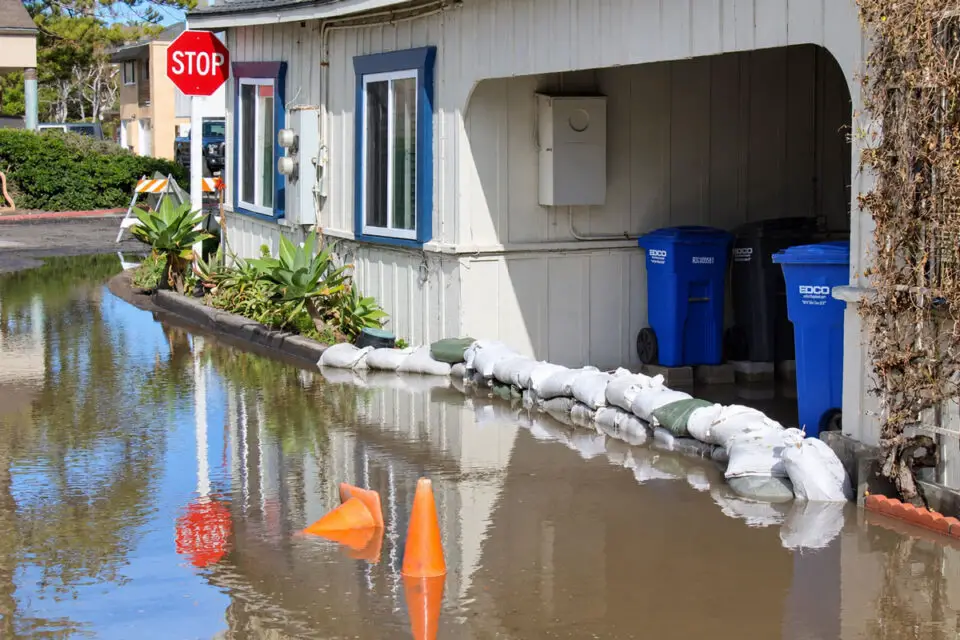
For those who live in flood-prone areas, stocking up on sandbags is a must.
In Oceanside, sandbags are offered on a first-come, first-served basis. Oceanside residents must bring a shovel and photo ID to pick up free sand and 10 free sandbags at Moody’s El Corazon Recycling, 3210 Oceanside Blvd., open from 8 a.m. to 5 p.m. Monday through Saturday. Prefilled bags are also available for purchase.
Those who live elsewhere should check with their local municipalities to see if free sandbags are available.
Residents can check whether their property is in a FEMA-designated flood zone through the FEMA Flood Map Service Center.
Create an emergency kit
During severe storms, some people may be stranded at home for several days — often without power. An emergency kit can help ensure they have food, water, first-aid supplies and other necessities.
According to the Federal Emergency Management Agency, a basic emergency kit should include the following:
- Water and nonperishable food for several days
- Extra cellphone battery or charger
- Battery-powered or hand-crank radio that can receive NOAA weather alerts, with extra batteries
- Flashlight and extra batteries
- First-aid kit
- Whistle to signal for help
- Dust mask to help filter contaminated air, plus plastic sheeting and duct tape to shelter in place
- Moist towelettes, garbage bags and plastic ties for personal sanitation
- Nonsparking wrench or pliers to turn off utilities
- Can opener
- Local maps
A list of additional items is available on ready.gov.
Inspect the home’s major mechanical systems
During winter storms, a home’s major mechanical systems may work extra hard to keep residents comfortable.
Burgeson’s Heating and Air Conditioning recommends scheduling professional inspections of the home’s heating, ventilation, air conditioning, plumbing and electrical systems.
Recommended steps include replacing air filters to prevent microbial growth and the circulation of particles indoors; ensuring the condensate drain line is clear; checking the sump pump, if the home has one; locating the main water shutoff; inspecting connections under sinks and toilets; testing all ground-fault circuit interrupter outlets; installing whole-home surge protection; and planning for power outages.
Stay safe
Residents are encouraged to sign up for AlertSD, a countywide emergency alert system that sends notifications to cellphones during emergencies. They can also download the Genasys Protect app, which shows specific emergency zones and helps residents navigate evacuations and return home.
Families should also make emergency plans. Remember to include pets.