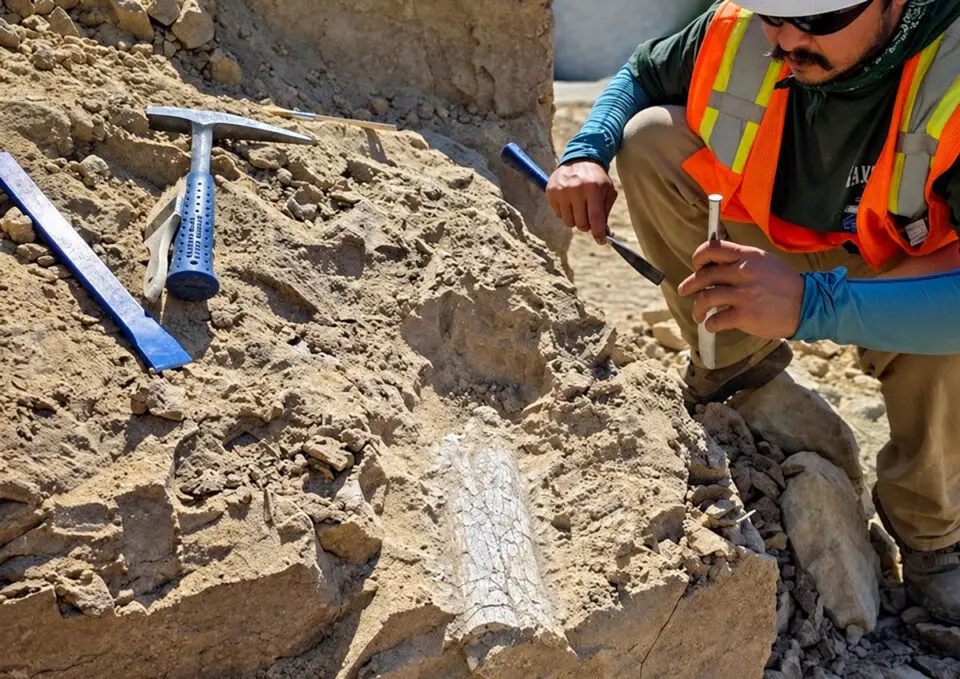
OCEANSIDE — Construction crews unearthed fossilized bones of a large, hoofed mammal that roamed the area more than 40 million years ago during a routine infrastructure project earlier this month.
Several limb bones, ribs and other fragments were found about 12 feet below the surface during excavation at the project site. The city is withholding the exact location for public safety and to protect the site.
“We dug in to build something for Oceanside’s future and came up with a piece of its ancient past,” said City Manager Jonathan Borrego. “It’s a remarkable discovery and a chance to imagine the Oceanside environment in the pre-human era.”
According to the city, the bones came from Member C of the Santiago Formation, a geologic formation of sedimentary rocks found in Orange and northwestern San Diego counties. It dates to the Eocene Epoch and is known for previous fossil finds from the same era.
Scientists describe the Eocene as a time when Earth had a “hothouse” climate and modern mammal groups rose and spread. It lasted from about 56 million to 34 million years ago.
According to the team of paleontologists behind the find, the fossils are estimated to be 40 million to 45 million years old, placing them within the Uintan North American Land Mammal Age.
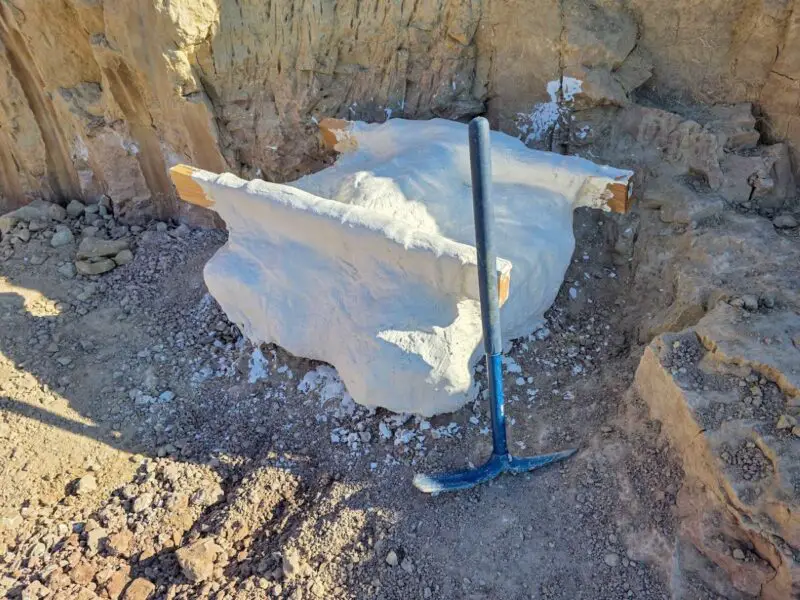
Joseph El Adli, the principal paleontologist, made the discovery on-site during routine monitoring. He immediately secured the area to begin excavation. For seven days, his team worked to expose the bones from several tons of mudstone and sandstone before placing them in a plaster field jacket for safe transport to an off-site laboratory.
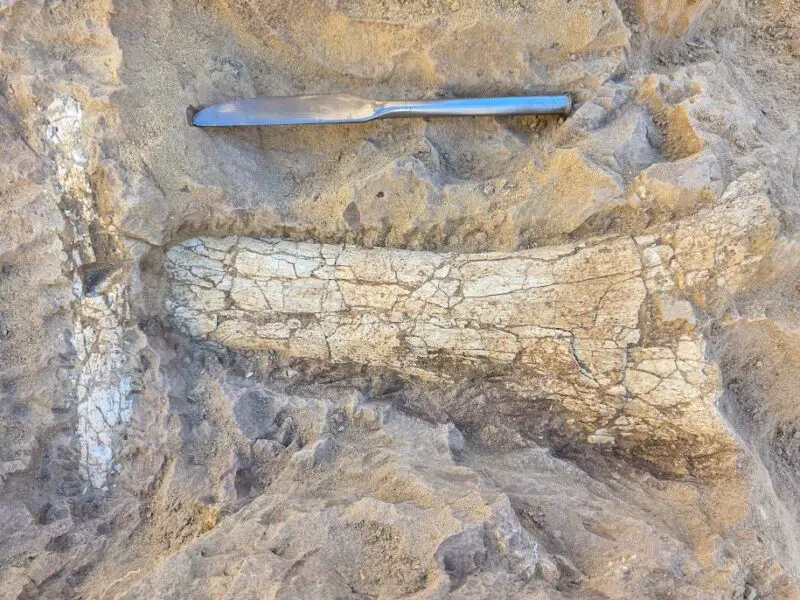
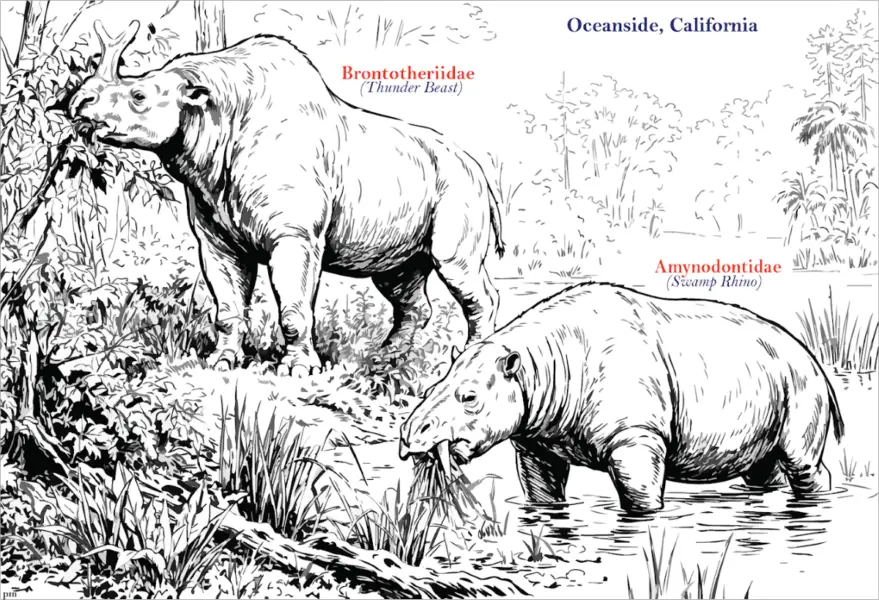
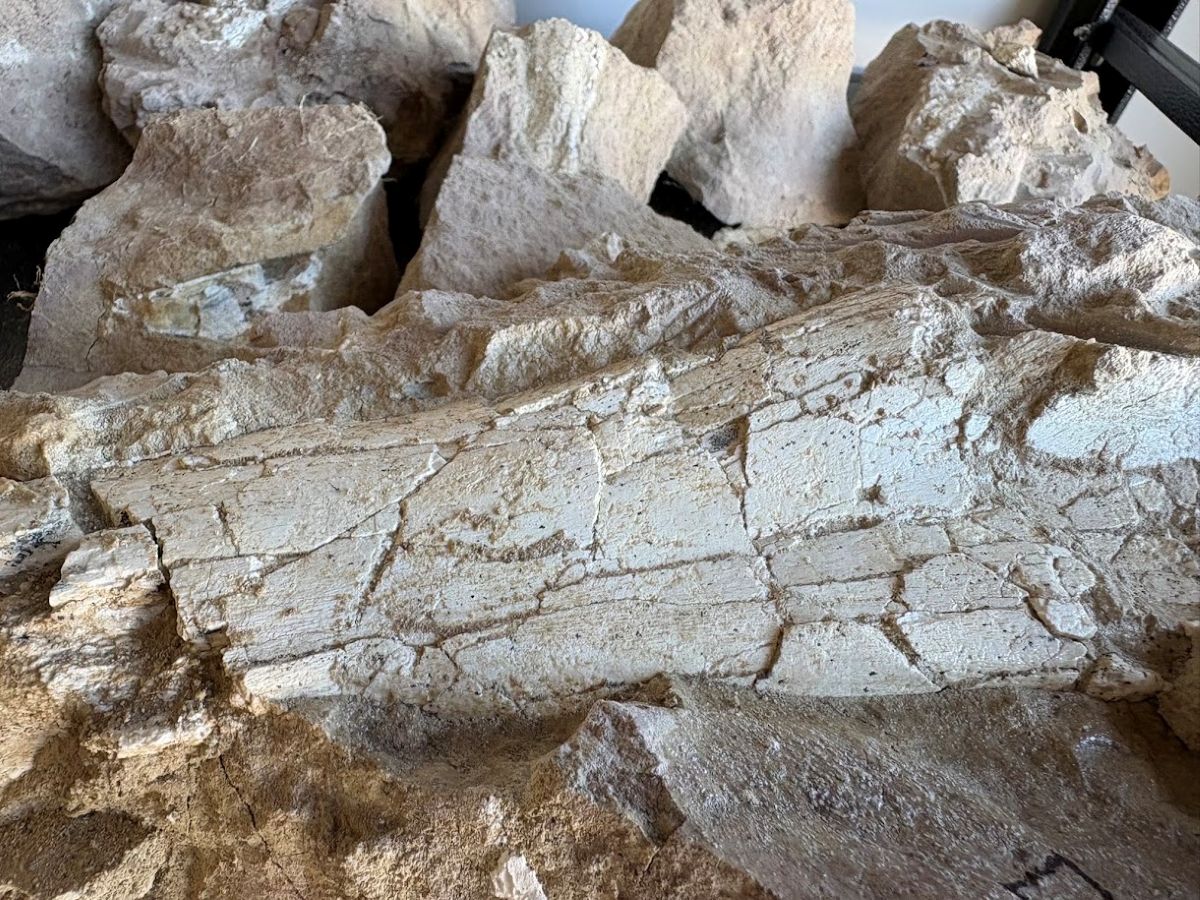
El Adli believes the fossils likely belong to one of two extinct mammal families that once lived here. Both belong to the order Perissodactyla, the odd-toed hoofed animals.
One possibility is a member of the Brontotheriidae family, a brontothere, also known as a titanothere or “thunder beast.” These were massive animals with deep chests, pronounced humps at the shoulder and distinctive Y-shaped bony horns on their noses.
A brontothere species found in the Santiago Formation was about the size of a modern black rhinoceros, with small horns on a saddle-shaped skull. These herbivores fed on soft leaves and vegetation in forested habitats.
The other possibility is an amynodon, or “swamp rhino,” a member of an extinct family of large herbivores distantly related to rhinoceroses. These animals had hornless faces and squat bodies resembling those of hippopotamuses, with low, barrel-shaped torsos, short, sturdy legs, broad, flat skulls and tusk-like canine teeth instead of horns.
Some were semiaquatic and spent much of their time in rivers, ponds and lakes.
“Oceanside is full of history, but apparently we’ve only been scratching the surface,” said Mayor Esther Sanchez. “Finding evidence of prehistoric life beneath our feet is an extraordinary reminder that this place has been telling its story for many millions of years. I’m grateful to the team who recognized this exciting discovery for what it was and treated it with the care it deserves.”
Once the fossils are removed from the plaster jacket, paleontologists will remove the mudstone surrounding each bone. During this process, paleontologists will harden and stabilize the bones using glues and resins meant for preservation.
After paleontologists fully remove the fossils from the rock, they will examine the bones more closely to determine the animal’s species. The fossils will eventually join a museum collection.
San Diego County has a rich history of fossil finds, largely because of its coastal and sedimentary rock formations. Many of these fossils date to the same Eocene Epoch as Oceanside’s latest find.
According to the San Diego Natural History Museum, discoveries in San Diego, Carlsbad and Oceanside have “unearthed California’s richest record of 40- to 50- million-year-old fossils of early bats, rodents, hedgehogs, primates, carnivores, tapirs, brontotheres and camels.”
In Carlsbad, notable finds include the 2015 discovery of mammoth, prehistoric bison, horse and turtle fossils dating from about 50,000 to 200,000 years ago in the Quarry Creek area.
In 1987, workers found the remains of a 75-million-year-old ankylosaur, an armored dinosaur, in Carlsbad during construction of the College Boulevard extension. The fossils are considered the most complete dinosaur skeleton found in the state.
To celebrate the find, Oceanside plans to develop library programming centered on the fossil discovery, including a naming contest for children.