REGION — New state funding totaling $1 million will help expand the food pantry and basic needs services at Cal State San Marcos, while expanded CalFresh eligibility will help students at CSUSM, Palomar College and MiraCosta College balance living expenses with the cost of attending college.
On Oct. 29, Assemblymember Darsha Patel, D-San Diego, will visit CSUSM to present a ceremonial check representing the funding.
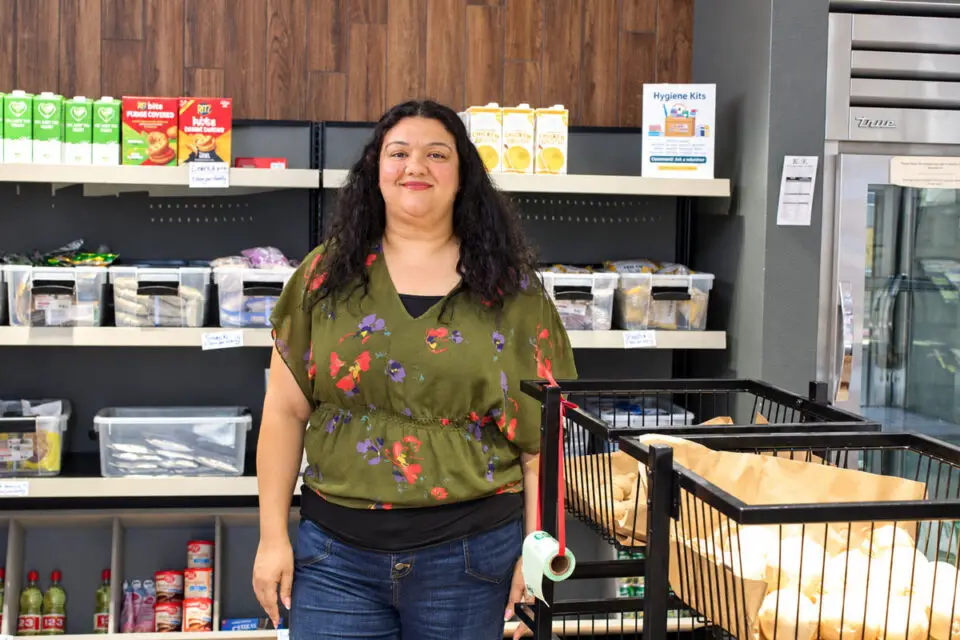
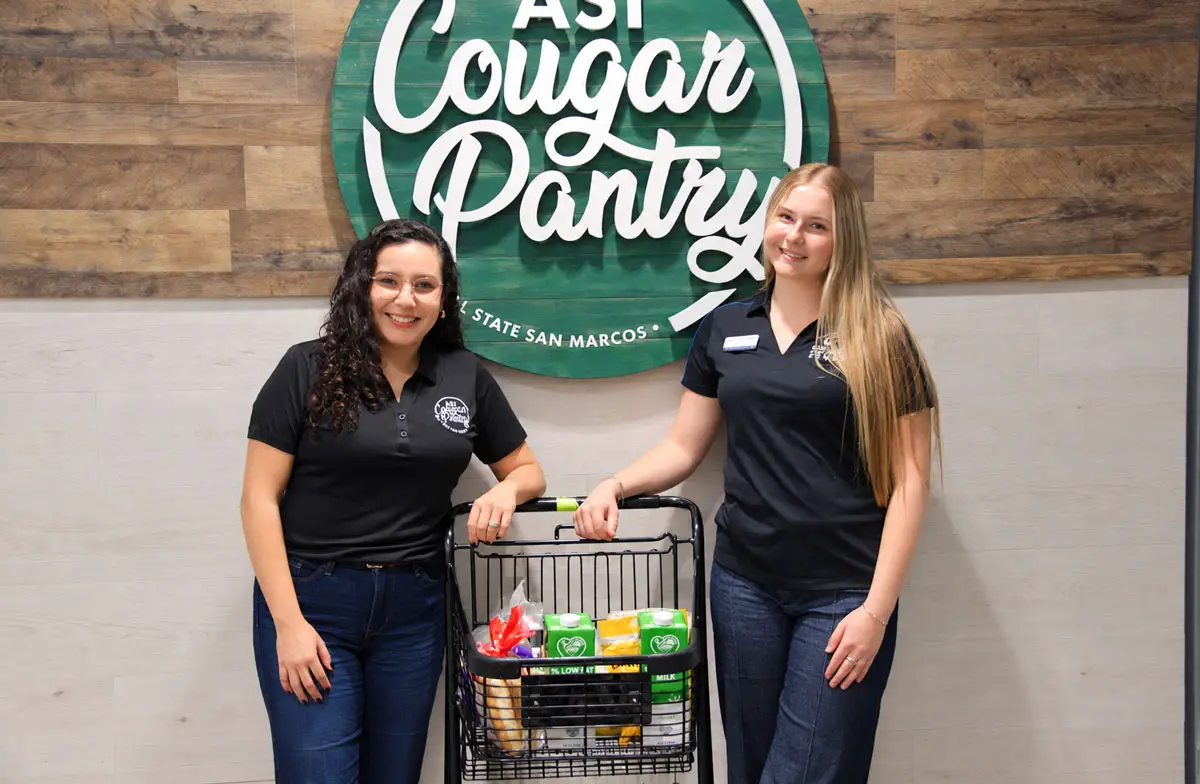
Pantry manager Alondra Lopez said the pantry struggles to serve the 1,200 students who come in for food each week, largely because of inadequate refrigerator and freezer space. The funding, which must be spent within three years, will first go toward site planning and hiring an architect.
A new campus location has not been identified, she said, and the project could involve repurposing an existing structure or constructing a new building.
Audrie Smith, vice president of student and university affairs for Associated Students, which operates the pantry, said a survey last fall found that 80% of CSUSM students wanted a larger pantry. Associated Students is considering using a portion of its $3.2 million in reserves to help fund the expansion.
A few miles northwest of CSUSM, Riham Shenouda oversees the basic needs center at Palomar College, which also includes a student pantry. During a recent visit, Shenouda said the college’s pantries serve between 800 and 900 students a semester. Its Escondido, Fallbrook and Rancho Bernardo satellite campuses each have a pantry.
At MiraCosta College’s main campus in Oceanside, Devon Boone, director of Campus Assessment, Resources and Education, said the college’s pantries provided free food to almost 700 students last year. MiraCosta also has pantries at its San Elijo and eastern Oceanside satellite campuses. Both MiraCosta and Palomar operate their own pantries.
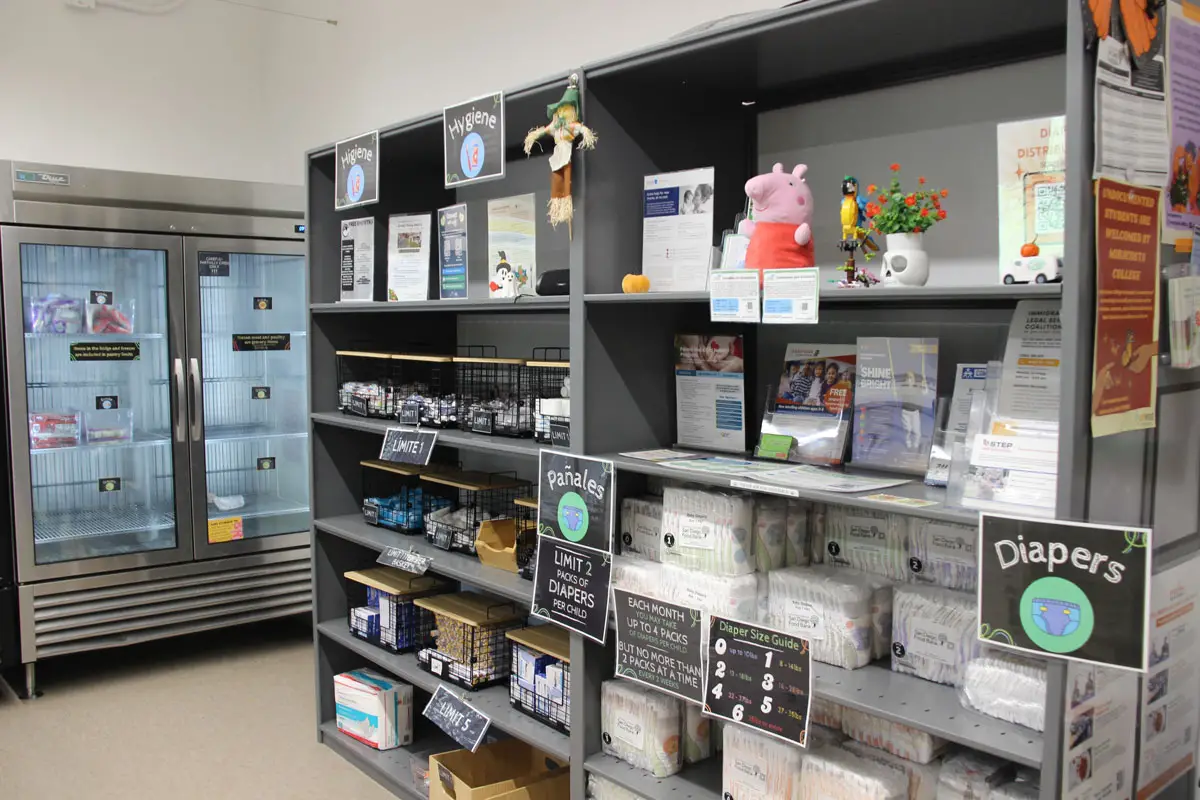
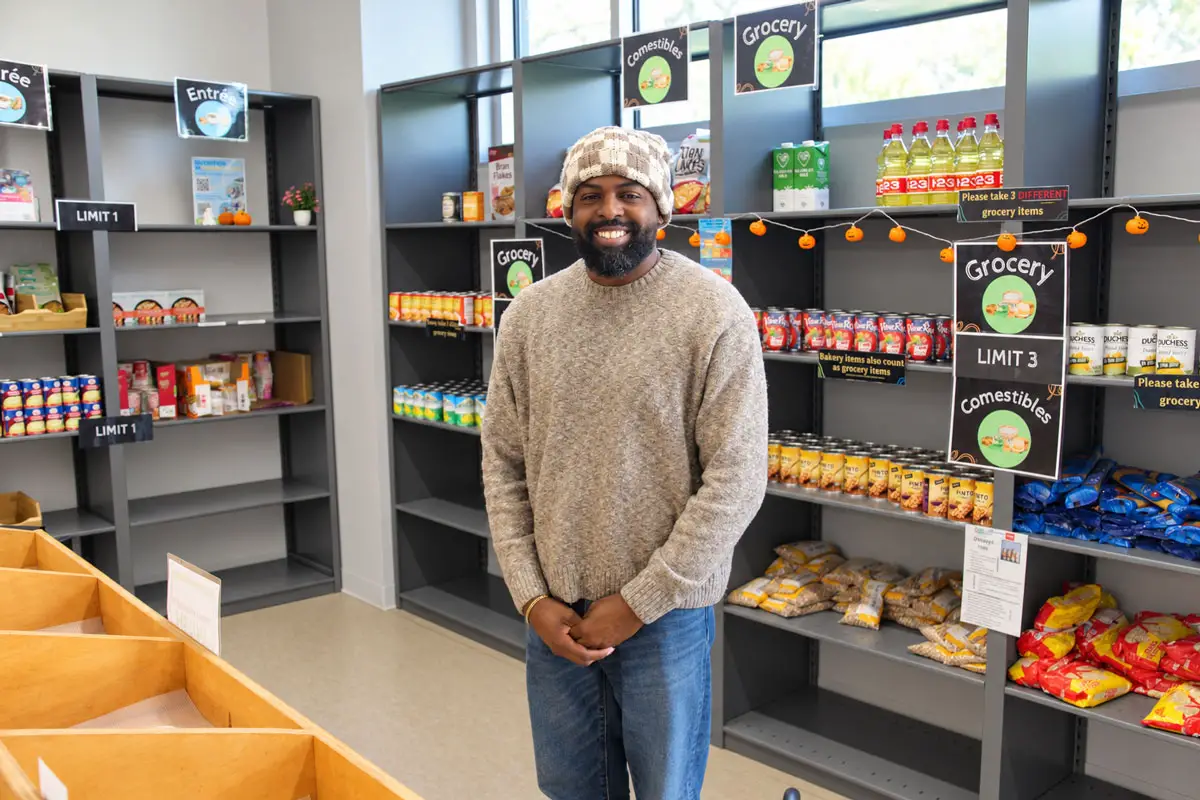
At all three public colleges and universities in North County, any registered student can receive free food and some personal hygiene products from a campus pantry. Each pantry is laid out like a small grocery store, a deliberate choice, Shenouda said.
“We want to create a shopping experience,” she said.
Students “shop” using their school IDs, with daily limits on different items, particularly popular ones. Lopez said word spreads across campus when the pantry receives frozen pizzas, and they usually run out quickly. Boone said Trader Joe’s donations can spark a run on MiraCosta’s pantry.
Each pantry relies on a combination of food donations, grants and fundraising to stock its shelves. Under state law, local restaurants and grocery stores must donate food that is past its “sell by” date but still edible. Boone noted that Trader Joe’s even donates flowers to the pantry.
The pantries also use grants and cash donations to purchase food at discounted rates from the San Diego Food Bank and Feeding San Diego. Depending on demand, Boone said, MiraCosta spends between $140,000 and $180,000 a year on food. Shenouda said Palomar spends about $40,000 a month.
Palomar spokesperson Julie Lanthier Bandy noted that the college participates in the annual “Pack the Pantry” fundraising drive. Sponsored by the nonprofit Mission Federal Credit Union and coordinated by the San Diego Food Bank, the drive runs through Oct. 31. Mission Fed matches donations up to $7,500, with proceeds going to local college pantries. Donors can use the online portal to designate gifts for Palomar or MiraCosta.
“It really helps us with our food budget for the year,” Lanthier Bandy said.
Campus food pantries are a relatively recent development. CSUSM’s first pantry consisted of a series of campus pop-ups where any student could receive free food. The pantry has been in its current location since 2021.
MiraCosta’s first pantry opened in 2017, and its current location opened two years later.
MiraCosta’s pantry is part of a centralized basic needs center, the Campus Assessment, Resources and Education, or CARE, center, where students can get help with needs ranging from housing to transportation.
Boone said the center also offers counseling to students who are disruptive in class or have other behavioral issues that fall short of requiring disciplinary action. The goal is to address those issues before discipline becomes necessary.
Because college and university faculty generally do not receive the same training in teaching methods as elementary school teachers, the center also offers faculty training in classroom management.
Palomar and CSUSM are still developing integrated basic needs centers similar to MiraCosta’s.
Palomar already has a clothing exchange, the “Comet Closet,” where students can donate gently used clothes they no longer want and choose from previously donated outfits.
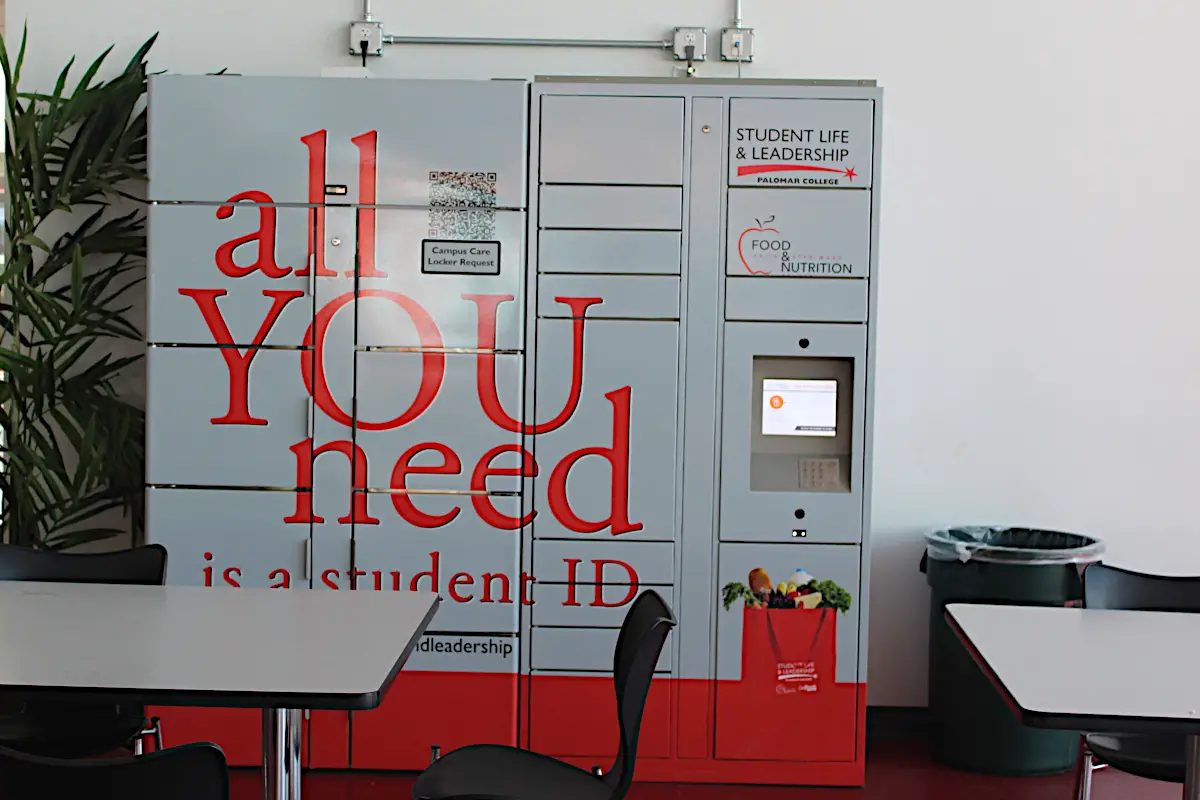
Palomar also offers food lockers at its main and satellite campuses, where students can preorder a meal or food package and pick it up using a code sent to them. Small Grab & Go refrigerators in campus study areas let students grab a snack without walking to the pantry or buying food at the food court.
In addition to providing free food and personal hygiene products, including diapers for student parents, all three North County schools help students apply for CalFresh benefits. Expanded eligibility rules allow more students to qualify.
CalFresh is California’s version of the federal Supplemental Nutrition Assistance Program, which replaced the food stamp program. It provides food-buying assistance to low-income individuals and families.
Two recent eligibility changes have made it easier for college students to qualify. This summer, the federal government waived the work requirement for college students, allowing them to qualify while focusing on their studies. The state also expanded eligibility to students enrolled at least half-time at a college or university.
CalFresh provides students with an electronic benefits transfer card, which they can use to buy eligible food at participating grocery stores and farmers’ markets. Students who receive more than half their meals through a campus dining plan are ineligible, but a county spokesperson said accessing campus pantries does not count as a meal plan.
A combination of CalFresh benefits and pantry access could help students meet nearly all their food needs.