

ENCINITAS — A month into his tenure, Mayor Bruce Ehlers has positioned himself as a reformer focused on infrastructure, local control, and what he describes as “practical governance.”
While his supporters applaud his back-to-basics approach, critics argue his policies may hinder progress on housing and multimodal transportation — two areas where the city faces growing challenges.
Ehlers, who defeated incumbent Tony Kranz in November, campaigned on a platform prioritizing local control and basic infrastructure.
Now in office, he aims to follow through on those promises.
“The policies that the previous administrations, plural, have put in place have backed us into corners,” Ehlers said, criticizing the council’s past adherence to state housing mandates.
While acknowledging that policies like the density bonus are dictated by state law, Ehlers contends local leaders should have exercised greater discretion.
“Where they said, ‘My hands are tied,’ my comment is, ‘You tied your own hands,’” he said.
Back to Basics or Backward?
Ehlers has placed infrastructure at the forefront of his agenda, prioritizing pavement restoration, storm drain repairs, and quiet zones over projects like Leucadia Streetscape and Pacific View, which he has labeled “vanity projects.”
“We’re going to work on pavement, storm drain refurbishment, Leucadia flooding, quiet zones, and at-grade crossings first before we get into any future vanity or beautification projects,” Ehlers said.

One of his key proposals is to reprioritize city funds to improve the city’s aging roads, a move he said could be deemed controversial. Ehlers says the city’s pavement condition index has steadily declined due to underinvestment, dropping from the mid-70s to 69 over the last 15 years.
Ehlers also promotes zero-based budgeting, a financial method requiring justifying and approving every expense for each budgeting period, helping ensure that income minus expenses equals zero each month.
“If you go back, kind of start from a zero base and build up, we’re going to find that there’s probably more money there,” he said.
Critics, however, argue that dismissing projects like Streetscape as “vanity” ignores their role in making Encinitas safer and more accessible for pedestrians and cyclists. Opponents also claim zero-based budgeting could delay sustainability projects aligned with Vision Zero goals, such as safer bike lanes and walkable streets.
A housing vision under fire
Ehlers has been an outspoken critic of California’s housing mandates, which he claims prioritize market-rate developments over true affordability. He views state policies as worsening the affordability crisis and says local officials should push back.
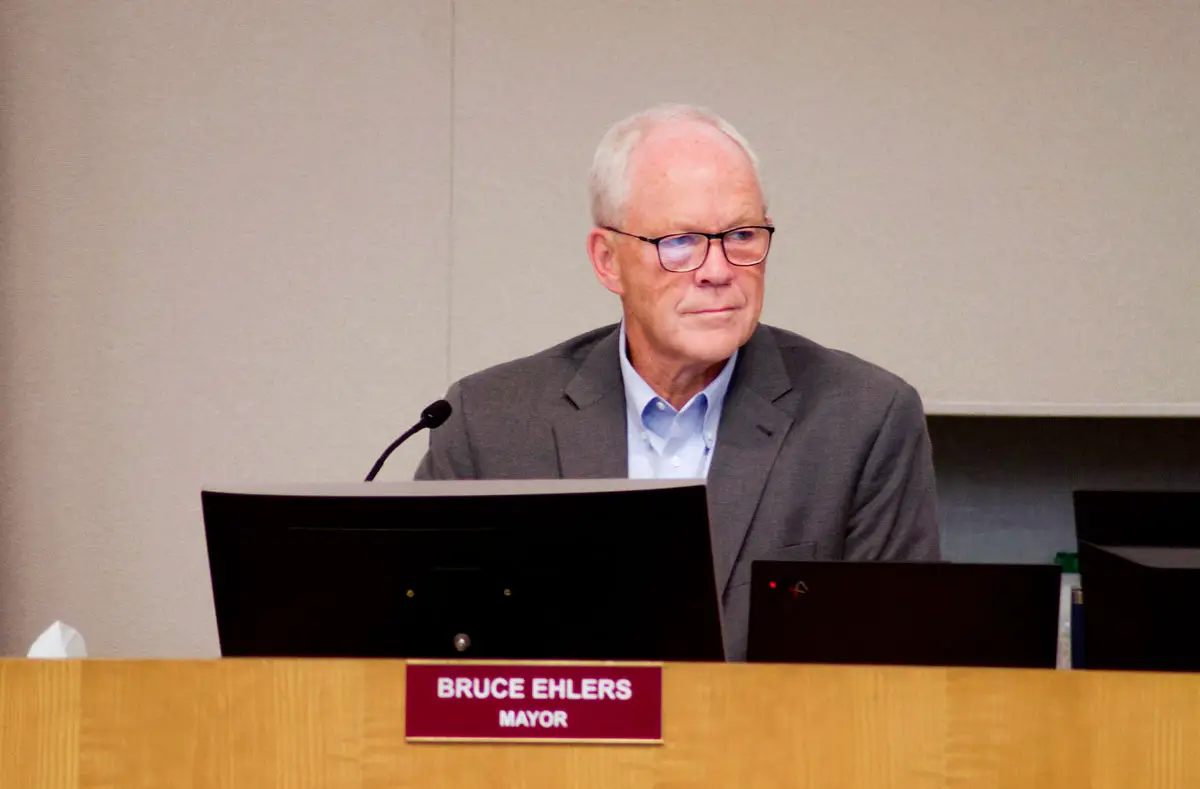
“How many million-dollar condos do you need to build to solve our housing affordability problems?” he asked, pointing to what he sees as a conflation of market-rate housing with affordable housing solutions.
As planning chairman and council member, Ehlers has supported higher inclusionary housing requirements, but critics argue his emphasis on local control risks slowing housing production. Encinitas faces significant Regional Housing Needs Allocation (RHNA) targets, and opponents claim Ehlers’ resistance to state mandates undermines efforts to meet them.
“I’m not against affordable housing,” Ehlers said. “If you have a council willing to look within its discretion and push the legal within the realms of good, calculated risk, you will get much better projects and less impact to the neighbors.”
Transportation: Balance or bias?
Ehlers’ approach to transportation planning has drawn criticism from advocates for alternative transit modes. While he supports separated bike lanes, his opposition to reducing vehicle lanes has raised concerns about favoring cars over other modes of travel.
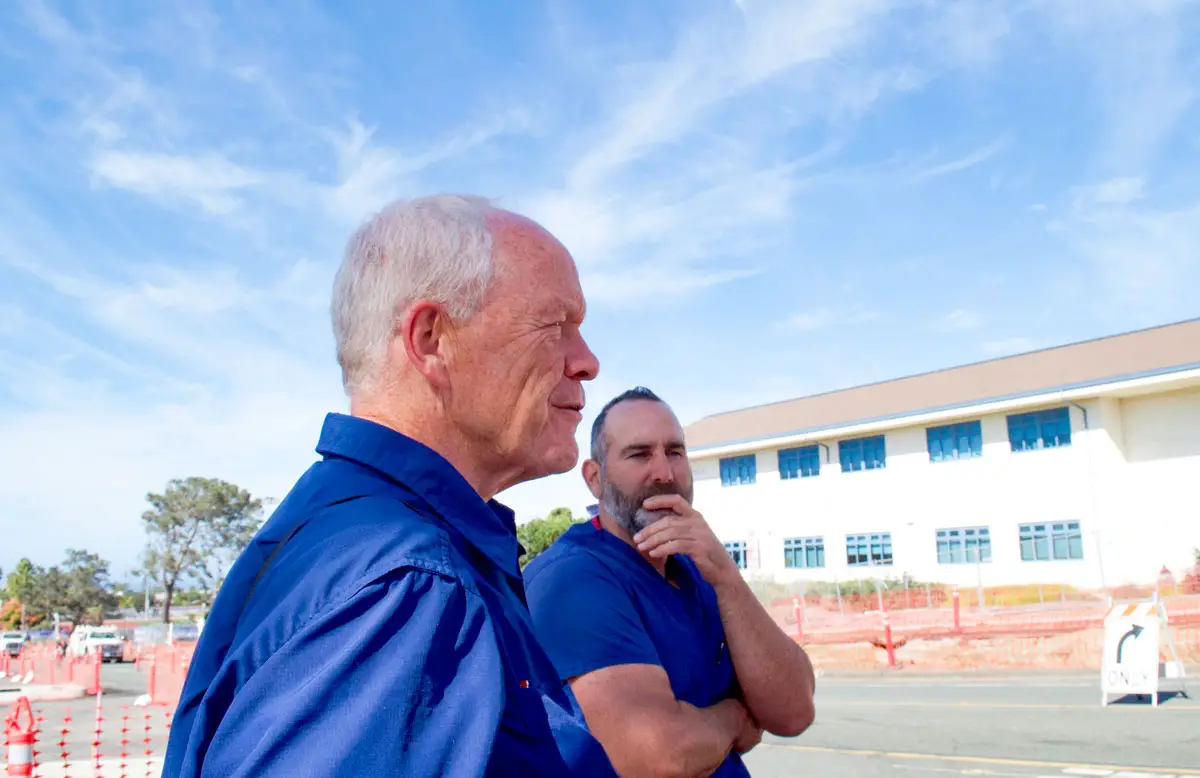
“I’m not a big proponent of removing travel lanes,” Ehlers said, citing concerns about rising car ownership and population growth. “They call them lane diets, I call them lane-ectomies. A lane diet, to me, is when I go on a diet, I get thinner. But if you’re taking off a leg, that’s taking out a lane, that’s a lane-ectomy.”
Ehlers recently joined other council members in unanimously agreeing to pause some aspects of the Santa Fe Drive Improvement Project, which includes reverse angle parking, lane reductions and protected bike lanes.
While critical of the project’s current design, Ehlers advocated for a six-month evaluation of the upgrades.
“We’re going to see whether the narrow travel lanes completely congest the traffic flow,” he said, emphasizing operational efficiency over sweeping changes.
As Ehlers begins his term, the tension between his priorities and those of his critics and previous administrations could significantly reshape Encinitas’ future. In February, he plans to lead a strategic planning session to align the city’s goals with his vision of fiscal responsibility and foundational improvements.
“We do this every year, they call it the ‘strategic planning meeting,’ and I’ve got a new facilitator coming in to help us set our goals,” Ehlers said. “But it’ll be all done in the public so everybody can see how the sausage is being made.”


1 comment
Blakespear and Kranz made Encinitas worse in every way.
Lane diets on ECR haven’t slowed traffic, it just made it more stressful to drive and who wants traffic alowed below the speed limit? People have places to go and driving will always be needed. Seniors and the disabled aren’t going to hop on a bike.
Do you see folks bike riding more on the streets they destroyed? I don’t.
StreetScam was definitely a vanity project, one that put this City into debt, all while ignoring the terrible street conditions. Streets that used to be the best in the County.
All Streets that were narrowed need to be put back to where they were.
I would like to see all current approved projects come up for a review vote since Blakespear is friends with some of the developers and she is clearly corrupted.
Require a higher percent of Middle Class (affordable) to reduce the total number of needed units.
Encinitas also needs it’s status to be changed from Urban (which it clearly isn’t) to Suburban (which is clearly is). That would reduce the number of needed units as well.
Encinitas is pretty much nothing like it used to be, even from 10 years ago. That is all thanks to the Developer Party, which sold it’s soul to developers, and thanks to Democrats like Catherine Blakespear, Toni Atkins, Newsom, etc, who gladly joined in to the massive PR fraud that is YIMBY. Scott Peters is the latest to join this crowd.
Encinitas changed teams, it’s time for the rest of California to wake up as well.
Comments are closed.