
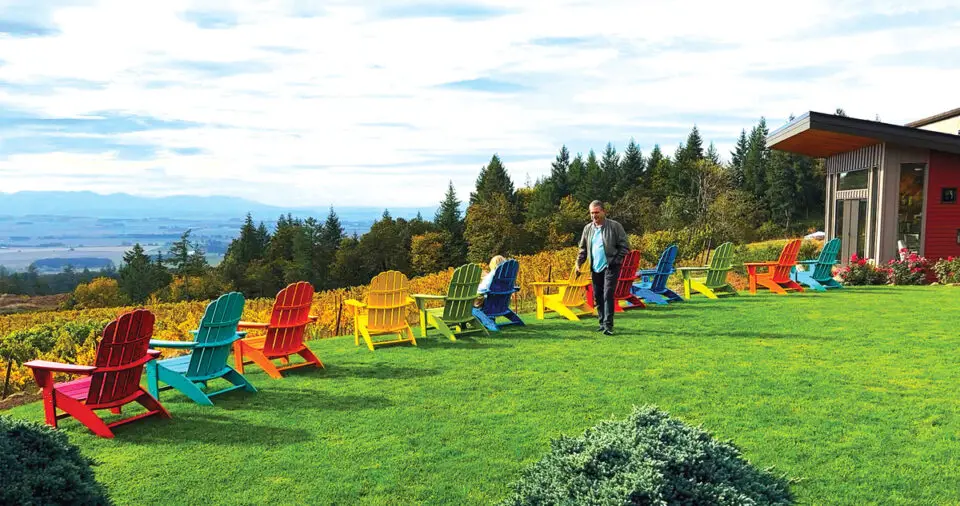
Dave Lauer, whose family owns Bryn Mawr Vineyards, points to a break in the silhouette of Oregon’s Coast Range.
“That’s the Van Duzer Corridor,” he says. “When the wind comes blowing through there in the afternoon, we sometimes have to close all the patio umbrellas or they’d go flying off.”
It is 2:30 p.m. on a mid-October afternoon and I can feel the air stirring, but as we linger through the next hour, the umbrellas stay put. I’m a little disappointed about the lack of drama, but not at all in the more-than-spectacular view from both Bryn Mawr’s patio and airy, wood-beamed tasting room. The multicolored Adirondack chairs lining the lawn add a touch of whimsey to the ultra-green, hillside property.
As a reference point for Californians, I’d describe the Willamette Valley, with its 700-plus vineyards and wineries, picturesque tasting rooms, two mountain ranges and big-leaf maples that glow vermilion in the fall, as Napa Valley on steroids. But unlike Napa Valley, visiting this area within minutes of Salem, Ore., a tourism experience that doesn’t feel as if you are a tourist.
Sure, the weather here will eventually get ferocious in the next few weeks, but right now, autumn in the Willamette Valley mimics my vision of Shangri La.


And the umbrella-launching gales that barrel through the Van Duzen Corridor? Nature has its reasons.
As climate change increases temperatures in the valley, these winds help cool the 1,000 acres and 18 vineyards in the area. It also dries the leaves on the grape vines, which helps prevent diseases like fungi and focuses the vines’ resources on developing higher quality grapes.
“We are planting higher on the hills and in an area that wasn’t productive before because of the winds through the Van Duzer,” said Lauer, whose parents’ founded Bryn Mawr in a garage in 2009. “The winds have made it work.”
This winery and multiple others are just minutes from Salem, Oregon’s capital city, where we are headquartered for four days. It’s the perfect location for exploring a certain segment of Willamette Valley vineyards.
“Most people approach wine country from Portland and move south,” says Dan Shryock, a local wine lover and our guide for the day. “I think the reverse is better. From Salem you can reach the wineries faster and avoid the crowds.”

Shryock, a longtime Salem resident and cycling enthusiast, has extensively explored Oregon’s backroads via bicycle, including miles of vineyard-lined roads. He parlayed this knowledge into “Cycling Across Oregon: Stories, Surprises & Revelations Along the State’s Scenic Bikeways,” an equally good resource for those exploring by car.
Earlier in the day, we visited Willamette Valley Vineyards for wine-tasting and lunch.
“If you’re talking about Salem and wine, Willamette Valley Vineyards has to be in the conversation,” Shryock says. “They are making wines with grapes from all over the Pacific Northwest.”
Though Willamette Valley Vineyards is the largest in the area, the midweek tasting experience is uncrowded and unhurried, and the accompanying small plates are excellent. And like many vineyards here, this one prides itself on its sustainable agricultural practices. About half of the acres in Willamette Valley are certified sustainable, the result of a process that can take 2-3 years.
An additional “salmon-safe” certification indicates that the vineyard works to restore and protect streams and rivers important to salmon populations.
Not interested in viticulture and winemaking? The Willamette Valley has plenty of other reasons to draw you in.
Autumn is a singular experience, with an explosion of colors that cover the hillsides and line the roads, even in the city of Salem. A walk down State Street, bordered by crimson maple trees, gives you entrance to Mother Nature’s celebration of the season. Parks and hiking trails abound, and there are multiple museums and historic points of interest for all ages.
For more, visit www.facebook.com/elouise.ondash and Instagram @elouiseondash.


