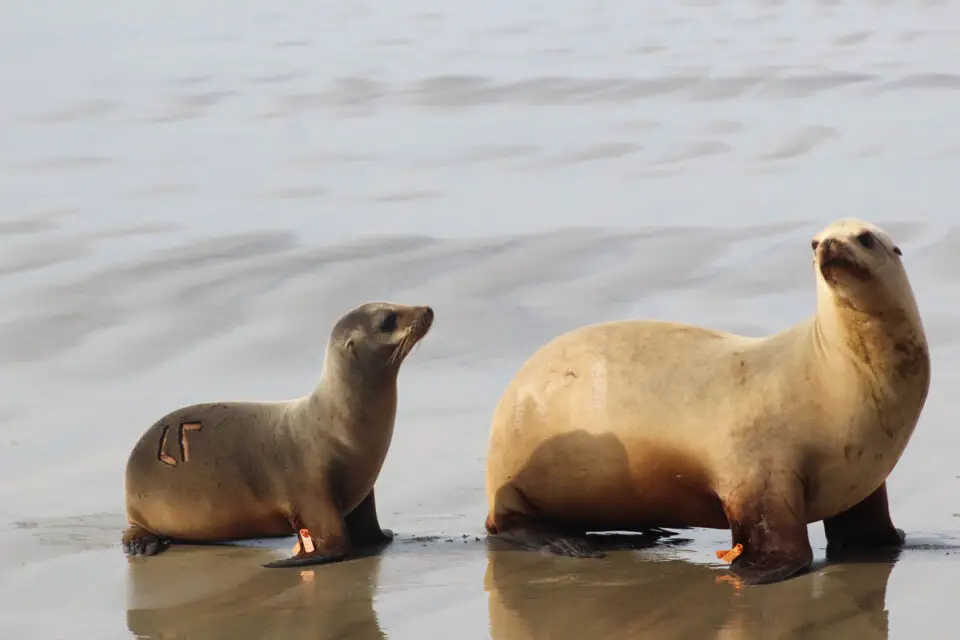
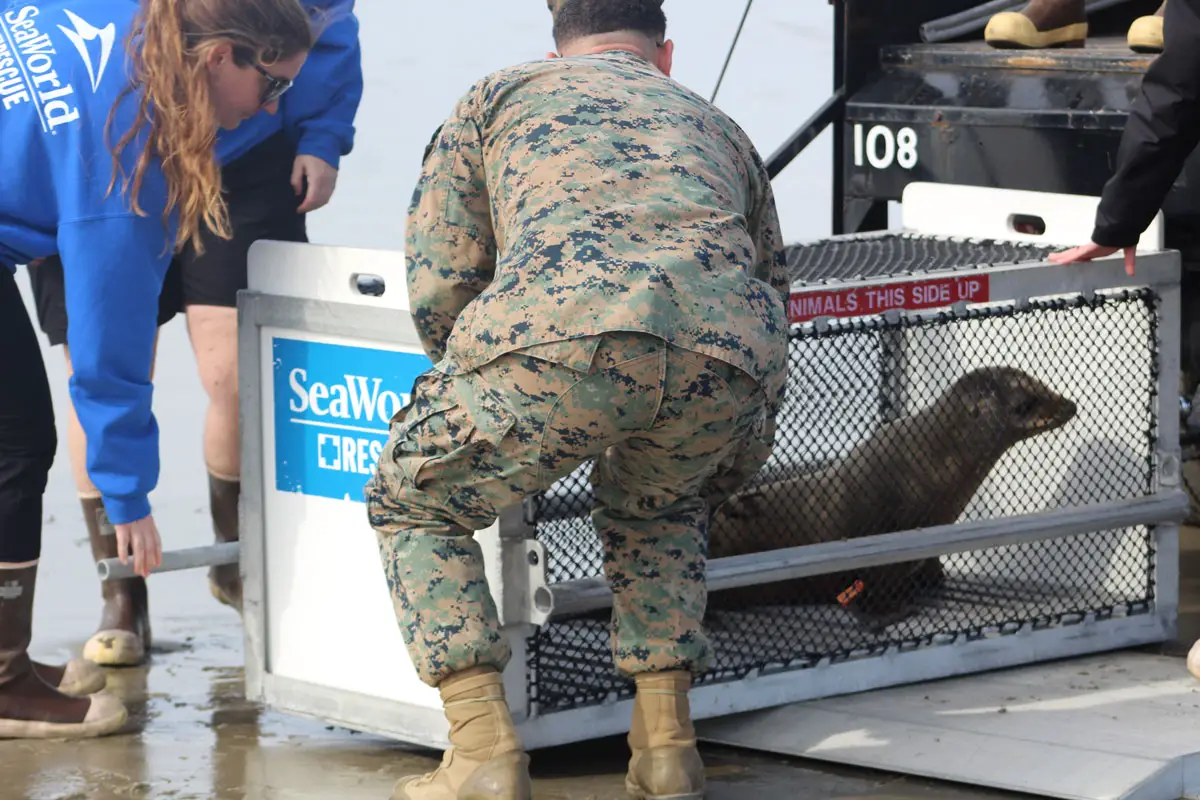
CAMP PENDLETON — Two rescued sea lions, one adult and one pup, were released back into the ocean last week on a private beach at Camp Pendleton after nearly two months of rehabilitation at SeaWorld San Diego.
The unrelated female sea lions were rescued at different times and locations prior to rehabilitation.
Since opening in 1965, SeaWorld has rescued and rehabilitated thousands of marine animals along the Southern California coast, including sea turtles, dolphins, whales, and various bird species. In 2024 alone, the park rescued 100 sea lions and more than 300 birds.
The pup, now approximately eight months old, was the 92nd sea lion rescued last year, while the adult released alongside her was the 95th. So far this year, SeaWorld has rescued four sea lions.
Rehabilitation and release
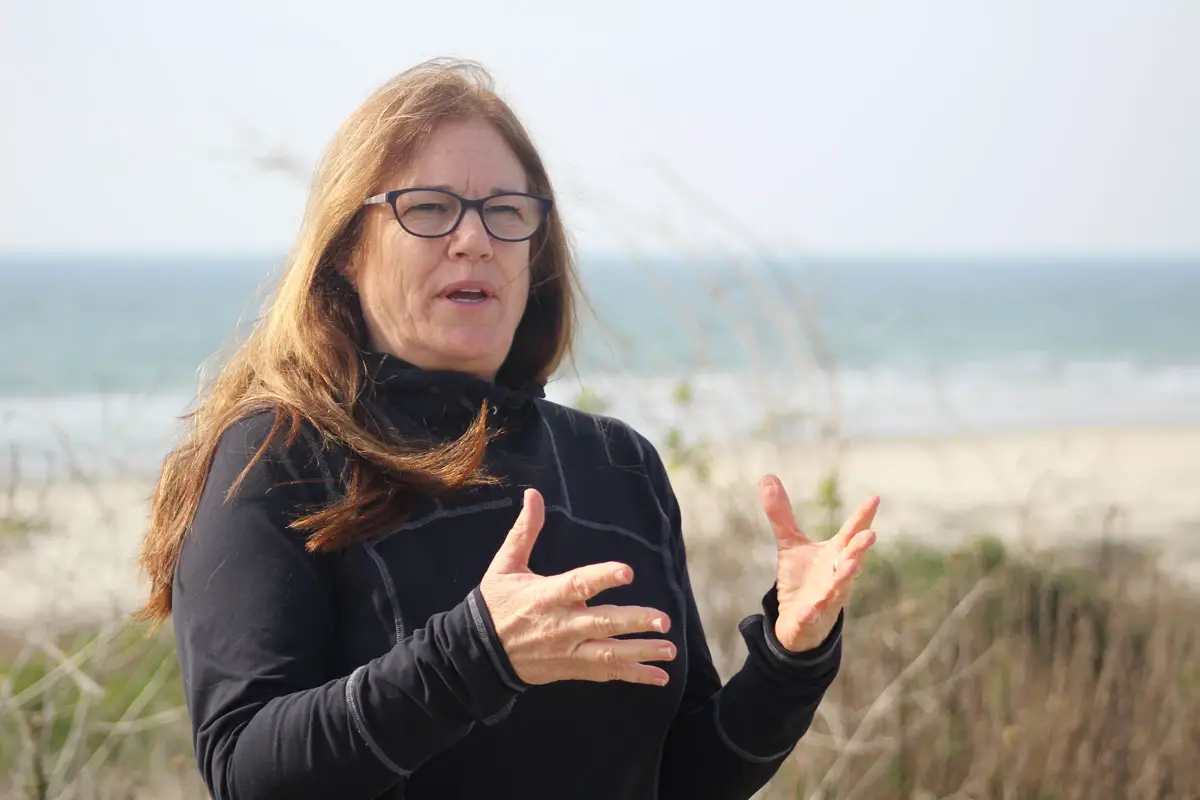
Jeni Smith, curator of SeaWorld’s rescue program, explained that most sea lions spend six to eight weeks in rehabilitation before being released. During that time, the team conducts health assessments, draws blood samples, and administers necessary medical treatments.
“We try to set them up for success before they go back out there,” Smith said.
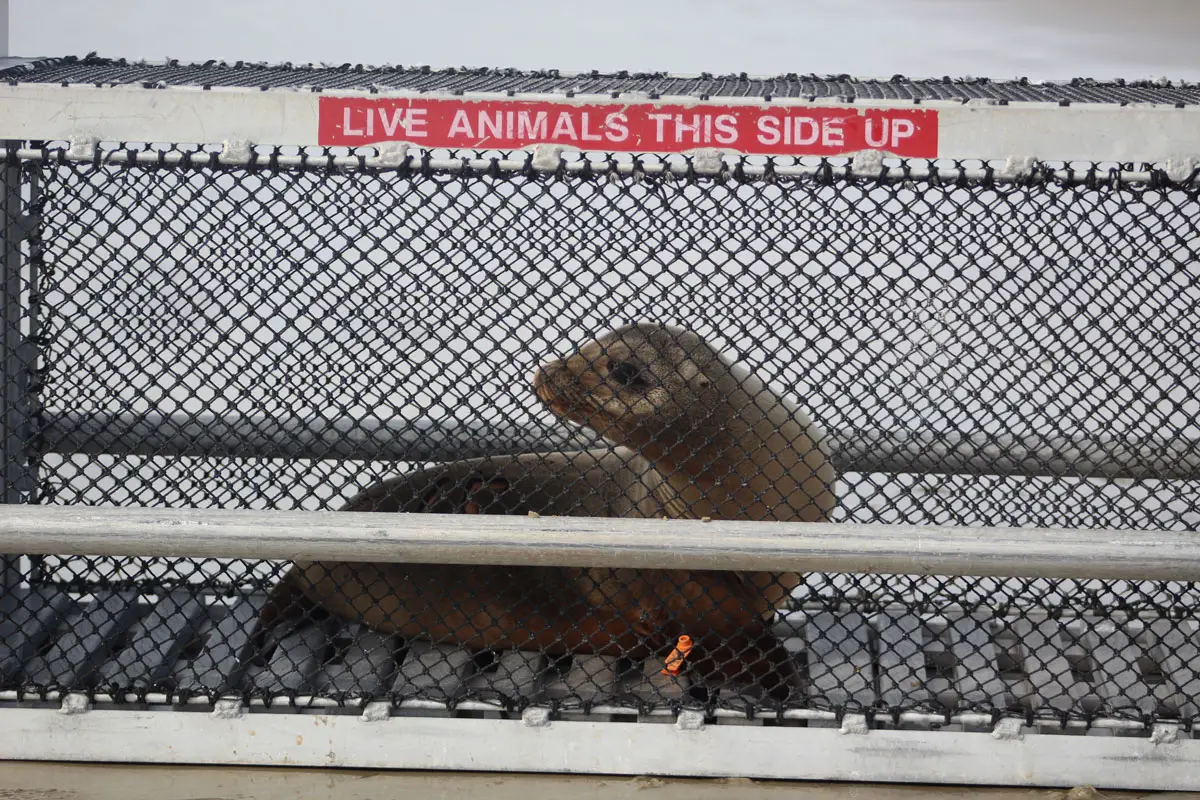
The adult sea lion had been rescued once before in Los Angeles. Her latest rescue occurred in Solana Beach, where lifeguards found her experiencing tremors.
Smith said veterinarians suspected domoic acid poisoning, a condition caused by a toxin found in algae that can contaminate the fish sea lions consume. The toxin affects the brain and can lead to seizures, disorientation, or even death. After treatment and recovery, Smith said the adult female “looked great and was ready to be returned.”
According to Smith, SeaWorld follows a three-strike rule: if an animal is rescued three times, it likely cannot survive in the wild and will not be returned.
The pup was rescued in La Jolla after being found emaciated, lethargic, and isolated. At just six months old, she was too young to survive alone. After nearly two months in rehabilitation, she was eating fish independently and ready to rejoin the wild population.
While SeaWorld typically conducts animal releases further south or offshore to avoid human interaction, Camp Pendleton’s isolated beaches provide an ideal location for returning rehabilitated marine life.
The two sea lions, who had never met before their release on Jan. 31, appeared to swim south together toward Oceanside Harbor, a well-known feeding ground for sea lions.
Marine Conservation at Camp Pendleton
SeaWorld worked with environmental conservationists at Marine Corps Base Camp Pendleton to coordinate the release and previous rescues. The military base spans 125,000 acres and 17 miles of coastline and serves as an ecological buffer zone between heavily urbanized areas to the north and south.
While the base is primarily a military training ground, its conservation efforts are extensive, protecting 19 endangered or threatened species, including the Western snowy plover, Southern steelhead trout, and Pacific pocket mouse. That number is expected to grow to 22 species soon.


“It’s very important for us to have rules and regulations during breeding seasons so that the folks who are out there training don’t clash with species management that we have in place, which works well,” said Sherri Sullivan, coastal and riparian ecosystems manager for Camp Pendleton.
Despite serving as a training area where Marines practice maneuvering amphibious and assault vehicles, the base enforces strict environmental regulations to protect sensitive habitats. Six game wardens monitor compliance and can cite individuals for violations.
“We make it work,” Sullivan said. “It’s not easy, but we do it.”
SeaWorld encourages the public to report stranded marine animals along San Diego County beaches by calling its rescue hotline at 1-800-541-7325.