OCEANSIDE — Local leaders celebrated the completion of one of the largest harbor dredging projects in recent history and the release of a long-term plan to replenish the city’s eroding beaches.
For years, Oceanside has replenished its beaches using sand dredged from the harbor by the U.S. Army Corps of Engineers. The dredging typically occurs in the spring and wraps up in May ahead of the busy summer season.
Annual dredging is necessary because sand accumulates at the harbor entrance. Excessive buildup can make the channel unsafe or unnavigable for boats, affecting local businesses that rely on ocean access.
Donna Kalez, co-owner of Oceanside Adventures, a whale-watching company based in the harbor, said her business has had to cancel trips because the harbor entrance was too shallow to navigate.
“It’s a real bummer for us and our customers,” she said.
This past winter, severe sand buildup at the harbor mouth created hazardous conditions that likely contributed to two boats capsizing and another running aground.
As a result, approximately 320,000 cubic yards of sand were dredged from the harbor and pumped onto Oceanside beaches this spring, significantly more than the roughly 250,000 cubic yards typically removed during annual dredging operations.
Earlier this spring, Rep. Mike Levin, D-San Juan Capistrano, secured more than $8.2 million in federal funding to support two dredging projects this year — one in the spring, which concluded May 9, and another planned for the fall.


Beginning next year, Oceanside’s annual dredging schedule will shift from spring to fall.
According to city officials and local experts, moving the dredging operation to the fall will help keep the harbor channel open longer while allowing winter currents to carry sand southward to some of the city’s most severely eroded beaches.
“Today the harbor is safer, the beach is wider, and for the first time we have a plan to keep it that way,” Levin said during a Monday press conference near the Oceanside Pier.
In addition to securing funding for two dredging projects this year, Levin helped advance a long-delayed federal shoreline study intended to address the city’s chronic erosion problems.
At the press conference, Levin announced that the Army Corps had released a draft plan outlining a long-term beach nourishment strategy. The proposal calls for a regular nourishment cycle that would place sand directly on Oceanside beaches without constructing seawalls or other hard shoreline structures.
According to the Army Corps, the plan is the most technically feasible, environmentally acceptable and cost-effective option for addressing erosion along Oceanside’s coastline.
The city’s erosion challenges date back to the construction of Camp Pendleton Harbor in 1942, which disrupted the natural movement of sand along the coast. The federal government acknowledged responsibility for the resulting erosion in 1953 but never implemented a permanent solution.
The Army Corps later initiated a study to address the problem, but the effort stalled for nearly two decades. According to Levin, the agency had effectively abandoned the study when he entered Congress in 2019.
Since then, shoreline restoration has become one of Levin’s top priorities for the 49th Congressional District. He secured a provision in federal law requiring completion of the study and later obtained more than $4 million to finish it.
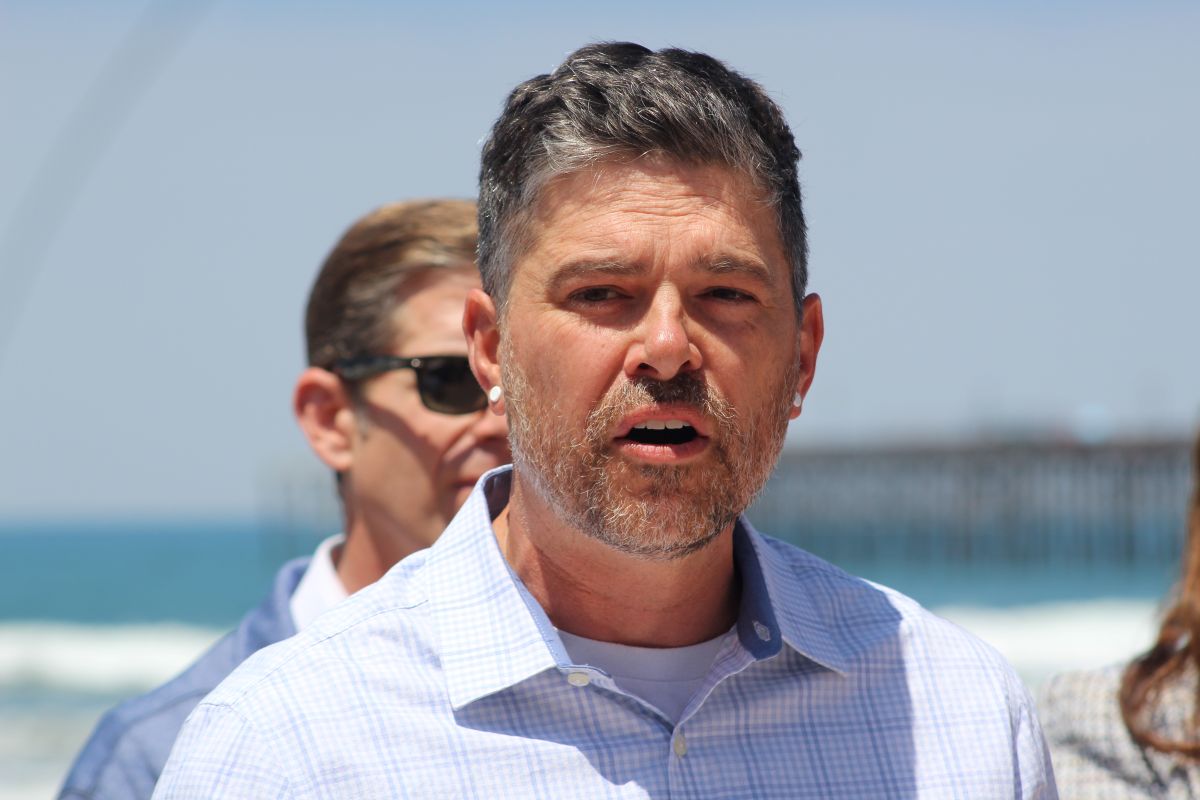


“For 26 years, Oceanside has been asking the federal government for one thing: a real plan to bring back the sand this harbor took. Today, we finally have it. And the answer is simple: sand, and lots of it,” Levin said.
City leaders praised Levin’s efforts to advance shoreline restoration and secure federal funding.
Mayor Esther Sanchez recalled discussing the Army Corps study shortly after joining the City Council in 2000, but said she had never seen meaningful progress until now.
“It finally did happen, and finally came up with the best alternative,” said Sanchez, who favors natural solutions for replenishing the city’s beaches.
Deputy Mayor Eric Joyce said the benefits would extend beyond Oceanside residents to visitors from neighboring communities such as Fallbrook, Bonsall, Vista, San Marcos and Escondido.
“I know this is going to be transformational and our community is going to live off of this change for years to come,” Joyce said.
The long-term nourishment strategy is expected to complement the city’s RE:BEACH initiative, which aims to keep replenished sand in place for longer periods.
Approved by the City Council in early 2024, the RE:BEACH project seeks to address long-standing shoreline erosion through a “living speed bump” concept developed by Australian firm ICM. The design includes two artificial headlands at the Tyson Street and Wisconsin Street beach access points, along with an offshore artificial reef intended to retain sand along the coast.
Levin said the two efforts are designed to work together.
The Army Corps’ draft plan is open for public comment through June 30. Afterward, the agency will prepare a Chief of Engineers report recommending the project to Congress for authorization and funding for construction.
Beyond shoreline restoration efforts, Levin also helped secure $26 million in federal funding to repair the San Luis Rey River levee system in Oceanside. The project includes removing sediment from the river channel, material that can also be used to replenish local beaches.